

 Bertine Jobse
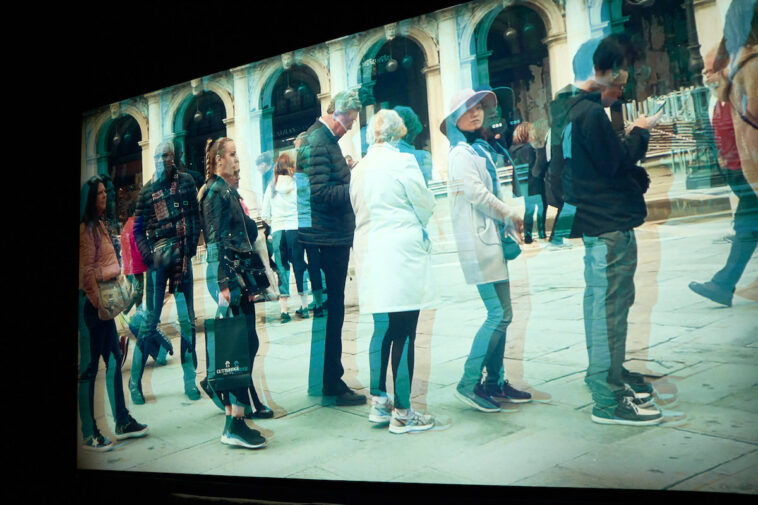
I recently had to apply for a new driver's license and I prepared myself for the fact that I would first have to stand in line for half an hour at the counter of the town hall. Fortunately, it is now possible to make an appointment online, so that you are assigned a time slot and you do not have to stand at the counter with 40 others at the same time.
I was outside again after 5 minutes and picking up my driver's license was also a breeze. It is very different in Italy, which is known for its endless bureaucracy. And although most Italians hope that bureaucracy will one day be less, there is one profession that benefits from it: the codest.
John Cafaro
Codista comes from the word queue, which means line. A codista is someone who stands in line for someone else and gets paid for it. The phenomenon was introduced by the Italian Giovanni Cafaro.
At the age of 41, he lost his job as a manager at a Milanese clothing company and had to look for a new job. This was not without a struggle: he sent out countless CVs and motivation letters, but unfortunately without result.
Until one day he was standing in line at a post office and the line didn’t seem to get any shorter. As the minutes turned into hours, he had a brilliant idea: stand in line for others in exchange for money. The profession of codista was born.
Cafaro asked for 10 euros per hour to stand in line for someone else. This could be at a post office, but also at a bank, museum, town hall or any other institution where Italians have to wait a long time.
To survive all those hours in line, he carried a bag full of supplies, such as a newspaper and an extra battery for his smartphone. His gear also included business cards, which he used to recruit new customers.
How do you queue like a pro?
After a while, Cafaro also started giving codista courses to people who wanted to become codistas. Via Skype, he taught the students the tricks of the trade in 5 hours, after which they received a recognized diploma.

In his book Closed for holidays tells Jarl van der Ploeg about his meeting with Cafaro. During their conversation about Cafaro's special profession, Cafaro indicates that there are 4 things that codistas have to take into account.
- So it is important to choose a good time to stand in line. Don't come too early, avoid lunchtime and never go just before closing time, because those are the times when all the working people enter the line.
- Also, think carefully about which shoes you wear and don't constantly reach for your smartphone, because all that looking down can cause neck problems.
- Furthermore, you should kindly address those who are in front of you about their behavior so that they join the back of the line.
- Finally, and perhaps most importantly, don’t treat waiting in line as wasted time. You have plenty of time to read a book, put on some music, or call a friend.
I think there are few other professions where you can do this without being called to account.

What does it pay?
As a codista you receive a good salary for all that waiting: for 30 hours in line codistas earn around 1.200 to 1.500 euros per month. As a codista you don't have to worry about having enough work. Despite the fact that nowadays you can arrange a lot via the internet in Italy, the lines are only increasing.
The Italian consumer and environmental organization Codacons stated that Italians spend an average of 190 hours a year waiting. That is why many companies hire codistas. If an employer spends an average of half an hour a day waiting in line, it costs more money than if he hires a codista.
And not only Italians themselves like to hire a codista, tourists also prefer to spend a little more money than to stand in line for hours. If you imagine the line at the Sistine Chapel in Vatican City, you will understand why.

The Codest
The profession of codista has even been used as inspiration for a performance. Dutch actress Marleen Scholten, who has lived in Italy since 2016, wrote the piece The Codest, which is about standing still and slowing down.
For her performance, she stood in line for hours and talked to several Italians, asking them what standing still means to them. The text of the play earned her the Italian playwriting prize Antonio Conti us.
It is once again evident that harsh conditions, such as high unemployment and sluggish bureaucracy, lead to creativity. In Italy, it even produces an entire professional group.
Still, I hope for all non-codistas that the sluggish bureaucracy will finally slow down a bit. Until then, it's a choice: stand in line for 190 hours a year or spend your hard-earned money on someone to do it for you.









Comments