

 Aart Heering
When you think of Lombardy, you first think of Milan, fashion, business and the Po Valley. But Italy's most populous and economically important region also includes a stretch of the southern Alps and includes Bormio, one of Italy's most famous winter sports resorts. The town of 4.000 inhabitants is located about 200 km northeast of Milan, close to the Swiss border, at an altitude of 1.200 meters in the Alta Valtellina, the end of the valley of the same name. But Bormio is also a center of summer sports, thermal baths, history, and gastronomy.
Here are 10 good reasons to choose a short or longer stay in Bormio.


Table of contents
1. Skiing in Bormio
The road from Milan to Bormio ascends slowly past Lake Como, the Adda River and steep mountain slopes, dotted with vines that give the Veltliner (Veltlin is German for Valtellina) its name. The 3.012 meter high tower towers above the town Cima Bianca.
Ski lifts and cabins take you to the top of this 'white peak', from where (weather permitting) you have a dazzling view of the surrounding mountains and valleys. You can also ski from it to the valley station, a long descent with a height difference of 1.800 meters.


The slopes are steep but wide, so you don't have to be a champion to get away unscathed. The most beautiful is the Pista Stelvio, where World Cup competitions are held annually and where the Men's Downhill World Championships were held in 1985 and 2005. 20 kilometers away, from the village Santa Caterina Valfurfa, which is located at 1.730 meters, you reach 2.900 meters (Pista Vallalpe).

From a 2.775 meter high ridge, the Cresta Sobretta, you can view the beautiful Pista Deborah Compagnoni named after the ex-champion from Bormio. It is a black slope, but not unsurmountably difficult for somewhat experienced skiers.


The two areas are not connected, but there is a ski bus and one ski card is sufficient. The slopes are open from December to April and thanks to the altitude there is usually enough snow, if necessary with the help of cannons.
2. The ciaspolata
They are called snowshoes in Italian snowshoeing and a specialty of the Valtellina are the treks with it, the snowshoeing. Routes have been set out from Bormio and Santa Caterina, but you can also follow random routes from Bormio 2000, the terminus of the first cable car, over snow-covered plains and the pine and larch forests of the Stelvio National Park.


A wonderful alternative in the great outdoors, especially when a lot of new snow has fallen or when it is snowing and you cannot see your hand on the slopes. Be sure to stay close to already paved routes, due to the risk of avalanches. If you are going to pioneer outside the area, take a mandatory cell phone locator with you.
3. Olympic Games
The IOC has awarded the 2026 Winter Games (6-22 February) to Milan and Cortina d'Ampezzo. To share costs and because it is difficult to hold ski competitions in Milan, the various disciplines are divided between the regions of Lombardy, Veneto and Trentino-Alto Adige/Südtirol.

This included men's skiing (downhill, Super-G and slalom) to Bormio, where the Pista Stelvio is already ready. Bormio also becomes the scene of the skimo, a new sport for the Olympiad that you could describe as ski trekking.
In Bormio they are already working to build temporary stands, press rooms and accommodation for 153 athletes. Money from the region is also being used to improve the road network and infrastructure such as hotels and hot spring baths. That is also an investment for the future, says assessor (councilor) of sport and tourism Samanta Antonioli: 'We are raising our standards for international tourism.'
That sounds like good news for future visitors, but not in the period from mid-January to February 22, when an influx of thousands of ski fans is expected. By the way, Bormio has no real complaints about outside interest. Half of the visitors already come from abroad.
4. Summer sports
'Dutch? They come here in the summer to cycle.' The shopkeeper and the hotelier have their answers ready quickly. As a summer destination, Bormio, with the nearby Parco Nazionale dello Stelvio, is known as a paradise for cyclists, mountain bikers, trekkers and walkers.

The toughest challenge is the Stelvio Pass, which, with its record height of 2758 meters, is a nightmare for the participants of the Tour of Italy. He is also on the program this year, on May 21 during the 16e stage (from Livigno to Santa Cristina Valgardena), which also passes through Bormio.
No less difficult is the 2621 meter high one Gavia Pass, but for those who want to take it a bit easier, there is also the option to ascend from Bormio via Santa Caterina to Bormio 2000.
Mountain bikers can indulge themselves on the mountain slopes and in the forests of the national park and for amateur cyclists there is the gradually rising Valtellina path, which ends in Bormio after 114 kilometers along the Adda River.
A total of 600 kilometers of trails have been set out for walkers, trekkers and bird watchers, which often also lead along one or another Malagasy, the word used in this part of Italy to describe the shepherd's summer residence, where homemade cheese, bread and drinks are usually available.

In Bormio itself there is a golf course and summer skiing is possible on the Passo Stelvio, where the lifts go up to almost 3.200 meters.
5. The thermal baths
The origin of the name Bormio probably goes back to Germanic "warm – in German Bormio is still called Worms in Veltlin –, which in turn would be a reference to the hot springs in and just outside present-day Bormio.

The water that comes out of the ground there comes from the Stelvio glacier, which is therefore promoted in advertising brochures as 'The wellness mountain'. It first sinks deep into the ground, is heated there and then rises to the surface again in the much lower Bormio.
This process gives the spring water a constant temperature of 42 degrees, so that no additional heating is required. The water is sulphurous but odorless, meaning you can benefit from its medicinal properties without smelling like rotten eggs – especially for respiratory problems, rheumatism and skin conditions, while a few glasses of water a day are also said to have a beneficial effect on digestion to go.
Over the centuries, mainly local residents used the springs, but in the 20s the first complex of hot water baths was built. Before it became a center of sports and recreation, Bormio was primarily a spa town.

The local tourist office is happy to let you know that in Bormio you have the unique opportunity to regain strength in medicinal holy water after exhausting yourself on the ski slopes. Today Bormio has 3 thermal baths.
Bormio Terme near the city center is owned by the municipality and is mainly intended for families and the sick, while just outside Bormio the Bagni Nouvi and the Bagni Vecchi are operated by a private company and have a more luxurious appearance.

6. The naked Christ
Unlike many other (winter) sports resorts, Bormio can also boast a rich past. In ancient times it was a famous center for the hot water baths that the ancient Romans loved, and in the Middle Ages it was an important transit point on the route from Venice to Northern Europe.
Bormio was a bone of contention between the bishops of Como and Chur in the now Swiss canton of Graubünden. Two churches with beautiful frescoes date from that period.


The externally unsightly Holy Spirit was already there in 1304 and is enriched with brightly colored 15ecentury murals of saints and church scholars. Below that is a rather gruesome image San Bartolomeo scorticato, where the martyr himself, flayed alive, exhibits his remains. Such pictures served to illustrate the lives of hagiography to illiterate people, and in this case they seem to have succeeded.

The Church of Saint Vitale a little further on is even older, from the 11th gradee of 12e century. The interior here is less interesting, but the faded frescoes on the facade feature an unusually naked Christ with images of a plough, a shovel, carts and other tools next to him.


This probably refers to the craftsmen who practiced their trade here in the Middle Ages. Anyone interested in baroque pride can indulge themselves a little further, in Via de Simoni, in the 17ecentury Jesuit church named after the founder of the order Church of Sant'Ignazio is called.


7. Via Roma


The main street with the rather unoriginal name Via Rome, together with a series of side streets, forms a car-free shopping and walking area with various shops and entertainment: fashion, sports, local delicacies, restaurants, ice cream and a 'lounge pub'.
The Via Roma is also located Torre Alberti, one of the last remaining medieval towers that once had a defensive function but has been primarily representative for centuries. Now there it is Touristic office established.

At the end of the Via Rome you arrive at the central square of old Bormio, which is officially - also not surprisingly - called Piazza Cavour, but by the bomini Piazza del Kuerch is named after the structure, which resembles a pyramidal marquee, where justice was once administered. The original Kuerch ('covered' in the local dialect) burned down in 1855, but the later version remains a symbol of Bormio.

Just like the catch behind it Torre della BajonaOf 15ecentury bell tower. On a winter evening the square makes a somewhat deserted impression (even though some young drinkers brave the cold), but with the many food and drink outlets overlooking the Kuerch it is certainly pleasant here in the summer.

Under the vault that leads from the square to Via Alberti, you will surprise yourself with a stern Byzantine-style Christ and an early medieval relief of the Savior. Behind it, a few streets of old Bormio remain.


8. The Museo Civico of Bormio
The Museo Civico, the municipal museum of Bormio in the ancient Palazzo Alberti, is one of those typical small museums with objects that you do not easily see elsewhere. As stagecoach with which in the 19e century, wealthy guests were driven to the thermal baths and over the Stelvio Pass, for more than a century old skis en antique mousetraps.


Beautiful is also a locally made carved and painted Flugelaltar, a 'winged' altarpiece whose side panels can be closed. If you are in Bormio, take a look.
Website: www.museocivicobormio.it
9. Food
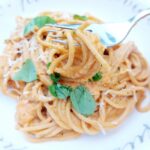
You can also eat well in the Valtellina, which, like almost every region in Italy, has typical regional dishes. The best known is the pizzoccheri, a tagliatelle-like pasta made not from regular flour but from buckwheat, which was widely cultivated here in the past because it thrives better than grain at high altitude.


In almost every restaurant they serve the local specialty Pizzoccheri alla moda di Teglio, prepared with 2 or 3 types of soft cheeses melted in butter, diced potatoes and Savoy cabbage. Heavy food, once the concentrate for poor farmers toiling on the mountain, but now also welcome as lunch in a hut (mountain restaurant) after a morning of suffering on the slopes.
The Valtellina is also famous for its typical cheeses, such as Casera, Scimudin, Magro Stelvio, Grasso Stelvio and the traditional aged cheese Bitto, that one presidio (protected product) is from Slow Food.
Buckwheat and cheese are also the ingredients of the Sciatt Valtellinesi, an appetizer of chunks of soft cheese deep-fried in buckwheat flour dough.

Another typical product is the bresaolaYou can now get this strong-tasting dried beef sausage throughout Italy, but in the Valtellina they also have a longer-matured and more refined-tasting version, the almost black-colored slinzega.

As in other Italian mountain areas, polenta is also eaten in Bormio, but there is also a local version, the taragna polenta, with a mixture of buckwheat and corn flour, butter and cheese. It is often served alongside Capriolo In Salmì, marinated deer or roe meat.

For dessert you can choose one apfelstrudel, a legacy of the Austrians who ruled here for a century and a half (until 1859).
10. Drink
When it comes to drinking, the Valtellina is best known for its red wines, of which the better varieties carry the predicate Valtellina Superiore and must be prepared for at least 90% from the indigenous nebbiolo grape. There is also the dry dessert wine Sforzato di Valtellino.
Bormio can also boast its own liqueur, the Amaro Braulio, which has been distilled and sold in the center on Via Roma since 1875. Bormio's bitter, made with Alpine herbs such as wormwood, yarrow, juniper and gentian root, is hardly known outside the region.


Production capacity has traditionally been limited and is increasing in Italy Amari manufactured, each with its own secret recipe, but often not very different: Amaro del Capo, Lucano, Averna, Montenegro, Ramazzotti, Meletti, Fernet, to name just a few.
But the intention is for that to change. In 2014, the descendants of the founder transferred the company to the Campari group, which invested heavily in it, including the construction of a gigantic new cellar 30 meters underground, which opened last year.
With the logistical and financial support of Campari, the world must now be conquered, so that it is quite possible that Braulio will soon also be available in Dutch liquor stores. Either way, it's a tasty after-meal drink and, at 21%, not too strong.







Comments