

 Bertine Jobse

Over the past few months, my newsfeed has been filled with reports of women murdered by their (ex-)partners. And as often happens when something is in the news, everyone had something to say: some say women provoke it themselves, others say there's not enough help from the authorities, and yet another advocates for a different way of raising "our boys." Wherever it comes from and whatever we have to do about it, femicide is a growing problem in the Netherlands. But what about Italy?
What is femicide?
According to the World Health Organization (WHO) and the European Institute for Gender Equality (OWNER) is it about femicide to murder a woman because of her gender. So, in femicide, a woman is murdered simply because she is a woman.
Unfortunately, there's no official, legally valid definition of the term yet, as European countries haven't reached a consensus on it. This is unfortunate, because only with a clear definition can the extent of femicide be truly mapped and laws can be created to combat it.
The terms femicide and feminicide are often used interchangeably, but they are not synonyms. Feminicide refers to any killing of a woman, while femicide is a crime motivated by gender. In most cases of femicide, the perpetrator is the woman's (ex-)partner.
The perpetrators' motives and the type of violence used vary, as do the backgrounds of the women killed. The women's origins, social class, and religion also differ.

Figures and facts
Because there is no legally valid definition of femicide yet, it is difficult to cite precise figures. A 2023 UN Women report on femicide stated that 140 women and girls worldwide were murdered by their partners or other family members every day. This means that every 10 minutes, a woman is deliberately killed somewhere in the world.
In the Netherlands, a woman is murdered every eight days on average, with the suspected perpetrator being a (former) partner in 6 out of 10 cases. In Italy, 113 women were murdered in 2024, of whom 99 were victims of domestic violence and 61 were murdered by their (former) partner.
Julia Tramontano
In Italy there have been government campaigns against it for years femicide, for example, through billboards along the road. Unfortunately, that didn't help for pregnant Giulia Tramontano. On Saturday, May 27, 2023, the 29-year-old disappeared without a trace, and a day later, her boyfriend, Alessandro Impagnatiello, filed a police report. It later turned out that Giulia was already dead by then, a victim of femicide. And that the perpetrator was her boyfriend.
Why did he kill her? Giulia had discovered he had another girlfriend. He promised Giulia he would leave her, but he didn't keep that promise. That's why she decided to leave him. On Saturday evening, May 27th, Alessandro stabbed Giulia to death with nearly 40 stab wounds, after which he tried to burn her. He then put her, with her seven-month-old child in her womb, in his car and dumped her. He reported the murder and sent her text messages asking where she was.
According to Alessandro, the situation caused him a great deal of stress, and he killed her for essentially no reason. During interrogation, he recounted the murder in detail, without showing any emotion. He even shared the gruesome detail that he was calmly eating a sandwich when Giulia lay on the floor, moaning, covered in stab wounds, and then stabbed her twice more.
Giulia Cecchettin
Another femicide case that caused a stir in Italy was that of 22-year-old student Giulia Cecchettin. On Saturday, November 11, 2023, Giulia was murdered by her ex-boyfriend, Filippo Turetta. Just like in Giulia Tramontano's case, Giulia Cecchettin had broken up with her boyfriend. He couldn't accept that Giulia had broken up with him, and that she was about to graduate while he had another year of study left.
When they went to the mall together to buy a graduation dress, she disappeared. She was later found in a canal, and it turned out he had stabbed her to death with over 70 stab wounds. After she died, he put her in a plastic bag and threw her in a canal. When Filippo was arrested, he immediately confessed to the murder, claiming it was an impulsive act. On Tuesday, December 3, 2024, Filippo was sentenced to life imprisonment.
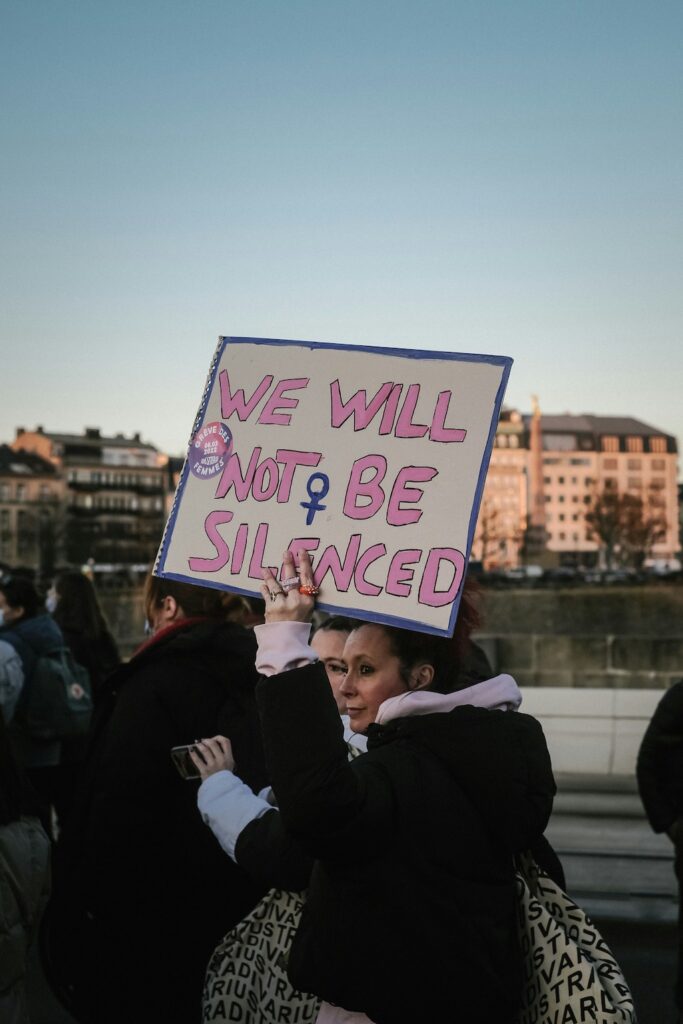
Giulia Cecchettin's case shook all of Italy. In several Italian cities, people took to the streets, calling for cultural change. This was partly due to the backgrounds of both Giulia and Filippo. Both came from middle-class backgrounds, had nearly completed demanding university studies, and had stable home lives.
Giulia's family was outraged. They believe Italy has a sexist culture that fosters violence against women. They established a foundation that raises money for educational programs to raise awareness of femicide.
Giulia's family wasn't the only one determined to put an end to femicide. In 2016, an Italian movement was founded that takes to the streets to protest against all forms of gender-based violence and the patriarchy in Italian society. The movement, called Not one less (not one less), is based on the Argentine movement Not one less, which was set up in 2025 after 14-year-old Chiara Paez was murdered by her boyfriend.
Not one less Initially, the movement protested primarily against the numerous murders of women in Italy, but now it has also focused on domestic violence, rape, sexual harassment, abortion, and the gender pay gap. After the murder of Giulia Cecchettin, the movement, comprising 500.000 Italians, held a demonstration at the Colosseum in Rome.
Femicide in politics
Femicide has been high on the political agenda in Italy for years. In 2013, an anti-femicide law was passed, requiring agencies to join forces when a woman reports to one of them. In practice, this law doesn't work very well, as women often don't report to agencies for fear of their (ex-)partner harming them.
A bill has also been passed that classifies femicide as a separate crime. Under this bill, a man who murders his (ex-)wife could receive a life sentence. Furthermore, plans are in place to impose harsher penalties for other forms of violence against women, such as assault, stalking, and revenge porn.
In addition to laws, the police and the judiciary have also been using the yellow card system for years. If a report is made that someone has used verbal and/or physical violence, the alleged perpetrator receives a yellow card. Initially, this is only an administrative measure.
Individuals with a yellow card can participate in a re-education program. If they successfully complete this program, their yellow card can be revoked. If the individual does not change their behavior, they may be subject to a sanction. The figures paint a positive picture: individuals who participated in a re-education program had fewer legal repercussions than those who did not.
It's questionable whether passing the bill will reduce the number of femicides in Italy. I doubt imposing harsher sentences would be truly effective. We need to ensure that a woman doesn't have to fear a man harming her at all.
So we must focus on education, training, and information. On the other hand, femicide has been on the political agenda in Italy for years, something the Netherlands and other countries could learn from.








Two days after this article, it happened again, another femicide in Italy, Pamela Genini