


 Aart Heering
Benvenuti a Gragnano Capitale Europea della Pasta. When you drive into this town, located between Naples and the Amalfi Coast, you immediately see what the main industry is here. The pasta van Gragnano is a household name, certainly in Italy but also beyond. Pasta has been made here since the Middle Ages and Gragnano still has no fewer than 45 factories (out of 29.000 inhabitants) where a total of 140 different types of pasta are made.
Pastificio dei Campic
This includes a few big brand names, such as Garofalo and Di Martino, but mostly small producers who focus on quality and exclusivity. Like the Pastificio dei Campic, where I was recently a guest at a tasting dinner, provided by a local and a Dutch top chef.
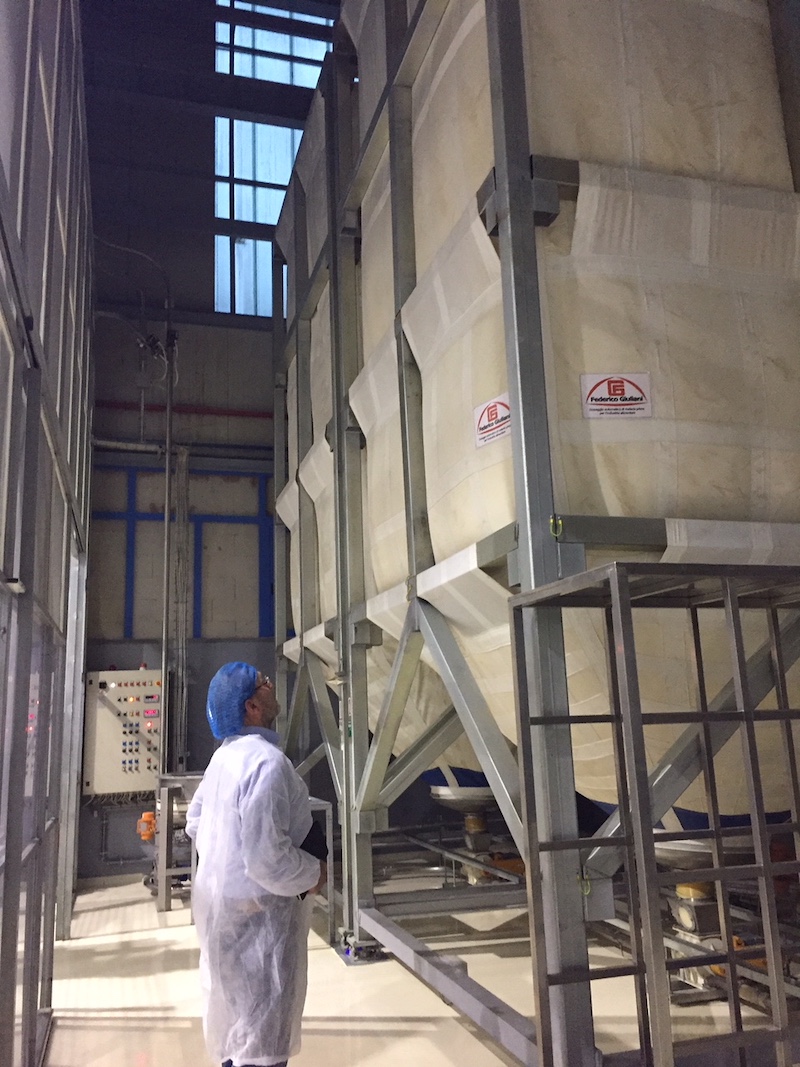
These kinds of invitations are usually accompanied by a company visit, which in this case was particularly instructive. At the Campi they produce 45 types of pasta, including some special ones such as double thick bucatini, extra long penne ziti en propellers (propellers).

The ingredients are always the same: durum wheat from Apulia and pure spring water from the mountains above Gragnano, the Monti Lattari, necessary for the origin guarantee mark Pasta di Gragnano IGT.
The mixture of flour and water is forced through pasta molds under a pressure of 120 atmospheres with tubes of bronze and not Teflon, as with less refined pastas. As a result, the surface remains somewhat rough, so that the sauce is retained better.

white pasta
The drying process is also important. Most factory paste is dried quickly under a high temperature, giving it a yellow, 'burnt' color. In the deluxe version, the product is placed in drying chambers for a longer period of time – depending on the type of pasta 24 to 72 hours – where the temperature is around 50 degrees Celsius.

As a result, the paste remains whiter – the difference is easy to see if you pay attention to it – and is easier and cook until pasta is to cook. That comes pretty close to the original artisanal process and in my opinion means that you no longer have to mess with a pasta machine at home and a kitchen full of slow-drying wisps and chunks.
The factory can do better. (At least where it concerns dry pasta. With fresh stuffed pasta like ravioli and tortellini, home crafts can lead to spectacular results.)
From theory to practice. Once a month, Giuseppe Di Martino, President of the Consorzio Pasta di Gragnano, invites 10 people to the Pastificio dei Campi to enjoy variations on the pasta theme, provided by Peppe Guida, chef of the Antica Osteria Nonna Rosa (one Michelin star ) in nearby Vico Equense and a cook from outside.
Bjorn Massop from Villa Ruimzicht

This time it was Bjorn Massop, the 31-year-old (but already very experienced) chef of Restaurant Villaruimzicht in Doetinchem. My dinner companions were also interesting: a Neapolitan gastronome, a cook from Veneto, the manageress of a restaurant in Reggio Emilia, a mother and daughter who run a coffee roaster in Naples, the owner of a wholesaler of special cheese, sausage and champagne with his wife , a Colombian food and wine journalist and organizer Di Martino.

The menu consisted of ten courses of as many differently prepared pasta types. Small portions, but still. The first two were provided by Bjorn who had brought his own ingredients. number 1 was Calamarata (a wide short pasta) with quinoa, Olde Remeker cheese from the Veluwe, fermented kohlrabi, stronger and grated brined and dried beef heart.


This was followed shells (shell-shaped pasta) with wild garlic, turnip greens, ox white, mini pieces of beef and ditto cornichons. Surprising, indeed, but both were very successful, as the Italian cook also agreed.

Back to basic
His Dutch colleague was given the opportunity to explain his cooking philosophy: regional products, herbs collected myself, no waste, creativity: 'I am completely done with all luxury products. We have to go back to the basics and the techniques of the past, but take the kitchen to a higher level.' That works in the country of Slow Food en kilometer zero and earned Bjorn a well-deserved round of applause.
Peppe Guida, once baptized by an American gourmet journalist as The Pasta Whisperer, then took over with (long ribbed) mafaldines primavera: with spring onions, fresh fava beans and peas, beetroot, pecorino fondue and chopped roasted onions.

Here are two more descriptions of the other corridors (in addition to a few photos): noodles with freshly cooked anchovies, sweet garlic, chopped parsley, chopped lemon zest and farina di accuughe, or dehydrated and floured bones and scales of the anchovy. (Guida doesn't throw anything away either.)
En Sardinian dumplings immediately mussel soup of almost raw Mediterranean mussels. Delicious! Interestingly, none of the ten courses involved tomato sauce and/or Parmesan. Because, as Peppe says: 'There is nothing wrong with tomatoes or grated cheese, as long as they are not used to disguise a lack of taste and inventiveness.' And that was certainly not necessary here.


A pleasant side effect was that, in addition to the pastas, different types of champagne also had to be inspected. Organizer Di Martino, himself a great lover of French sparkling wine, therefore gladly seized the opportunity to prove that the combination of pasta with champagne is very well possible.

Well, he succeeded, thanks in part to the 10 bottles that went over the table. For the record: Bourgeois Diaz; DeVille Carte Noir; Louis Lavalle; Pierre Gerbais; Pertois Moriset; Francis Boulard Les Murgiers; Marguet Chaman, Francis Boulard Les Rachais; André Beaufort Grand Cru 2000.
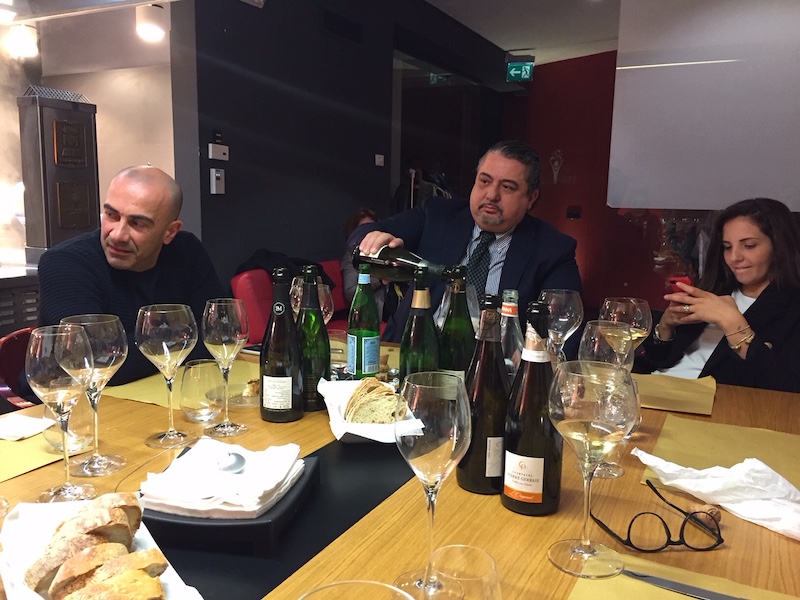
Unfortunately, I can't remember the name of the latter for some reason. Anyway, a memorable evening!
Photos: Aart Heering







Comments