

 Willemijn Lindeboom
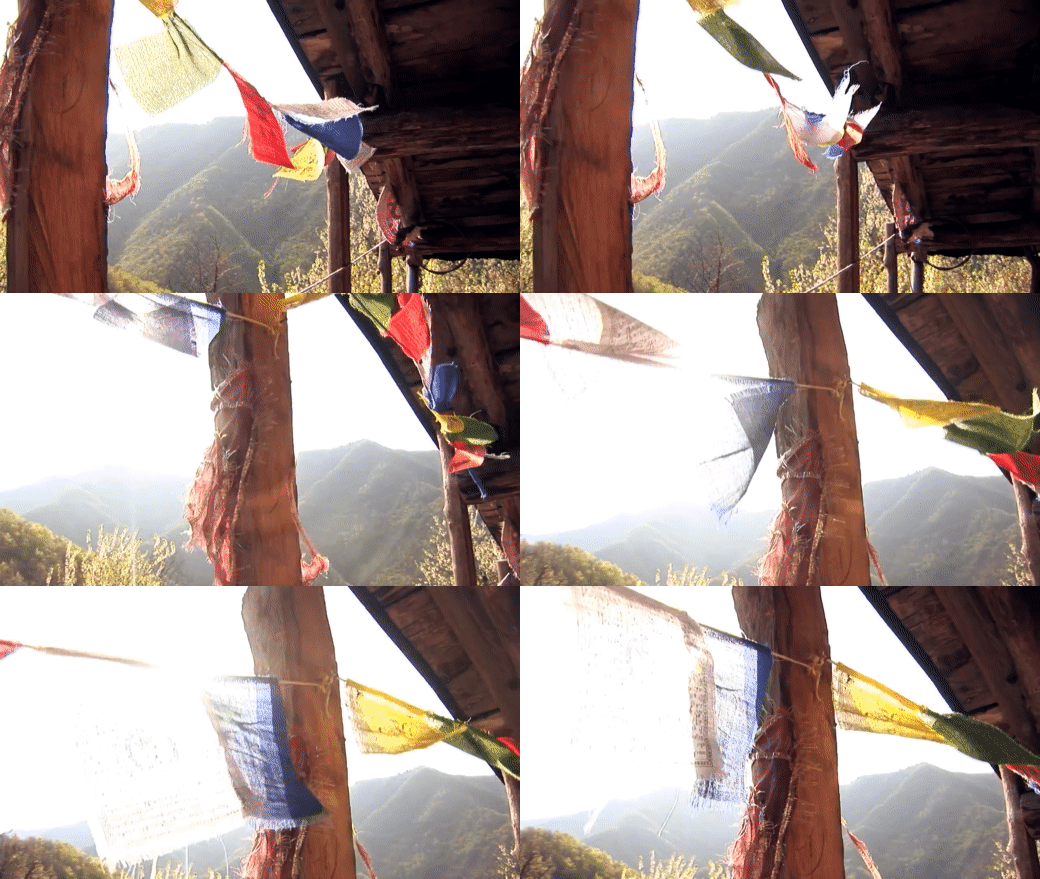
From afar a dog barked in the desolate landscape. The barking came from the direction we were walking, following a wide but rocky path. After a while we came to a dilapidated house where the dog went crazy in the hope that his owner would finally come out. That happened. A small friendly-looking woman came out barefoot under a huge clump of gray hair.
In the 70s, a group of people settled in the mountains above Pistoia. They had studied a lot and thought a lot about life during their college days and decided that they didn't want to be part of this consumer society. At that spot in the mountains a kind of commune arose that slowly expanded. There were many empty old houses that were occupied by this group, renovated and eventually rented or even bought if possible.
'Gli Elfi'
This particular group of 'alternatives' was given the name by the locals The Elves, the Elves. They liked the name itself, too, though they understood it wasn't meant to be flattering. The name stuck and the group has become a household name
Despite the skepticism of the locals, the community is still there after some 50 years. Even some of its original inhabitants are still there. Everyone is welcome in principle, as long as you want to join in the simple life they have and if you stick to the most important principle: living with total respect for nature.
Now that sounds very nice and easy, respecting nature, especially from our comfortable homes. If you live in the mountains without a car, often without electricity (they do have some solar panels these days) and without heating, then nature comes really close. Incidentally, it is a beautiful area if you like hiking or mountain biking, but that aside.
The Apennines between Modena, Bologna and Pistoia have always been poor and the original inhabitants still leave. In the past people mainly lived on chestnuts, but at the beginning of the last century a disease came that destroyed the chestnut trees and then there was too little to live on.
Survive
In this area full of remote empty houses that are slowly falling into disrepair, you regularly encounter someone who has occupied the house and survives. So is the woman with the gray hair. We chatted with her for a while, befriending the dog in the meantime. She said that she had been living in the house for a year and had renovated the roof. Before her there was another woman just with young daughter. She couldn't understand how the two of them could survive with that terribly bad roof. She had an almost grown daughter who also came to greet her and then disappeared into the vegetable garden next to the house.
We asked how she got into this house. After all, you just have to know where all those houses are and which of them can be inhabited, without hassle with the owner. She said that there is a whole network of people like her living in the Apennines. Everyone helps each other and they are like one family. If someone leaves somewhere, it goes around and someone else can move in. She had lived for years in Tuscany, east of Pisa, in a deserted village.
This woman was looking for a slightly better house, because the roof was still very bad. She would also prefer to live more remote. At this spot she occasionally heard the road (many miles away). By the way, her house cannot be reached by car, only by tractor or on foot.
After this meeting, we talked to some of the original inhabitants that we encountered along the way. Real farmers who have been living in the mountains for generations and who don't like all those alternative people at all. They crave good TV reception, tarmac roads, running water from a real water pipe and other comforts.
These 'more conservative' farmers obviously think that these new 'alternatives' all have problems. According to them, they either escaped prison or were addicted to all kinds of drugs. "They don't want to work and dress strangely." It doesn't butter at all and that makes sense. Two worlds that are completely opposite.
So all kinds of things live in the Apennines Elfi. Not all of these people come from the original commune above Pistoia, but a few have been there to learn how to survive in nature, without resources.
Umbria
In Umbria I also knew a number of people who had moved into abandoned houses and a community had developed there too. These people often saved the houses from decay and sometimes they lived there for 20 years or more, when at a certain point the houses regained value because more and more (rich) foreigners have a second home in the 'green heart of Italy'. wanted to buy and so they had to leave their homes. That was at the beginning of this century.
Once every few weeks there were small markets in people's homes where everyone was welcome. This was their way of making some money, although a number of people preferred to barter. They made everything. From vegetables to socks and sweaters or jewelry and bags, hats, cheese ... you name it!
High in the mountains above Fanano we came across a real hermit a few years ago. She had moved into a shabby house just next to a small stream. The cottage was really high in the mountains and was only accessible on foot. We saw smoke curling from the roof and some dogs barking as we passed.
At the local tourist office she was described in a booklet that explained a particular walk and everyone we encountered in that area talked about her. Most people were afraid to take the path past her cottage. We knew nothing about it and tried to follow the walk, but got hopelessly lost just below the house.
From the village where I live in Tuscany I see the Apennines. When winter set in that year and I saw the snow on the mountains, I wondered for a long time how on earth this hermit could survive on her own (with her dogs) at that altitude. She was a topic of conversation at our house for a long time.
Anyway, in Italy there is a community that almost no one knows about. They live everywhere and nowhere and live in and with nature, preserve old houses from total disrepair and help each other as much as possible.
Quite different from the image that many Italians have, smartly dressed with the latest brands of sunglasses and all show and exterior. That 'modern Italian' is one extreme and the people I'm talking about are the other extreme.








Comments