

 Lottie Lomme

Enzo Avitabile is a well-known singer from Naples. His language contains many Christian-humanistic concepts such as compassion, mercy, the Kingdom of God and standing up for the weak. With his songs he casts these concepts in the form of a political struggle. Italian culture, but also other places in the world, are imbued with this Christian language and that is perhaps one of the reasons that the songs also resonate so much outside Naples.
Saxophonist, singer, master of ceremonies of intimate performances of almost sacred music, performer, writer and composer of popular, folk and classical music. The subject of a documentary made by Oscar winner Jonathan Demme and winner of several awards himself. We're talking about Enzo Avitabile.
A local phenomenon Napels and a separate category. His language is Neapolitan. Let's tell you a bit about his career.
Civil battle
Avitabile refuses to sing in Italian because he can express himself better in his own language, Neapolitan. His songs are an exciting invitation to rebellion and a call to one's own conscience. Recurring themes for him are the willingness to act, the call to action and the civil strife.
His song Mane e Mane is the subject of a UNICEF benefit project, set up to raise money for education for children in Benin.
His songs are based on repetition and have a rhythmic, almost sacred character.
Universal music
Avitabile worked with Hugh Masekela, Amina, Baba Sissoko, Khaled, all names of world fame. Each singer brings his own story and qualities. Together they build a bridge between the different cultures and take a stand against violence.
Africa and Naples, southern Italy and Palestine become one in his songs. These southern countries are all marked by poverty and tragedy and thus form a rewarding subject.
The song Tutt' egual song' 'e criature is a compassionate song about children in conflict areas. So that children can live their own dimension, precisely in those places where there is no place to be a child. The song expresses a universal theme: the rights of the child.
Motherland
Who inspired Avitabile? He calls himself Sant'Alfonso. 'The soil of Sant'Alfonso is still the motherland of all the slain of the city, the people who are unseen and disinherited. Sant'Alfonso is still the shining light for the latter.'
This is how Avitabile describes Sant'Alfonso: church scholar, writer, architect, lawyer, poet, missionary, writer and composer. The spiritual songs are due to him.
Enzo Avitabile and Sant'Alfonso share their homeland of Marianella, a neighborhood in the north of Naples where the soil was once cultivated. Today the area is considered 'difficult' and is part of the Metropolitan City of Naples.
The countryside of Scampia, once the place of walks, thoughts and prayers, is today a place of violence and marginalization.

Avitabile also has The plague written. A prayer in the form of a poem addressed to Saint Mary to restore health to the soil of Scampia and to free it from the plague of the Camorra.
Soundtrack
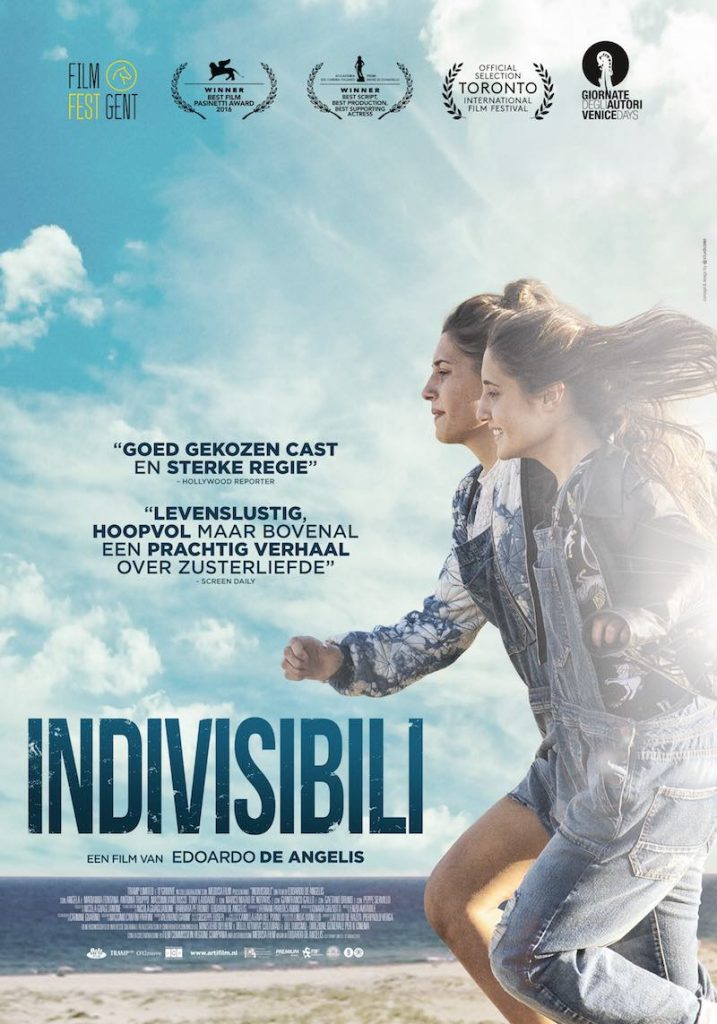
The film Indivisible by Edoardo De Angelis is accompanied by the classic songs of Avitabile. The film received two David di Donatello awards, for the music and for the song by Avitabile Have mercy on us.
Enzo Avitabile and San Remo
After 18 albums and 35 years of career, Enzo Avitabile participated for the first time in 2018 at the festival of Sanremo. Participation in this is of great symbolic value. The festival has always been the temple of pop music, but that time it opened its doors to the 'folk' music of Avitabile.
NB This article is adapted from Vincenzo Rossini's article on unadimille.it and is in Italian part of the new A2 training of This is Italian (to follow soon!).







Comments