

 Lottie Lomme
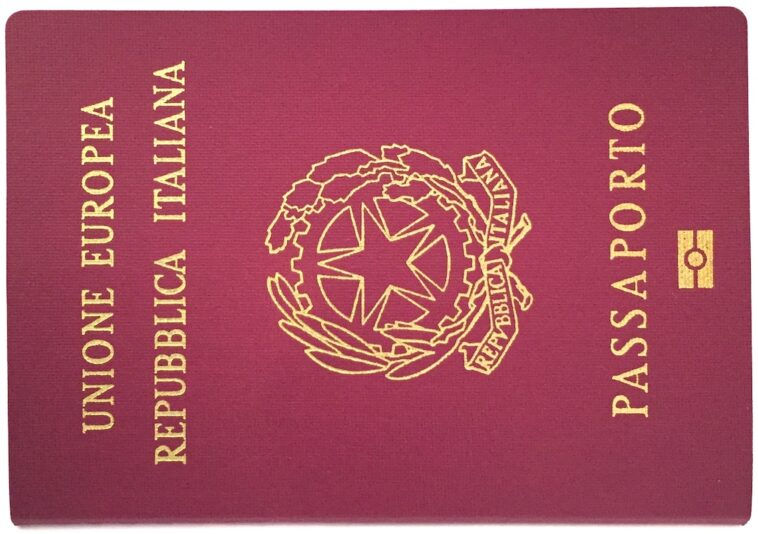
By learning another language you also get to know another culture. The same words can mean different things in another language. Have a different load. And with that, with your Dutch or Belgian frame of reference, you are also someone else in Italy than you are in the Netherlands or Belgium.
It is not for nothing that cultural mediators help the Dutch with doing business in Italy. You see it go wrong again and again in the still popular TV program I leave. The clichés often surface: in Italy you have to know 'men' to get something done, the terrible bureaucracy, the meddling mothers-in-law, the good food or the sense of beauty.
embarrassing mistakes
Many students of the Italian language have to get used to being able to have an Italian version of themselves as well. They still feel uncomfortable speaking Italian and are afraid of embarrassing mistakes. Mistakes that I also made and which I think are unavoidable.
For example, I switched 'fico' for 'figo' at the greengrocer's and asked him for a nice guy instead of a fig. In another conversation, I became disoriented when I thought my interlocutors were talking about a blind person (blind) and I was not thinking at all about someone with Czech nationality (ceco).
People understand this of course and understand this. It's worse for you than it is for them. Also read: I'm learning Italian, but I don't dare to speak it.
Cultural differences
Anyone who learns a language and goes abroad with it has to deal with cultural differences. Sometimes this is even accompanied by culture shock. Friction and uncertainty about norms and values. Another culture does raise questions. Why do people do this like this? Do I have to do this too? How annoying are they doing this here! Or: I feel like a fish in water here!
I used to travel quite a lot. In Brazil I felt European, in Amsterdam an Amsterdam (which I am not at all), in Italy a Dutch, in Maastricht an Italian, in Utrecht a lost soul, displaced in my parents' village and in my own town of Schoonhoven. a newcomer. Being an Italian I feel mostly at home these days, I don't often travel to Italy. What's up with that?
The people who feel bilingual or have two passports are often people who feel displaced and are not really at home in both cultures.
lingua franca
When I studied history I took a course 'American Cultural Influence', which also dealt with the great melting pot that America is. That everyone can find a home and then people don't look at your origin, your accent or the food in your lunch box.
When you speak English you don't feel that people judge you on your language skills or your origin. Anyone can speak English and does so shamelessly incorrectly. In English, people worry less about mistakes and you are less corrected and the annoyance at virgin about your language errors is a lot less big.
English is a French language. Italy is in any case not America or London and Italian is not French language. (Although there are also people in Milan who like their latte at Starbucks with soy milk and their coffee single origin.)
Who the shoe fits…
For a long time, language was an instrument rather than an end in itself. I wanted to exchange ideas with other people and get to know their culture. Gradually I came to understand that that other culture is to a large extent in the language. You can speak a different language like you put on a different jacket, but sometimes you find that that jacket doesn't quite fit. That doesn't necessarily have to be your fault.
People differ in their adaptability. Some are so adaptable that their character changes a bit if they speak in another language or are in another country. I myself am sensitive to other people's norms and values, but also often unwilling to adapt. After all, integration also means adopting these and then I turn out to be quite conservative. I therefore have great admiration for my naturalized friends who have left their homeland and mother tongue behind and have become successful in the Netherlands.
I found it very annoying when Italians said something about the form, about my lack of language knowledge. It is nicer when people correct you grammatically in a specific sentence than when they say: 'you are really incomprehensible, I don't understand what you are saying'. You can't do anything with that and it mainly shows impatience and unwillingness on the part of your conversation partner. So speak Dutch with foreigners who are here and do not switch to English. You really help them with that.
East West
So I have traveled quite a lot, but these days I prefer to be at home and I like a simple and quiet life. When I want to think, I like to read a book or keep myself reluctantly occupied with my insecurities. I see the same faces in my town all the time, very soothing. I can talk to Syrian fellow citizens who are learning Dutch if I want to come into contact with another culture. If I want to see another opinion, all I have to do is open my laptop. I save a lot on my ecological footprint.
You may become an Italian mainly by being different from another Italian and by not being the same as another foreigner. My advice? Be yourself and take time for other people. Use the motto: 'live and let live'. Don't judge too much. Those are my personal golden tips to become a real Italian.
Want to learn more about culture?
For the course 'intercultural communication' that I followed at the Hogeschool voor Vertalen in Utrecht, I wrote a paper about how feminism in Italy differs from that in the Netherlands.
I loved the interview with Giulia Blasic and an interpreter afternoon with Anna Utopia Giordano. For This is Italy I wrote a blog about why italians always seem to argue.
In Italian Course for Beginners that I developed for This is Italy, I also pay extensive attention to Italian culture. Because you cannot learn the Italian language without learning more about the culture.








Comments