

 Lottie Lomme
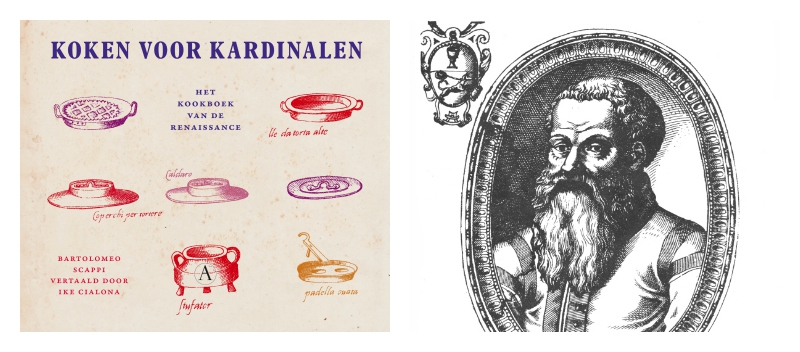
Historic cooking with Italian cuisine is now possible with Bartolomeo Scappi's book: Cooking for Cardinals, the cookbook of the renaissance. Scappi lived in the 16th century and cooked for cardinals. His cookbook in old Italian has recently been cleverly translated into Dutch.
Italian cuisine goes way back
There are fun stories on the internet from culinary historians who dive into the archives to find a recipe, write the story of the chef and describe the historical context. The dishes often feel a bit strange. And that goes well beyond the 'out of fashion' of the 80s shrimp cocktail.
You notice that Italian cuisine goes way back. Ingredients such as lard, bottarga, chestnut flour and pine nuts are still widely used in Italian cooking. Italian recipes dating back to Scappi's book (and perhaps beyond) include zabaglione, tortellini, and gnocchi.

Weird ingredients
Preparing a dish from the 16th century is difficult. You need weird ingredients and the end result is often not quite you because of the excess of sugar or fat. Our taste buds are also often a bit more refined than chewing up a pig's snout would allow. Where we go to the butcher, a cook also had to use his time to slaughter the animals. Preservation was done with the help of herbs, vinegar and salt and not with the help of the freezer.
Animal by animal finished
The 'recipes' in Cooking for Cardinals are described in a somewhat casual manner. The animals are treated one by one, and then Scappi describes how to prepare the different parts or entrails of that animal. They are finished animal by animal. There are also animals such as a 'hamel' and a 'capon' or a 'blackbird'. Yes, that little bird we like so much singing in our garden.
The chapter on meat ends with all kinds of sauces that actually taste quite tasty and that were served in huge sauce dishes that we know from grandmother's time, but that are now unused in second-hand shops or end up at Art and Kitsch.

Corpulent Cardinals
Scappi wrote down his recipes for future generations. The second chapter is devoted to the nature and usefulness of fish. You would almost think that it is not about recipes at all, or about cooking. Personally, I especially find the pies to appeal to the imagination. He would even have wanted to make a pie for the Pope from which live birds would fly!
The cardinals who served Scappi must have been corpulent. An awful lot of courses, actually all huge buffets. The difference in lifestyle from an ascetic monk could not have been greater than at the table. It is therefore not surprising that in the Renaissance there was also criticism of the lifestyle of the clergy, which became visible at the table.
Cooking for Cardinals – The Cookbook of the Renaissance
by: Bartelomeo Scappi
translator: Ike Cialona
424 pages
Release date: February 25, 2016
Price: € 35, -
Athens, 2015
ISBN: 9789025300708










Comments