

 Aart Heering
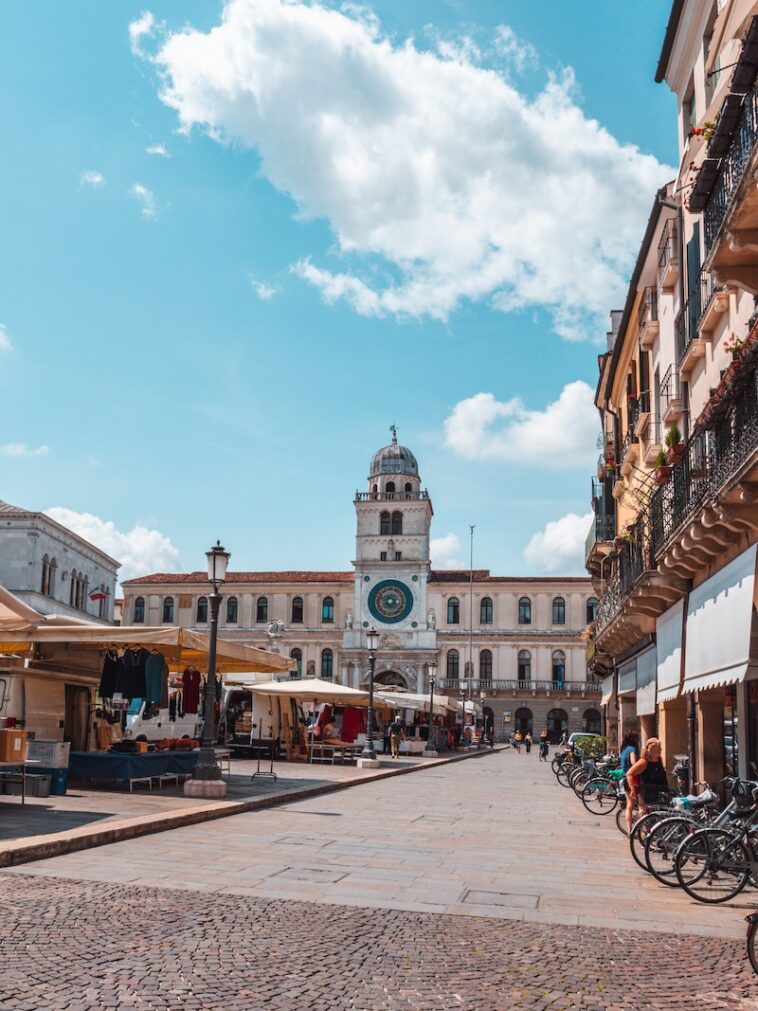
Padua (Padova in Italian) is much less known than nearby Venice. Yet Padua is also a fascinating city with a rich past, beautiful monuments, a pleasant city center and Saint Anthony as a top attraction for pilgrims. All this without the never-ending flow of tourists in the Doge's City, and cheaper too. Padua is therefore also a suitable base for a day in Venice, rather than the other way around. Then take one, or better yet two, days for Padua itself because the city is definitely worth it.
In the Middle Ages Padua was known as Urbs picta, the painted city, and it is still known for its beautiful murals. Most of them date from the 14e in 15ecentury, when Padua, as an independent city-state, ruled the mainland of the current Veneto region.
(The city was already centuries old at the time, but little of its earliest history has survived after destruction by Lombards, Hungarians and a major city fire in 1147.)

In 1405 Padua was overrun by Venice, which ruled until 1795. The Venetians symbolized their power by painting paintings and reliefs throughout the city Lion of San Marco to apply. Padua, no longer an important political center, was occupied by Napoleon in 1797 and 18 years later incorporated with the rest of Veneto into Austria, joining the newly formed Kingdom of Italy in 1866.
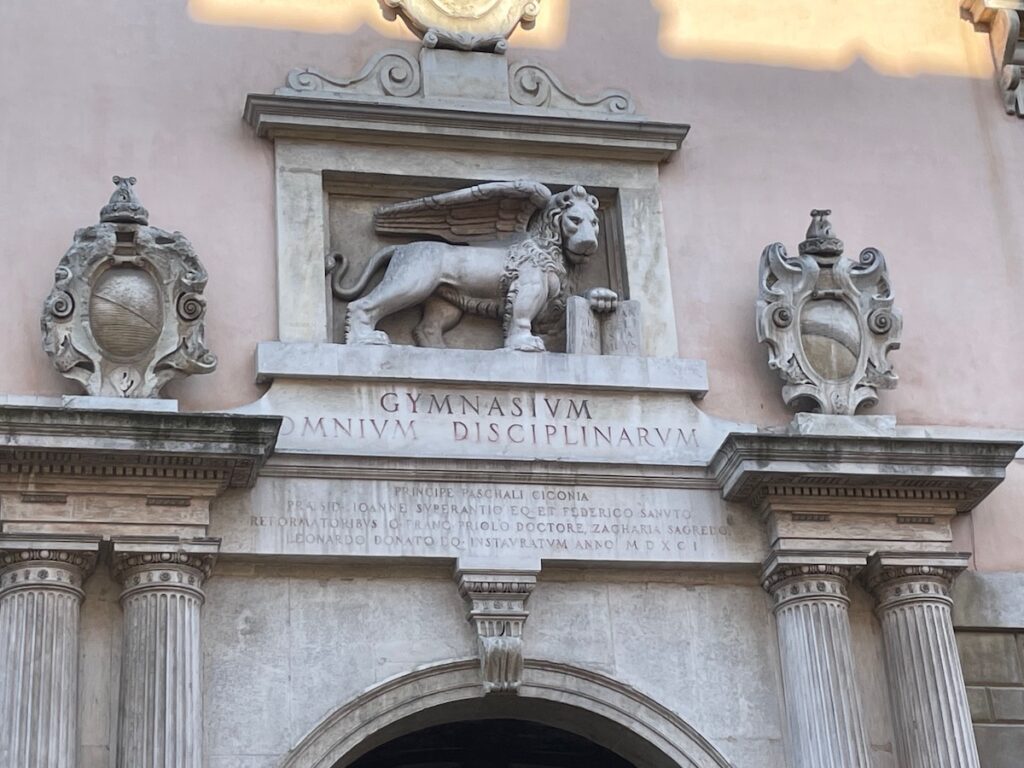
Now Padua is a lively city with more than 200.000 inhabitants, which is best known internationally for its university, founded in 1222. In the city you will find a few strange looking columns tombs of learned gentlemen from the early days and if you wish you can also visit the old university building, Palazzo del Bo.


Below are further suggestions for an extensive city walk with 10 things you should definitely see.

1. The Chapel of the Scrovegni
If you walk from the train station to the center, after crossing the Bacchiglione river, you will arrive at one of the most beautiful gems of Padua. The Capella degli Scrovegni is located in the Giardini dell'Arena, a park where the remains of a Roman theater and the medieval city wall can still be seen.
The walls of the chapel, commissioned by banker Enrico Scrovegni, were completely covered in 1303-05 with perfectly preserved frescoes by the Florentine master Giotto, which offer an overwhelming sight with their beautiful colors.
On either side the lives of Jesus and Mary are depicted in dozens of episodes, and above the altar we see a ruling Christ with scenes of the Last Judgment, including a man eating real devil, which is very similar to that of the Battistero (baptismal font) of Florence.

2. Caffe Pedrocchi
After crossing Piazza Garibaldi you arrive at Piazzetta Pedrocchi near the coffee house of the same name. Built in 1831, this neoclassical structure became famous as the informal headquarters of rebellious students who attempted to overthrow the Austrian governor, Marshal Josef, in the revolutionary year of 1848. Radetzky (indeed that of the march), to drive away.


It didn't work, the uprising was crushed and the impatient nationalists had to wait another 18 years, but the name of Caffè Pedrocchi has since been carved into the Italian collective memory.
It is still a place to have coffee or something else, with a gothic-looking section where ladies could once drink tea, but it is also a museum of the Risorgimento, the struggle for Italian unification.
3. Palazzo della Ragione
Then we arrive at the Palazzo della Ragione, the true heart of the city. The Palace of Reason dates from 1218 and was raised a century later and expanded on both sides with colonnades.


It was for centuries center of Padua's judiciary and also one of the largest covered spaces in Europe: 81 meters long, 27 meters wide and 27 meters high. The walls were initially also painted by Giotto, commissioned by the city council, but his frescoes were lost in a fire in 1420, after which local artists repainted them.
The result is an immense hall with... more than 300 paintings with astrological representations, scenes from everyday life, real animals and fantasy creatures.


In the hall are a wooden horse made in 1466 for a knight's festival and a basalt chair, known as the Pietra del Vituperio, the Stone of Shame, which in the 14e century debtors and defaulters were exposed.

And high from the ceiling, a modern response to the song - made famous by Umberto Eco - sways gently back and forth. Foucault's pendulum. The Palazzo della Ragione is shown on either side flanked by Piazza dei Frutti e Piazza delle Erbe, spacious squares where markets, food and drinks have been held since the Middle Ages, while the colonnades next to the Palazzo are the domain of small shopkeepers.

4. The Dom
Via the Piazza dei Signori and the rustic Piazza Capitaniato you reach Piazza Duomo, the Cathedral Square. If you want, you can visit a beautiful medieval church nearby, on the Piazza San Niccolò, that has been dedicated to San Niccolò di Mira, or our Sinterklaas.

The cathedral itself is not that bad. He was in his 16th yeare century, thoroughly renovated on the instructions of Michelangelo and radiates a Counter-Reformation severity that has nothing of the cozy medieval paintings.

The ultra-modern altar is decorated with statues of the patron saints of Padua: Prosdocimus, its first bishop; Justina; Gregory the Great and Anthony. There are no fewer than 4 and Padua is still a good Catholic city.
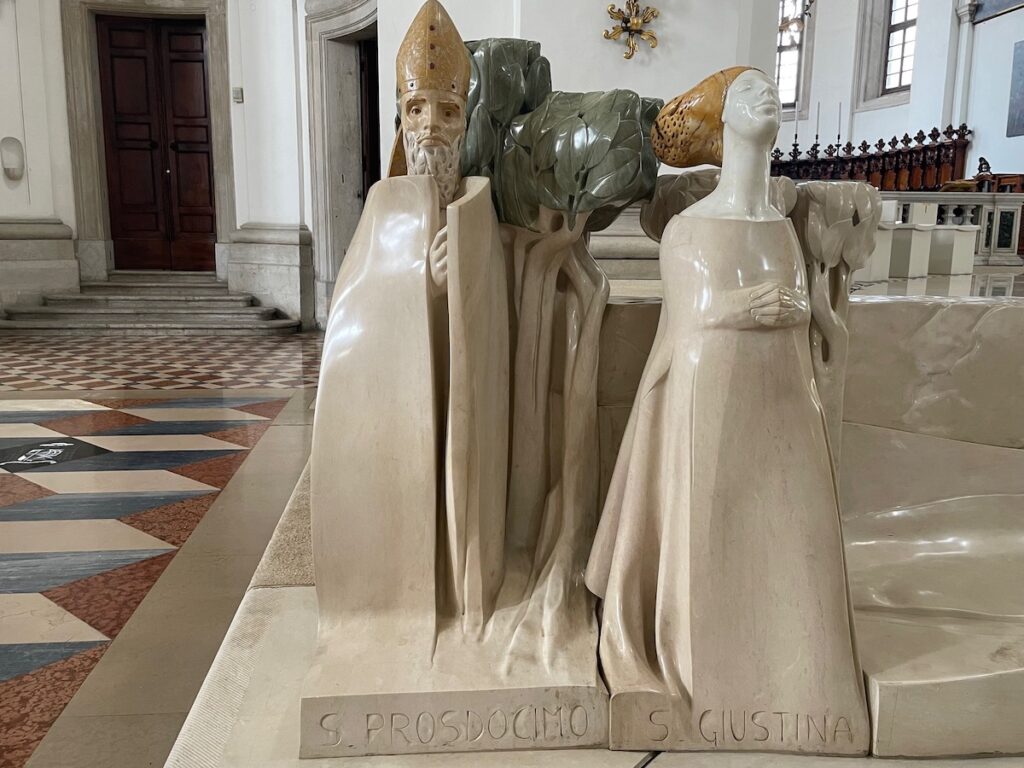

It's more interesting Baptistery (Baptismal font) next to the Cathedral. This is in the 14e century, completely filled with frescoes with themes such as paradise, the Fall, Christ the King, the creation of Eve and the apocalypse, but also with scenes from daily life in the 14e century and portraits of prominent citizens.
5. Porches and bicycles
Walking through Padua is largely done under arcade: arcades lined with columns between the houses and the road, where it is pleasantly cool and dry, even in rain and bright sunshine. Bologna is considered the city of portici par excellence, but the residents of Padua proudly argue that their city is also a total of 25 kilometers has.
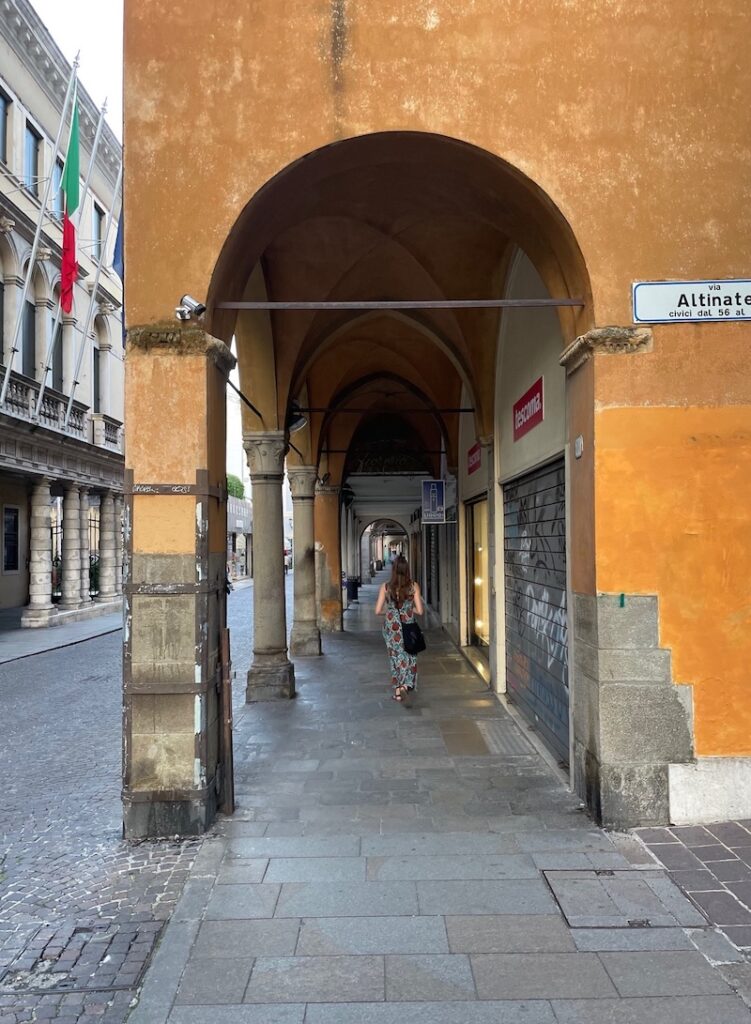
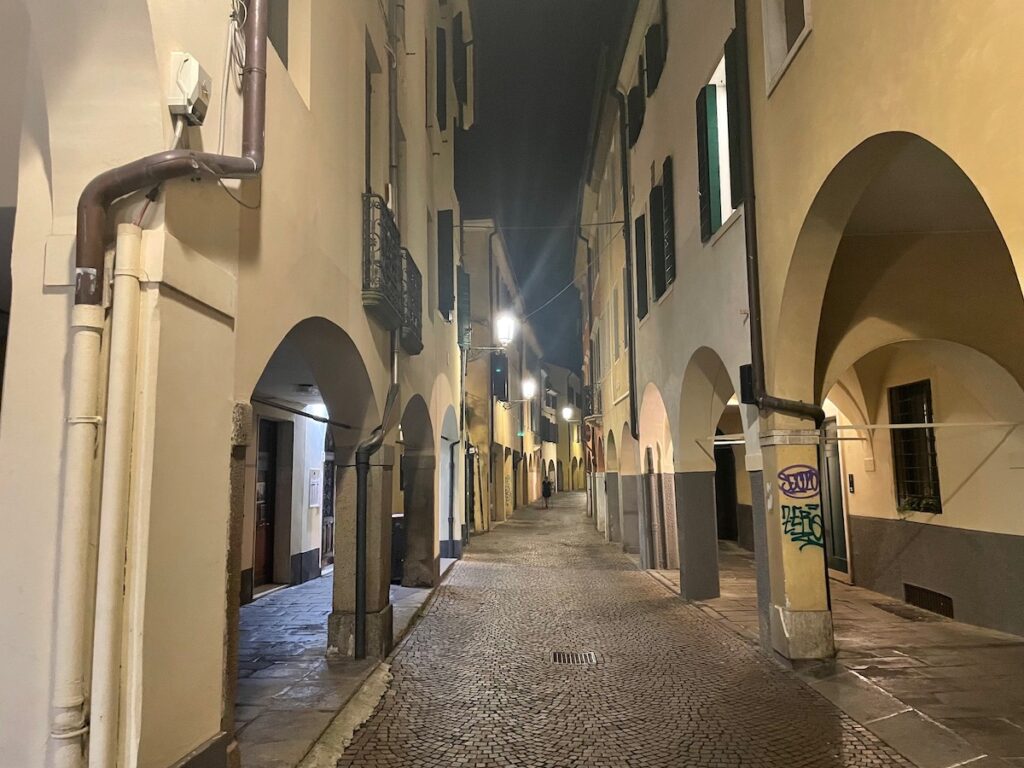

Strolling around more or less aimlessly is a pleasure in Padua, where... car-free center has been made. There is room for bicycles and that is what Padua makes, especially compared to most Italian cities. Until a real one bicycle city.

(If you come by car, it is advisable to park outside the center. That should not be a problem, because the center is small and you can get there quickly enough by bus, tram or on foot.)
6. The ghetto
Wandering through the small streets around the Cathedral and the Palazzo, you will end up in the Via San Martino e Solferino in the former ghetto, where the 17e in 18e century the Jews of Padua were forced to live.
At first glance there is little to indicate this. The 5 gates that closed off access to the ghetto at night were demolished more than 2 centuries ago and of the 4 synagogues that the city once had, only one remains. (The largest synagogue was set on fire by fascists in December 1943.)
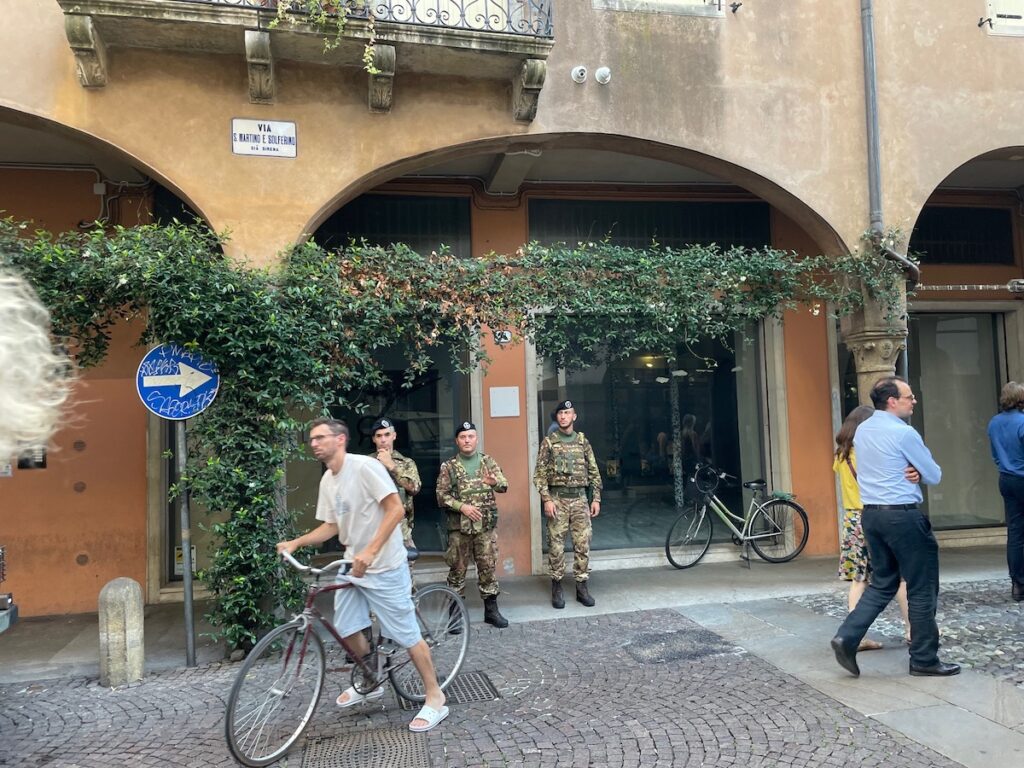
Yet there are 2 clear indications: Keep it on the street armed soldiers the guard and the houses here are 1 or 2 floors higher than elsewhere in the old city, just like in the ghetto of Venice. That was necessary, because the Jewish community at that time had to proliferate with the limited space allocated to it by the city council.

7. Saint Anthony of Padua
Like a Paduan speaks about The Saint, then that can only be Saint Anthony. The Franciscan from Portugal, who preached and performed miracles in France and northern Italy, spent his last years in Padua.
He was canonized just a year after his death in 1231 and has been the saint ever since patron saint of Padua and Portugal, and he is invoked by the poor and by people who have lost something. ('H. Anthony, help me find it!')
Construction of the building named after him also started almost immediately basilica which was completed almost a century later. The result was one of the largest churches in the world, built in a mixture of Romanesque and Gothic style, with a handful of Moorish-looking domes.


At the end of the road that leads from the center to the basilica, which is of course called Via del Santo, you are greeted by a sense of holiness. In Piazza del Santo, sellers of religious trinkets and hotels with names like Dal Santo (At the Saint) and Riposo del Pellegrino (Pilgrim's Resting Place) compete for the favors of pilgrims and tourists.

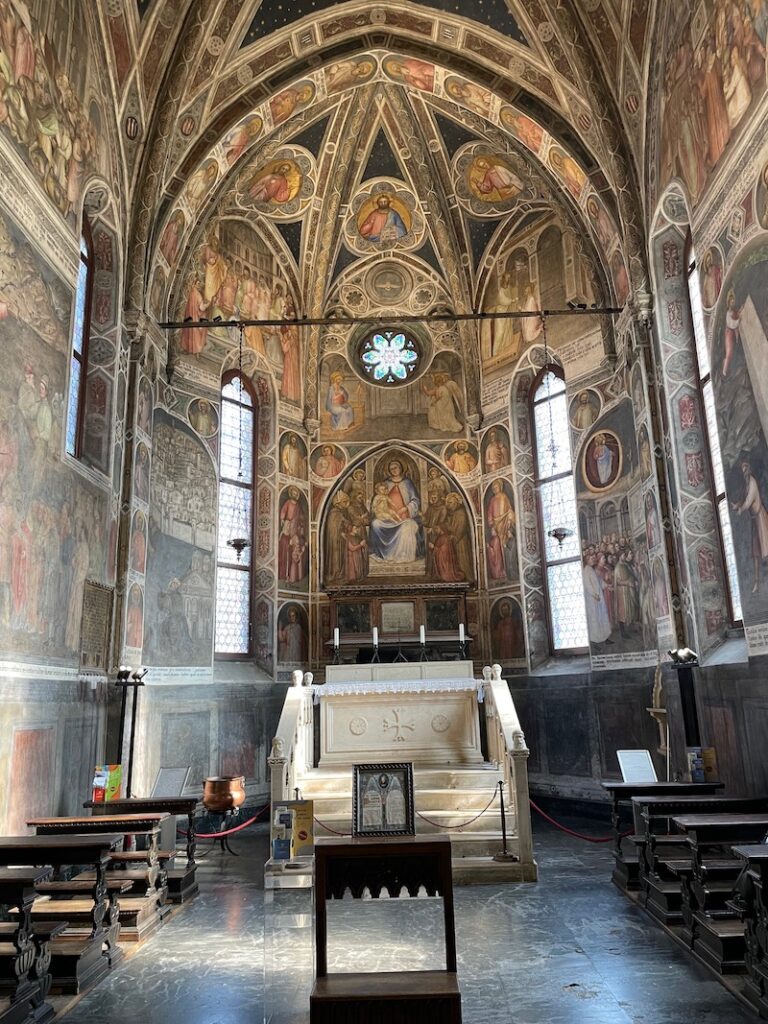

The chance that they will succeed is high, because the basilica attracts such people every year 6,5 million visitors. The city of Padua, which with 1,2 million guests, cannot compete with that.


The basilica itself is overwhelmingly decorated with frescoes, reliefs and sculptures from the 14e century to the present. Highlights include the Chapel of the Black Madonna, with early work by Giotto, the Chapel of the Relics, where the saint's black habit is kept, and the tomb of Anthony, before which many visitors pause silently or murmuring softly.


8. Goethe's palm
From the sacred atmosphere in the basilica, a few steps away you are completely back on earth, in the Botanical Garden di Padova. The oldest university botanical garden in the world, which has been on the UNESCO World Heritage List since 1997, was founded in 1545 and has retained the character of an old-style hortus, divided into sections such as tropical, Mediterranean, indigenous, hill and so on.
But because it has always remained in the same place, there are now centuries-old palms, trees and shrubs, such as one giant plane tree of 1635 and a 18ecentury ginkgo biloba. After a load of culture, you can take a refreshing walk through a primeval forest in the middle of the city.
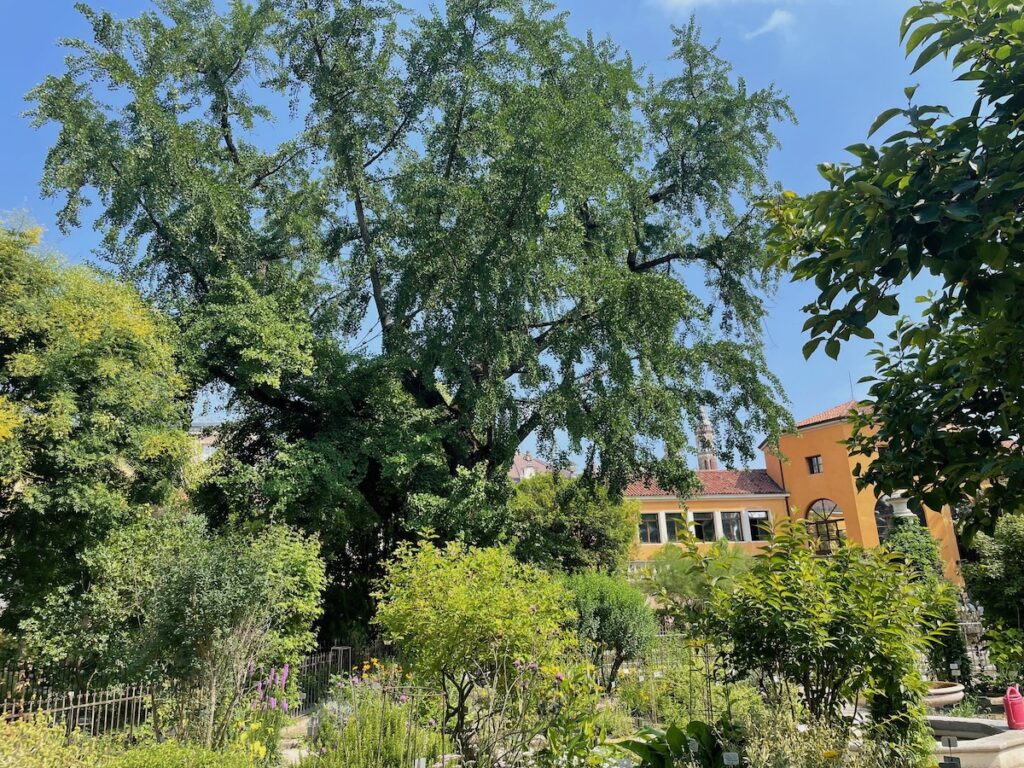
By far the most famous plant is a dwarf palm that has been here since 1585. Normally this species, the only native European palm (chamaerops humilis), painfully slow and does not grow higher than 2 or 3 meters, but it has been growing steadily for more than 4 centuries and is now an 11 meter high giant dwarf palm.
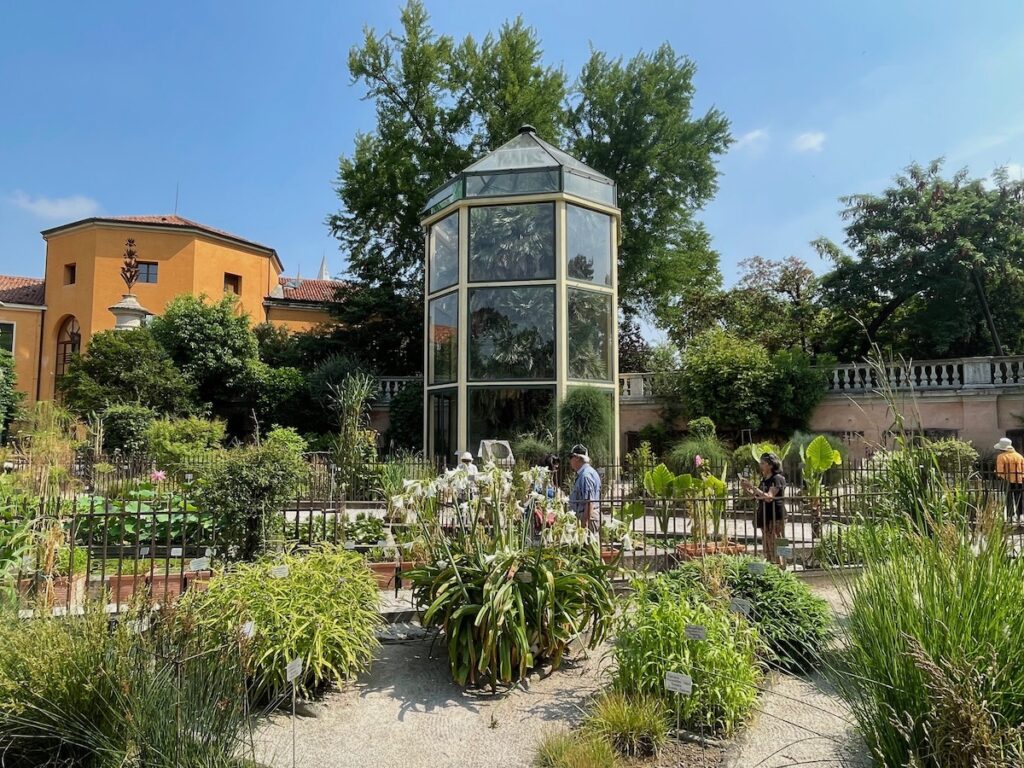
He had already made a lot of progress by then Johann Wolfgang Goethe visited the Orto in 1786. The German poet was so impressed that once at home he used the palm as the basis for a treatise on the metamorphosis of plants. Since then, 'Goethe's palm', around which a special greenhouse has now been built, has been the star of the Hortus.
9. Prato della Valle
A short walk then takes you to the Prato della Valle, one at the end of the 18e century-built immense square – 88.620 square meters – with an artificial island in the middle.
The market is held here on Saturdays, during the day this is the site of walkers, rollerbladers and sun worshipers, in the evening it is a meeting point for young people and concerts and events are regularly held.


The furnishings and decoration are still those of 2 centuries ago, with modern obelisks and on either side of the canal around the island images of 78 famous citizens from Padua. Those are all men and that is why 2 years ago an action group submitted a request to include a few women.
That didn't work. After two years of debate, the judge ruled in June this year superintendent, the authority responsible for cultural heritage, that 'the history of the site must be respected'. And there was no room for women in that.
10. Taverna Nane della Giulia
There is plenty to eat and drink in Padua. Everywhere in the center you will find cafes with terraces where residents and tourists enjoy themselves appetizer, preferably one Spritz with Aperol or Campari, Prosecco, sparkling water and ice.
The cuisine is Northern Italian, with lots of fish and shellfish, but also with meat or vegetarian if desired. The local pasta are the bigoli, extra thick freshly made spaghetti served in Venice as bigoli in sauce, with a chunky anchovy-based sauce.
You can get that in Padua too, but the typical dish is here bigoli al ragù di anatra, or with a sauce based on duck and guinea fowl. You will be served this in the tavern Nane Della Giulia (Via Santa Sofia 1), probably the most authentic eatery from Padua.


The decor is chaotic, the atmosphere cozy, the audience local, the food delicious, and the prices reasonable. A nice bonus is that the owner is a Dutchman, Arjo den Hertog, who has been working in the local catering industry for more than 30 years and likes to have a chat with rarely passing Dutch people.
There are also others on the menu traditional dishes as boiled beef with green sauce (parsley and anchovies) and prepared with donkey meat musso e polenta. A typical starter, in which you can still taste the Austrian tradition lengua con kren, buttery soft pickled ox tongue with horseradish.
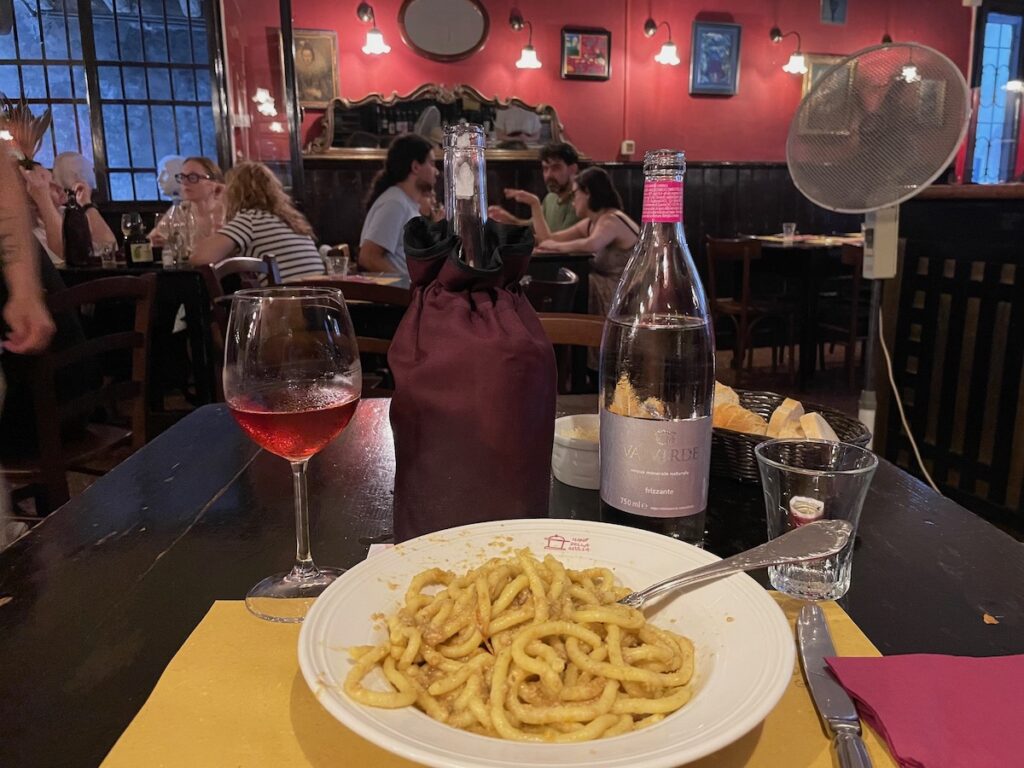
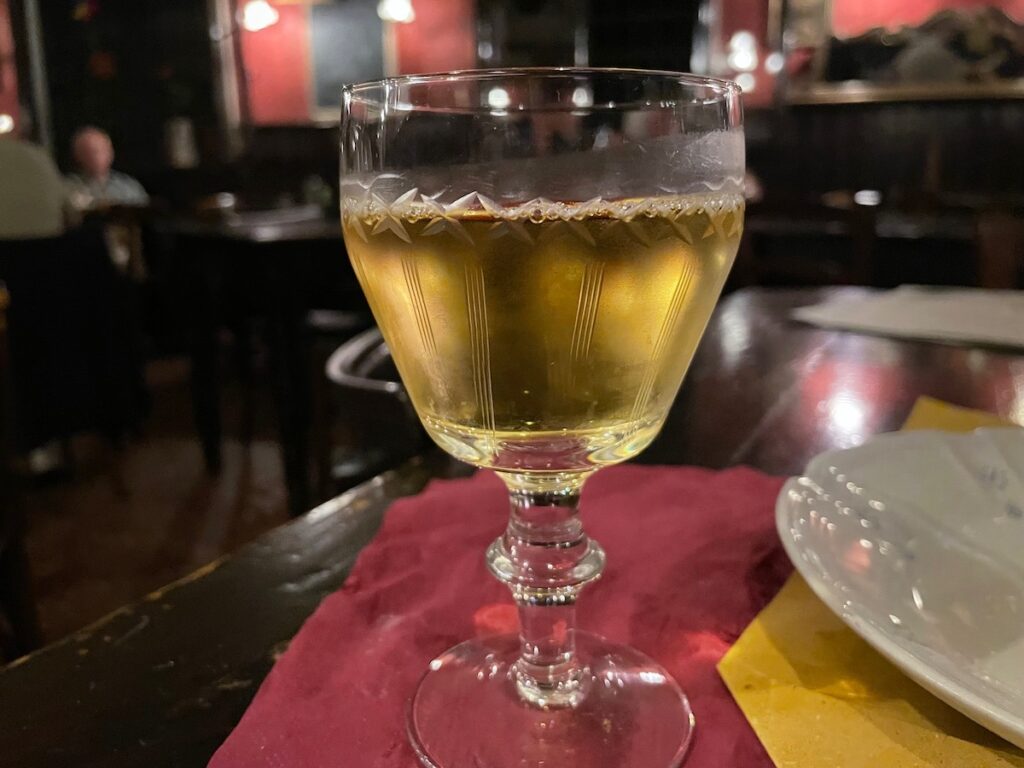

As a surprise, the taverna serves the strawberry, a (white and red) wine made from the strawberry grapes (strawberry grape), in which you can indeed taste ripe strawberries. Formally, the fragolino, an American vine with a relatively high methanol content, is banned, but in Veneto it is sold under the table.
At Nane della Giulia it is even on the menu, and that is a good thing, because a glass of white fragolino is a rare pleasure! Finally, if you prefer a more modern, less popular environment for dinner, you can go a little further to the Osteria La Sofia (Via A. Gabelli 2b).









Comments