

 Aart Heering
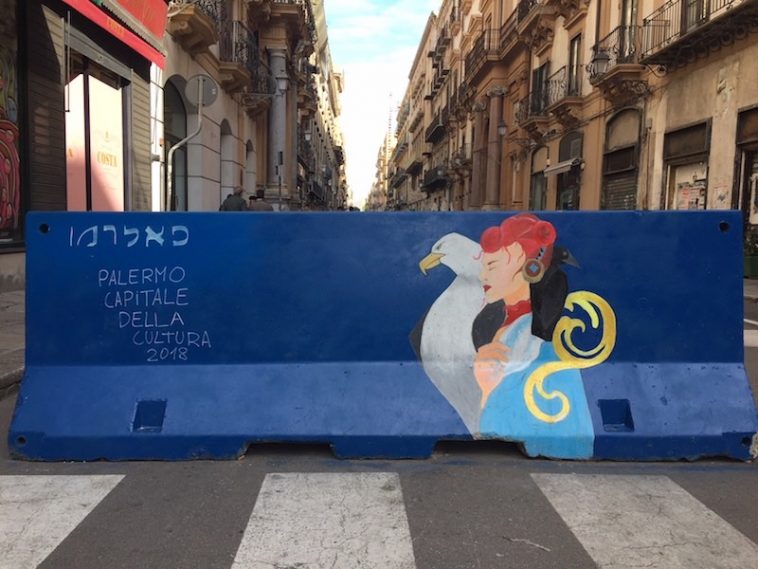
Whoever goes to Palermo this summer will not be bored. The Sicilian capital is this year's Italian Capital of Culture. Palermo celebrates this with an impressive program of a total of 783 events, 83 of which are international. (The full overview, which is regularly updated, can be viewed at www.palermocapitalecultura.it.) The cultural year is the provisional culmination of a long-term policy and development known as the Palermitan Renaissance.
'Palermo has changed capital of the mafia in the cultural capital. Of course there is still mafia in Palermo, but that also applies to other cities. The city's main problem is no longer crime, but it traffic, and we're working on that too. We are working hard to make our city more and more beautiful and tourism is growing steadily,' said Mayor Leoluca Orlando last week when presenting Palermo's summer cultural program at the foreign press club.

anti mafia party
Orlando, 68, who has been mayor for most of the past 30 years, has left his mark on the new Palermo more than anyone else. In the early 90s, he led the popular resistance against the Cosa Nostra, for which he even founded his own anti-mafia party, La Rete. At the same time, he started an impressive cleaning and restoration program that is still ongoing.

transfiguration
Palermo has thus undergone a thorough metamorphosis. The dilapidated, uncomfortable and exhaust-infested city of a quarter of a century ago has now become a hospitable and cozy place. With clean streets, thoroughly renovated monuments and freshly painted buildings, well-kept greenery, a car-free center and nice bars and restaurants everywhere. Inns.
The authentic atmosphere still hangs in the three colorful markets Ballarò, Vucceria and Capo, in the narrow medieval streets and in the typical dishes such as the pasta alla norma and the pani ca meusa (spleen sandwich: very tasty!).
There is still a lot to do and the periphery is still nothing to write home about, but it is understandable that more and more foreigners have recently bought a pied-à-terre in the old center of the Sicilian capital.

Capital of Culture
The election as capital of culture is an important impulse for Palermo, which the city council wants to exploit to the fullest. That's why it has made available the most beautiful locations in the city for the summer events surrounding the international art biennale Manifesta 12, which opens on June 15.
A different city is selected for each edition of Manifesta, so this time Palermo has been chosen, which has given it a lot of international splendor as a cultural capital.
The headquarters of Manifested is based in Amsterdam and the Dutch contribution is significant this year, with names such as textile artist Claudy Jongstra, the Droog Design bureau, Delft University of Technology and the Rotterdam architectural firm OMA, which will present a multidisciplinary 'Atlas of Palermo'.
Many events will take place in the Santa Maria dello Spasimo, a 16e century church whose roof once collapsed and never recovered, providing a wonderful stage for open-air events.

The Spasimo is located in the Kalsa, the old Arab quarter, which has become more and more trendy in recent years from dodgy. Another stunning site is the Zisa, a medieval Arab-Norman fortress that stood for decades as a neglected block of stone but has now been beautifully restored.


Of course, the major theaters of the city, The Teatro Massimo and the Politeama Garibaldi, are also discussed. Surrounded by greenery are the Giardino Botanico (botanical garden), where Manifesta will elaborate the Planetary Garden motto, and the immense park of La Favorita, where the mayor holds court in the 17e century Villa Niscemi.


Outside the center, activities are organized in, among others, the working-class district ZEN (Zona Espansione Nord) and the luxurious Mondello, the beach of the Palermitans.

Artists from the Low Countries
The program includes a total of 132 concerts and 72 exhibitions. In the Palazzo Reale, also known as Palazzo dei Normanni, an exhibition can be seen until the end of May under the title Sicily, pittura fiamminga. This is dedicated to artists from the Low Countries who are from the 15the to the 17e were employed in Sicily or whose works were purchased by Sicilian nobility or clergy.
In addition to Flemish, this also concerns Northern Dutch (it is always a problem to explain the difference to Italians), such as the Middelburger Jan Gossaert, better known as Mabuse, Jan van Scorel and Matthias Stom from Amersfoort, teacher of his fellow townsman. Kasper van Wittel who would later cause a furore in Rome as Gaspare Vanvitelli.

The exhibition series concludes in November with a bang, dedicated to the 15e century Antonello da Messina, perhaps the greatest artist ever Sicily has produced.






Comments