

 This Is Italy
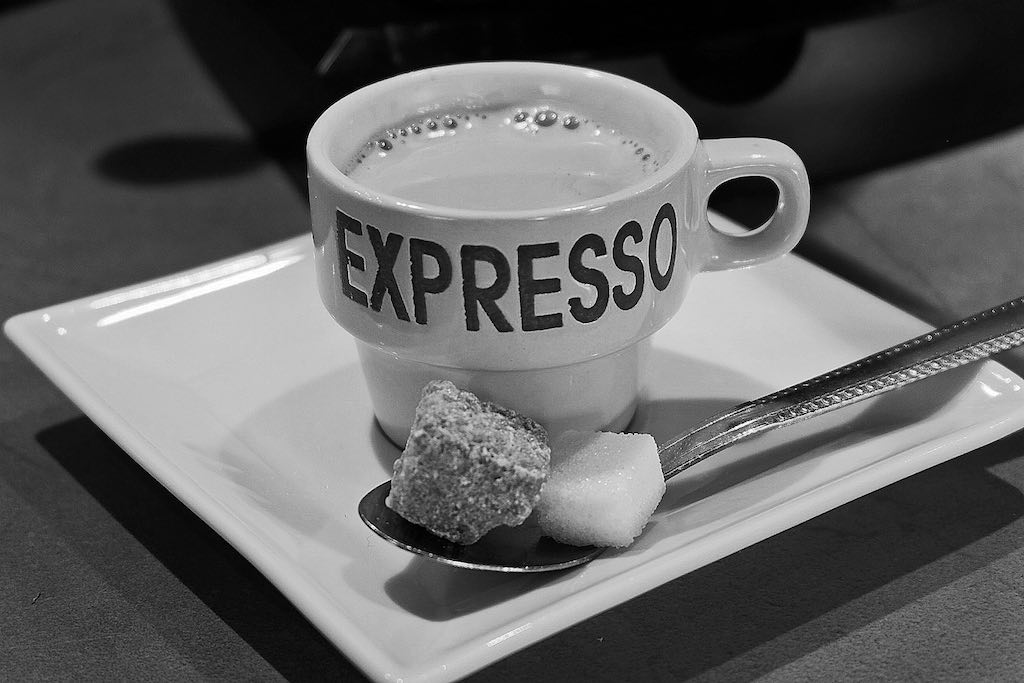
In general, Italians appreciate it if you do your best to speak their language. However, there are some common mistakes in words that hurt Italians' ears. Below you will find a list of 10 language errors that Italians can no longer hear.
1. Express
The quickest way to indicate that you are a foreigner is to pronounce espresso as "expresso."
2. The pronunciation of the 'c'
If the vowels 'a' and 'o' follow, the pronunciation is hard, but if an 'i' or an 'e' follows, the pronunciation is soft. Just look at the word 'cappuccino'. Oh, and so 'ch' is pronounced like a 'k'.
3. Panni
If you want a sandwich and ask for 'panini', then you are actually very hungry. Where we use panini as a singular, the Italian singular is 'panino'.
4. Thanks
If you forget the pronunciation of the 'e' at the end of grazie, you immediately betray your foreign origin. So gra-zi-eh.
5. No problem
Sounds Italian, but it isn't. Un problema, is Italian for 'a problem'. If something is not a problem, you usually say no problem of non c'è un problema.
6. Using Personal Pronouns
Io sound… is not strictly speaking wrong, but Italians usually don't use the pronoun 'I' unless there is special emphasis on it. In the majority of cases it is not necessary and the excessive use of 'io' betrays your status as a foreigner.
7. Double Consonants
Double consonants in words are pronounced clearly in Italian. If you don't, it hurts an Italian's ears. Cap (hat) you pronounce it like this: kap-pel-lo. Accentuate your double consonants to sound like an Italian.
8. Por favor en gracias
Yes, Spanish and Italian are similar. But do you like to hear 'bitte' and 'danke schön'? In Italian please per favore.
9. Fake Friends
Italian words like room (room) and casino (brothel or chaos) can sometimes cause confusion. Read more about 'false friends' in Italian here.
10. Word Genera
In the Netherlands we now refer to just about everything with 'he' and 'him' (even a cow is already a he), but Italian is still sensitive to word genders. The Flemish do better in that regard.
But in Italian it is easier to deduce. Words that end in 'o' are masculine and words that end in 'a' are feminine, it is often said.
Unfortunately, in practice it is often less easy and words in the plural can deviate from the usual. Memorizing the gender of each word is really the only option.
Source: thelocal.it









Comments