

 Edward Hendriks
At the invitation of Umbria Tourism I stayed for a few days in beautiful Umbria. Nice, because I realized that I had never actually been to Italy in December. Let alone Umbria. And let the region of Umbria now be especially worth a visit in the month of December.
Table of contents
- One of the best destinations in Italy all year round
- 1. Assisi
- 2. Gubbio
- 3. Spoleto, nice shops and relatively few tourists
- 4. Terni, the city of Saint Valentine
- 5. Perugia, the largest city
- 6. Citta della Pieve
- 7. Orvieto, high on the rock
- 8. Todi, the balcony of Umbria
- 9. Bevagna, one of the most beautiful villages in Umbria
- 10. Montefalco is of unparalleled beauty
- 11. Lake Trasimeno
- 12. Spello, the village of blooming alleys
- 13. Fonti del Clitunno, relax at holy springs
- 14. Foligno, your chance to taste medieval dishes
- 15. Monti Sibillini, a treasure trove of nature
- 16. Norcia and the famous mountain plain full of flowers
- 17. Città del Castello, a must for Renaissance lovers
- 18. Lago di Piediluco, a sporting source of inspiration
- 19. Narni, a city full of adventure
- 20. Deruta, for traditional ceramics
- Authentic Italy
- Your most beautiful places in Umbria?
One of the best destinations in Italy all year round
But certainly not limited to December. In both summer and winter you can relax in the sun in Umbria and enjoy all the beauty and culinary delights that the green heart of Italy has to offer.
To help you on your way, I give you here the 20 most beautiful places in Umbria, in random order. To enjoy this winter. Incidentally, these beautiful places are often also very beautiful in other seasons…
1. Assisi
Assisi is not to be missed if you go to Umbria in winter. In December you can stroll around the Christmas markets and marvel at the fascinating medieval architecture. The hilly location and the picturesque streets and alleys also provide a cozy atmosphere in winter. The town is small, but it is a well-known place of pilgrimage, because of Saint Francis of Assisi, who founded the Franciscan Order.

The Basilica of St. Francis was built on his grave. What stands out during the visit are the heavily armed soldiers in the immediate vicinity: Europe in 2016. But yes, they also guard an important relic. As you descend into the crypt, you can see the tomb of Francis. A nice extra in December: the tradition of the living nativity scene originates from Assisi.
Hotel tip: Valley of Assisi
2. Gubbio
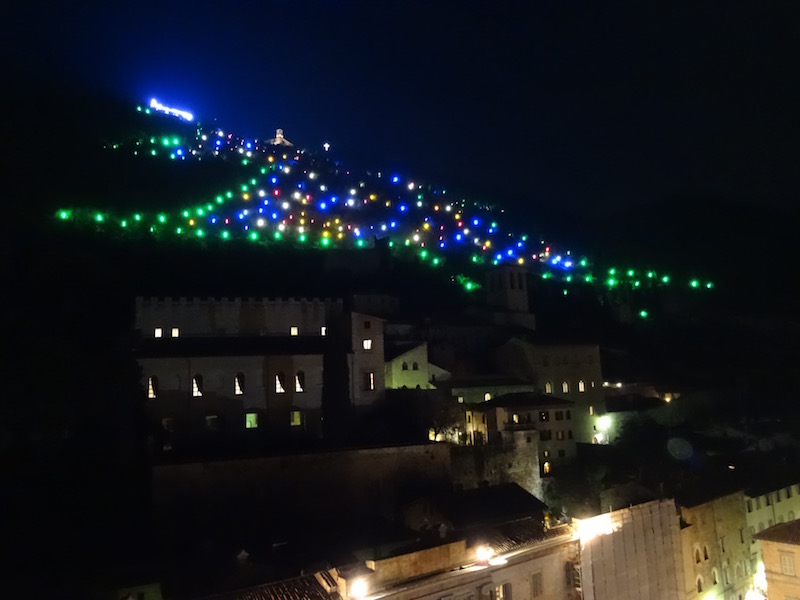
And maze of alleys, stairs and small squares. All decorated with lights, Christmas trees and Christmas decorations. And if that wasn't enough in itself, the hill that towers over the medieval town also houses the largest 'Christmas tree' in the world, although there think differently in IJsselstein.

Gubbio's Christmas tree has the best credentials by the way. Since 1991 it has been recognized by Guinness World Records as the largest Christmas tree in the world. It has a length of 740 meters and a maximum width of 450 meters and consists of 3.000 colored lamps and 8,5 kilometers of electrical cable. The tree is placed annually against the slope of Monte Ingino.
Dinner tip: Taverna dal Lupo
3. Spoleto, nice shops and relatively few tourists
Spoleto is a beautiful city in the province of Perugia, region of Umbria. There are regular performances in the renovated Roman theater. The city is also famous for its aqueduct that carries water from the mountains to the city. The cathedral is the Santa Maria Dell'Assunta, which is located in a picturesque square.

In the immediate vicinity you will find a large castle or fortress that is more than worth a visit: the Rocca Albornoziana. Until the late 20th century this was a prison. In 2007 it was reopened as a museum. From the castle you have a fantastic view over the area.
Shopping tip: Spoleto has nice shops and relatively few tourists, which means that the offer is of better quality
4. Terni, the city of Saint Valentine
On December 8, the Immacolata Concezione (the Immaculate Conception of Mary) is in Italy. A national holiday on which everyone is free. On this day, the Catholic Church celebrates that she was conceived with an immaculate soul. Besides being a religious holiday, December 8 is also the official start of the Christmas season. And they celebrate that in Terni with the ignition of the Stella di Miranda. A poinsettia with a tail, which is about 300 meters wide and smiles at the inhabitants from the hills around the city. At the same time as the lights go on, torchbearers come from the hills to the town to light the flame.

Besides this Christmas tradition, Terni has a peculiar mix of old and modern buildings. This is because the city had to withstand more than a hundred bombings during the war. Some old buildings have been restored, but now stand next to modern buildings. Perhaps that is why you could say that Terni is the 'Rotterdam of Umbria'.
The city has reinvented itself and now offers many nice fashion shops and bars where the younger generation (and those who feel young) enjoy themselves. There are also a few beautiful churches to visit and there is a Roman amphitheater from the first century BC. Fun fact: Saint Valentine (the one of Valentine's Day) is from Terni. So it really is a city to go with your loved one.

Just east of Terni are the Cascate delle Marmore. Artificial waterfalls once created by the Romans. The special thing is that the water only flows at fixed times. Opening the dams that generate electricity is a happening that attracts many tourists. Check the times on the website in advance. We were just too late, but yes, the Italian lunch was of course also important.

More information about the active sports such as hiking, rafting and kayaking that you can do around the falls can be found in the special article about the Cascate delle marmore.
Dinner tip: Osteria della Mal'Ora
5. Perugia, the largest city
Perugia is the largest city in Umbria. Here you will find a university and many international students, which makes for a lively atmosphere. In summer there are many tourists in Perugia, in December it is still cozy but not so crowded. The old center can be reached via an escalator and a system of corridors in an old fortress - the Rocca Paolina. During our visit there was an atmospheric Christmas market in those corridors.
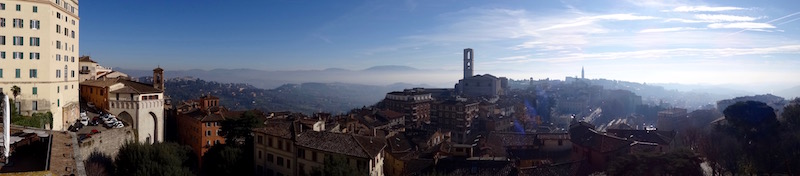
Since the old town is located on a hill, you have a beautiful view of the distant surroundings. The main street – Corso Pietro Vannucci – is perfect for a stroll, while the adjacent alleys allow you to discover nice shops, bars and restaurants. You will automatically end up at the main square, Piazza IV Novembre with the large cathedral of San Lorenzo.

Lunch tip: Trattoria del Borgo
6. Citta della Pieve
A beautifully situated village that has less than 8.000 inhabitants, but still exudes an artistic atmosphere. That is Città della Pieve, or the 'City of the People'. The city is located at an altitude of more than 500 meters, overlooking the Lake Trasimeno and across the border into Tuscany. The famous Italian painter Pietro Vannucci (indeed, the one from the main street in Perugia) came from here. He is better known as Pietro Perugino. He lived from 1446 to 1523 and was a contemporary of Leonardo da Vinci. He received commissions from the city of Florence and collaborated on the walls of the Sistine Chapel in Rome. His work is characterized by a peaceful and dreamy atmosphere.

In the chapel of Santa Maria dei Bianchi you can admire an almost intact fresco by Perugino. The baby Jesus is sitting on Mary's lap and around it are the various visitors who come to present the royal child with gifts. Perugino painted it in 1502. A few letters have also been preserved from which it appears that the painter wanted 200 florins for the work, but later also wanted to do it for 75 florins and an easel.

Recently, special excavations from the time of the Etruscans were carried out in Città della Pieve. A number of nearly intact sarcophagi with inscriptions have been found. The sarcophagi contain the skeletons of deceased persons.
Lunch tip: Trattoria Bruno Coppetta
7. Orvieto, high on the rock
Orvieto is beautifully situated on a 325 meter high rock of volcanic tuff. You can take a cable car (the funicolare) or up with escalators. The showpiece of the city is the gigantic Gothic cathedral with its particularly richly decorated facades.
The city's strategic location made it difficult for invaders to conquer for centuries. The Etruscans lived peacefully high on the rock from the eighth century BC until the Romans invaded the city in 264 and destroyed many structures. Now Orvieto is best known for the medieval palazzos, towers, churches and of course the Duomo. Construction began in 1290 and took more than three centuries to complete.

Orvieto is a city that is not only beautiful but also lively and cozy. During our visit in December we were treated to an open air concert in Piazza della Repubblica. There are also many nice little shops where you can buy wine, trinkets and the best olive oil.
The Pozzo di San Patrizio is a pit 62 meters deep and thirteen meters wide, into which you can descend to the groundwater. An ingenious construction allows two routes with 248 steps each to run over each other. Thus the donkeys, which were loaded with water, could descend and ascend in front of the city without getting in each other's way. The 72 windows that allow light to enter the well are also special. After the Duomo, this is the most important attraction in Orvieto. Close to the well, you have a beautiful view of the green surroundings from the municipal park.

Dinner tip: Oleoteca Bartolomei
8. Todi, the balcony of Umbria

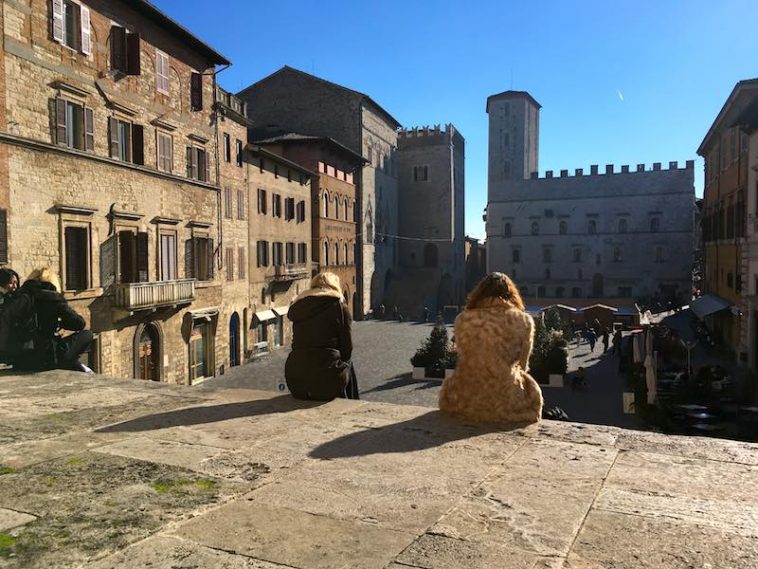
Todi is located on the banks of the Tiber on a hill 400 meters high. The view from Todi over the area is fantastic. The originally Etruscan city has three special city walls. The outer one is medieval, the middle Roman and the inner Etruscan. On the medieval Piazza del Popolo you will find a beautiful medieval cathedral. In the picturesque square you can bask in the sun on the steps to the entrance of the church. Or have a drink in one of the catering establishments. The town feels attractive and cozy.

Another religious landmark in Todi is the Santa Maria della Consolazione.
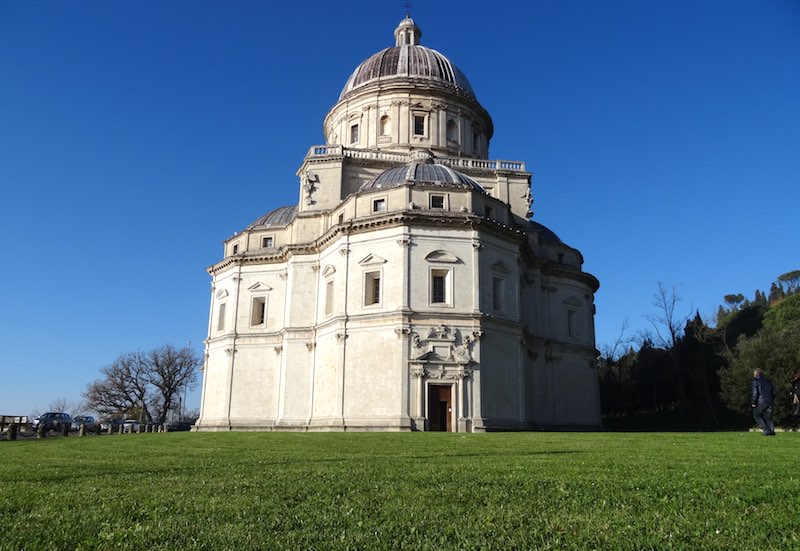
Close to Todi – as always you should know the place – you'll find a great restaurant run by an eighty-year-old chef. It's called La Mulinella (the windmill). The locals come here in droves to eat and then you know it's good.

Lunch tip: La Mulinella
9. Bevagna, one of the most beautiful villages in Umbria
A small and sleepy village, but of an incredible beauty. It's not for nothing the list of the most beautiful Italian villages. Everything here looks equally idyllic. From the old washhouse to the central Piazza Silvestri with the Palazzo dei Consoli and the churches of San Michele and San Silvestro. An ideal village to have a refreshing Aperol Spritz to drink on a lazy terrace in the summer. Or to take a closer look in the winter, because here you can admire beautiful medieval buildings, squares and fountains.

Bevagna is a walled city with towers. The village itself is home to some great piazzas, antique arches, bridges and churches. You can admire the old washhouse and breathe in the medieval atmosphere that still prevails here. The path on the outside of the wall is also worth walking. And of course you should settle down here on a terrace and have a nice drink or – better yet – a pranzo.
Lunch tip: have a pizza at the Largo Gramsci
10. Montefalco is of unparalleled beauty
Montefalco is also a small village, but well worth a visit. It starts to get a bit monotonous, but yes, Montefalco is of unparalleled beauty. The village is surrounded by city walls with no fewer than five city gates. There is not much to do in the village, but that is not necessary here either. Stroll through the streets, breathe in the Umbrian air and refresh yourself with the beauty that is omnipresent.
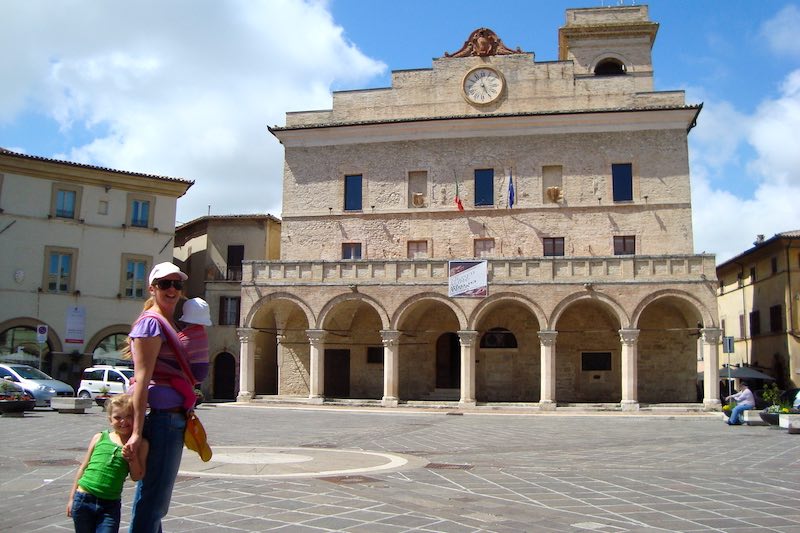
Montefalco is located on top of a hill, from which you can see an amazing 360 degree view of the Valle Umbra. with this extraordinary panoramic position, it is also called 'the balcony of Umbria'. The main attraction is the museum church of Saint Francis, with frescoes by the Renaissance painters Benozzo Gozzoli and Perugino.
Coffee tip: enjoy a nice caffè in a bar on the central Piazza del Comune
11. Lake Trasimeno
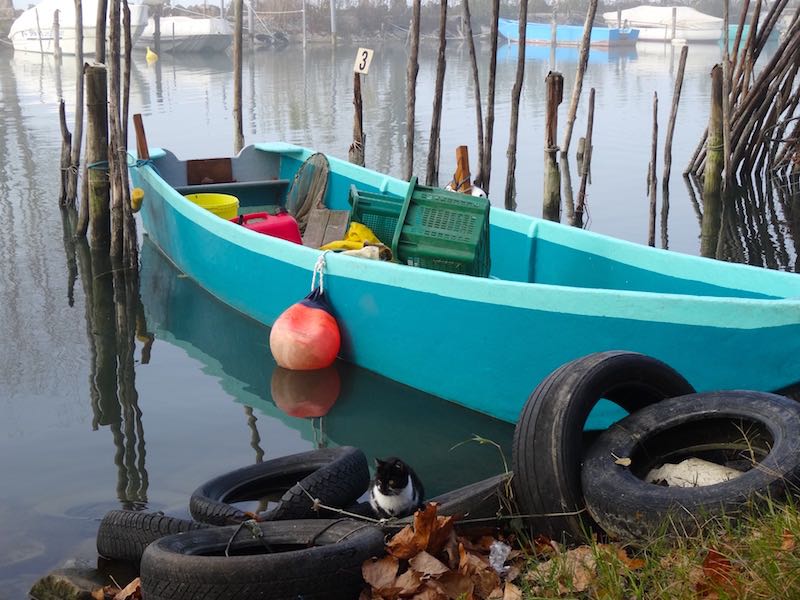
If you go to Umbria, you can visit Lake Trasimeno (Lago di Trasimeno, also known as the Lake Trasimeno), which borders Tuscany. Trasimenomer mentioned) don't actually skip it. During our morning visit to the lake it was foggy, but even then the fourth largest lake in Italy is a beauty.
Many Belgians and Dutch people live on the shores of the lake, who have built a new life here. According to the guide, the Dutch settled here in ancient times to grow tulip bulbs. Nowadays they come because of the affordable houses with a great view over the lake.
Castiglione del Lago on the western shore is a town of medieval origin with the Palazzo della Corgna, the only miniature palace in Umbria. Just outside the city is De Rocca del Leone, the castle that protected the town in the distant past.
But Corciano is also worth a visit with the monastery of Sant'Agostino just outside Corciano and the beautiful castle of Pieve del Vescovo. And actually you can't miss Tuoro, San Feliciano, Castel Rigone and Magione with the castle that once belonged to the Knights of Malta and the race track.
But Lake Trasimeno is not just small towns along the shore. It also stands for islands in the lake. Ferries run from Passignano, Tuoro and Castiglione del Lago to Isola Maggiore with Guglielmi Castle. From the same Castigliano del Lago and from San Feliciano ferries run to Isola Polvese. It is the largest island of the three. You can visit a castle, walk around in a nature reserve and marvel at the thousand-year-old olive trees that surround the monastery of San Secondo. The third island, Isola Minore, is privately owned and cannot be visited.
It is a nice trip to drive all the way around the lake (about 60 kilometers) and marvel at the favorable microclimate with its special flora that you will find here. For example, the olive trees around the lake are much larger than a little further on. The lake and its immediate surroundings are a Regional Park.
The following additions to the most beautiful places in Umbria are written by Myrtle Claus:
12. Spello, the village of blooming alleys

Between Assisi and Foligno lies Spello, one of the most beautiful villages in Umbria. It is a place with a perfect mix of remains from Roman times and the Middle Ages. You will find very well preserved Roman city walls. City gates such as the Porta Consolare with its medieval tower, the Porta Urbica and the Porta Venere with the Romanesque towers of Properzio. A historic center with the remains of the amphitheatre, the Roman theater and the baths. And streets with stately medieval buildings and Renaissance palaces.
But if you don't care much about all that, it's also just fun to wander around in the labyrinth of narrow alleys, squares and courtyards with colorful flowering pots here and there. The frescoes in the chapel of Santa Maria Maggiore and the church of Sant'Andrea are definitely worth a visit. Just like the Villa Fidelia and the Villa dei Mosaici, discovered in 2005, which are located just outside Spello.
Spello is also known as the flower village. Every year between May and June, the 'Infiorata di Spello' takes place, an ancient event associated with the feast of Corpus Domini. The residents transform the streets with flower petals into a flower carpet of paintings and works of art. Highly recommended if you are in the area during that period.
13. Fonti del Clitunno, relax at holy springs
If you've had enough of pretty villages and long for relaxation in the green, the nature reserve of the Fonti del Clitunno is a good place. The springs of the river Clitunno are located in the park. Long ago the water bubbled up so abundantly that the Romans used the river to sail to Rome. They considered the springs in the park sacred and worshiped the god Jupiter Clitunno.
Today you will find the Tempietto del Clitunno in the park, which is on the UNESCO World Heritage List. And although the park with its trees reflecting in the water is the perfect setting for a picnic, unfortunately food and drink are not allowed in the park.
A ticket for everyone over 10 years old costs €3. People over 65 pay €2. Children up to 10 years old and people with disabilities can enter for free. From April 1 to September 15, the park is open continuously between 9.00:19 am-30:XNUMX pm. Outside that period, opening times vary and the park is closed at noon.
More information about opening hours can be found on the (Italian) website: www.fontidelclitunno.it.
14. Foligno, your chance to taste medieval dishes
Foligno is half way between Perugia and Assisi. Unlike most towns in Umbria, it is on flat terrain, so you can drive and walk around without too much effort. Also in Foligno there is no lack of churches and historical buildings. The main ones are located around the main square, the Piazza della Repubblica. You will find the Duomo, the Cathedral of San Feliciano, the Palazzo Comunale, the Palazzo del Podestà and the 14th century Palazzo Trinci.
The first edition of Dante's Divine Comedy was printed in the Palazzo Orfini in 1472 and now, how could it be otherwise, is home to the Museo della Stampa, the printing museum. Do you prefer contemporary art? Then you should not miss the CIAC in the former church of Santissima Trinità in Annunziata. And if you need a quiet place to relax after all that strolling around, go to the old city park Parco del Canapè, named after the 80 stone benches that are there.
The best months to visit Foligno are June and September. The 'Giostra della Quintana' takes place in the city: a knight's tournament in traditional costume. In the taverns and trattorias you can taste medieval dishes such as the Spaghetti col Rancetto and the Rocciata, a strudel-like dessert.
15. Monti Sibillini, a treasure trove of nature
A natural park of over 70.000ha can't help but be filled with things to discover. In the nature reserve Monti Sibillini you will therefore not only find beautiful medieval towns such as Norcia, but also rivers and mountain streams. There are high and narrow gorges, interspersed with waterfalls, mountain peaks to climb and the glacial lake Lago di Pilato.
A perfect destination if you like to be in nature and like hiking or mountain biking. There are 18 hiking trails suitable for everyone. For seasoned hikers there is the Grande Anello dei Sibillini, a route of 120 km. You can cover the stages of this tour not only on foot, but also on horseback or mountain bikes.
There is a chance that you will encounter your deer, golden eagles, porcupines, wild cats or wolves along the way. And maybe more. Because the Monti Sibillini are not only named after the witch Sybille who is said to live in a cave on a mountain top. According to the inhabitants, fairies, wizards and other magical creatures also live in these areas.
More information can be found on the park's website.
16. Norcia and the famous mountain plain full of flowers
Norcia is the main town of the Castoriana Valley in the Sibillini Mountains. This medieval town is best known in Italy for its traditionally made salami and sausages. It was also the birthplace of Saint Benedict, the first Christian monk and founder of the Benedictine order.

At the Piazza San Benedetto de Catellia are a small fortress and the Palazzo Comunale. The Church of Saint Benedict on the same square largely collapsed in the earthquake of 2016. Only the facade is still standing in all its glory.
From the town you can walk along the Benedictine footpaths to discover the rest of the valley. And if you really want to see something spectacular, you have to go to Castelluccio di Norcia. This village is located on top of a hill opposite the Piana di Castelluccio. The wild flowers on this plateau bloom between May and July, turning the mountain meadow into a vast sea of color.
17. Città del Castello, a must for Renaissance lovers
Unlike the other towns in Umbria, Città di Castello is dominated by the Renaissance thanks to the Vitelli family. And if you are interested in painting, you can really indulge yourself in this city.
Palazzo Vitelli, the main palace of the family, houses the Pinacoteca Comunale. This museum features works by Raffaello, Signorelli, Della Robbia and Ghirlandaio, among others. If you are more of a fan of contemporary art, you can see the work of Alberto Burri (1915-1995), who was born in Città del Castell.
But there is also plenty to see if you just want to taste the atmosphere. Stroll past the Palazzo del Podestà in Piazza Matteotti and the Porta Sant'Andrea. Climb one of the legendary towers of Città di Castello to admire the surroundings and the Tiber. Take a look at the Cathedral with its round bell tower and don't miss the Chiesa di San Domenico and that of San Francesco.
18. Lago di Piediluco, a sporting source of inspiration
Lake Piediluco is located on the border between Umbria and Lazio, not far from Terni. It is one of the most picturesque places in Umbria, loved by artists and painters who chose it as the subject for their paintings as early as the 17th century. The lake is reminiscent of an Alpine lake and is a great place for water sports: many rowers choose it as a destination for a sporty weekend. It is even a venue for international rowing events!
The medieval fortress of Albornoz is also located on the lake. From the pyramid-shaped Echo Mountain you have a beautiful view over the lake. And if it's quiet enough, you might be able to hear the echo the mountain is named after.
19. Narni, a city full of adventure

What makes Narni especially special is the underground city. Under the historic center of the city, there are underground passages that you can visit. You start at the monastery complex of San Domenico where you will find the entrance to a church from the 12th century that was discovered in 1979 by young speleologists. Through a room with a Roman water basin and a long corridor, you enter the Hall of Tortures, which was used by the Inquisition in the Middle Ages.
20. Deruta, for traditional ceramics
In Umbria you will find old crafts especially in towns of medieval origin. The product par excellence is ceramics from Gubbio, Orvieto and Deruta. In Deruta you can admire the work of master potters. Furnaces for processing ceramics dating back to the 16th century can still be seen. It is not surprising that you can visit the oldest ceramics museum in Italy in such an environment.
You will also come across the traditional majolica tiles during a walk through the town. On the former church of San Michele Arcangelo, for example, but also on the walls of the church of the Madonna dei Bagni. Studios, galleries and craft workshops alternate in the streets. Finding souvenirs has never been easier!
Authentic Italy
Umbria is one of the most authentic parts of Italy. The Umbrians were, and still are, a proud and independent people in the past. Here lies an enormous history that continues to the present day. Due to the secluded location, various rulers have had little influence on the environment and the people and you can feel that in your capillaries.
It is green, you have the rugged nature, the excellent cuisine and the special wines. You don't really need more reasons to travel to the green heart of Italy this winter or the coming holiday season.
Your most beautiful places in Umbria?
These were the 10 most beautiful places in Umbria. As we have experienced at This is Italy during several visits in all seasons.
Maybe you have a completely different list of beautiful places in Umbria? Comment below if we missed your favourite!
Also watch: the most beautiful places in Italy.
Photos: Edward Hendriks








Comments