

 Steve Smulders
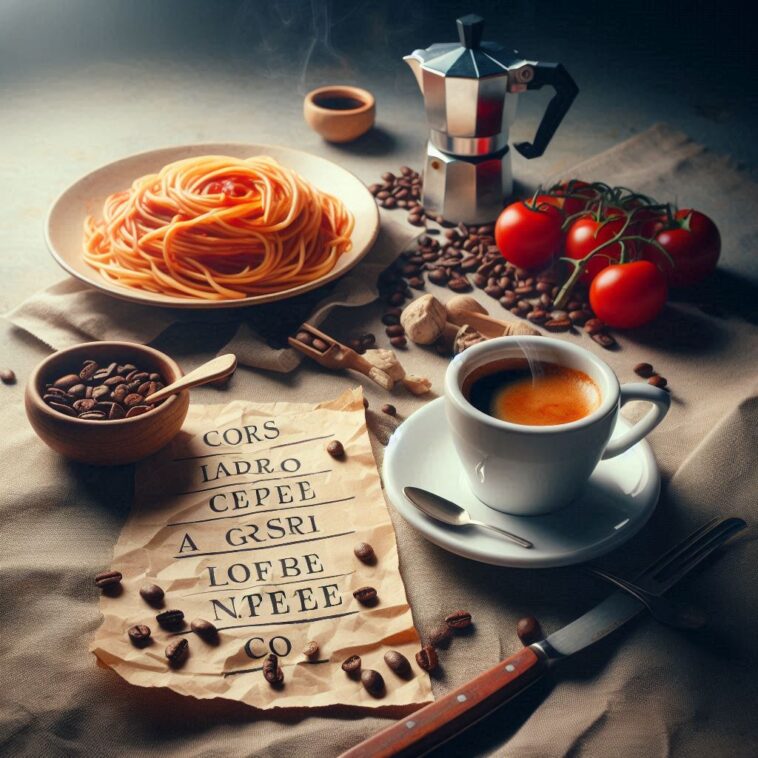
See here, 5 useful words and expressions in Italian, which sometimes mean something slightly different than what you might think.
1. A posto
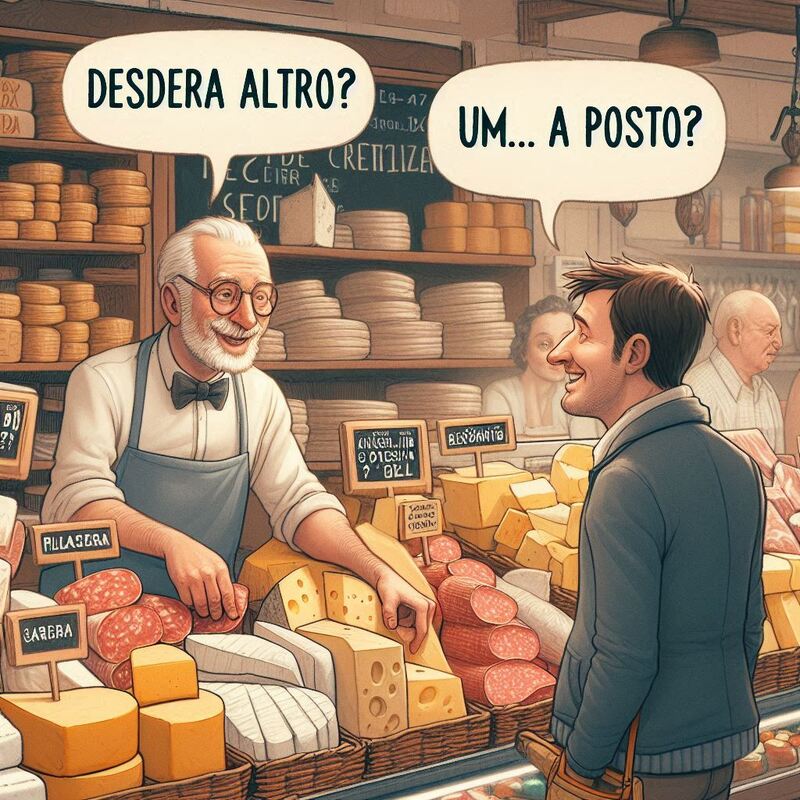
You are standing in the supermarket in Italy or at one of those nice local specialty shops (or at the market with a stall full of Italian delicacies), you have miraculously managed to find exactly that cheese or sausage with pointing, hand gestures and some semi-Italian gibberish. or order fresh, handmade pasta, and then…
The friendly shop assistant asks you something like 'Desidera altro?' and you can't think of anything else to say but 'No', or hopefully at least 'No, grazie'. There is a chance that the clerk will not understand you immediately because he/she expects a different, standard answer.
As happens in France when you ask the manager after a dinner the account asks. He/she expects the 'addition', l'addition. The magic word (or better: words) in this case is Italian 'a posto': 'No, (son) a posto, grazie'. Not to be confused with the related on purpose, alright.
2. Bravo

In Dutch theaters the standing ovation has become commonplace, while Italian spectators rarely rise from their seats (but during the national anthem, of course).
Bravo they shout both in the Low Countries and in Italy, with the understanding that non-Italians have the floor for everyone Bravo customs and Italians Bravo only for a male singer, actor and so on.
A lady is brava, and in plural apply respectively bravi en brave. The latter only in companies consisting exclusively of women, because even if an orchestra has 99 ladies and only 1 gentleman, they are still bravi (Of brutti Naturally).
But except in the theater and others shows you hear the word Bravo also sometimes in conversations. Someone claims something (the government consists only of pocket pockets, for example) and the interlocutor makes a powerful statement Bravo! to indicate that he agrees 100%. Bravo means something like: You get it, you understand it, you are Bravo. Alternative expressions are Indeed! en Precisely!
3. Coraggio
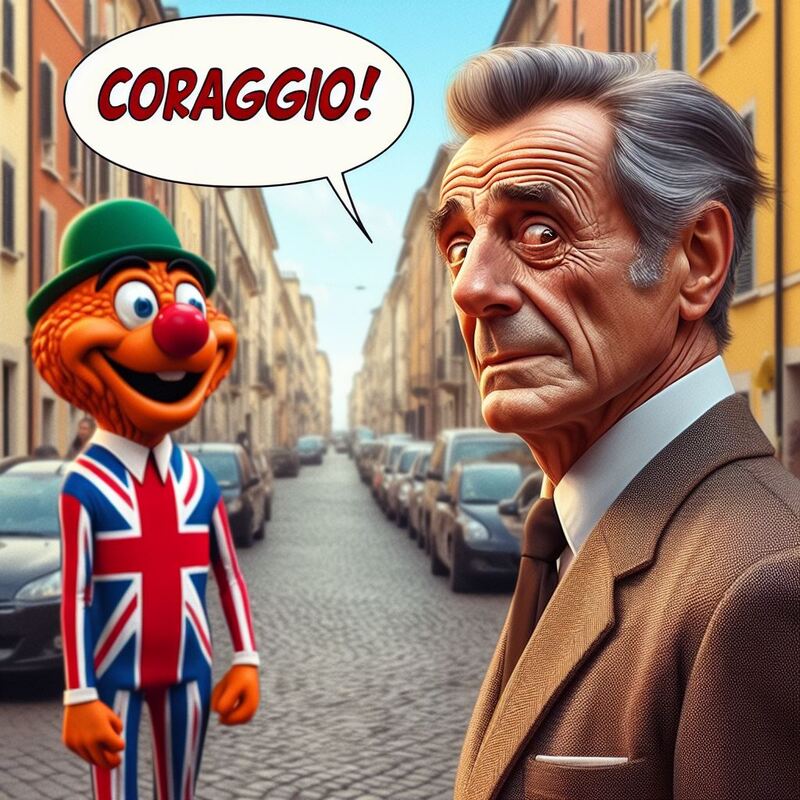
“The house we are interested in is for sale at Gabetti, in Stradella!” a Dutchman writes to us who is looking for a house in Italy and has searched the Internet himself. And then you come across all kinds of things, but rarely anything pleasant. When we hear the name Gabetti, Roberto looks at us ironically and pityingly and says: “Allora, coraggio!”
With the services of Gabetti 'Dreams House' (owner Cinzia's English is nothing to write home about either) we are familiar enough to know what the Dutchman can expect if he does business with this real estate agent. From my own experience and the stories of others. So good luck!
Coraggio literally means courage, but can also be sarcastic, as in the example above: 'Good luck!' Also the wish greeting can be used like this: 'Congratulations!' (just kidding).
4. Me lo dicevi
The Italian verb forms are quite complicated for a Dutch speaker. All those different times, pfff. Passato remoto? Never heard of it. Congiuntivo? We don't use it at all in Dutch anymore. And then the difference between imperfect and past perfect, that has almost worn away in the Dutch language.
These forms are still very much alive in Italian and you discover that it is almost impossible to master them if you have not learned to deal with them from birth. Fortunately, even Italian dignitaries sometimes mess up, like the former leader of the Five stars movement and Minister of Foreign Affairs, Luigi di Maio. He once incorrectly used the subjunctive and was extensively ridiculed on social media channels.
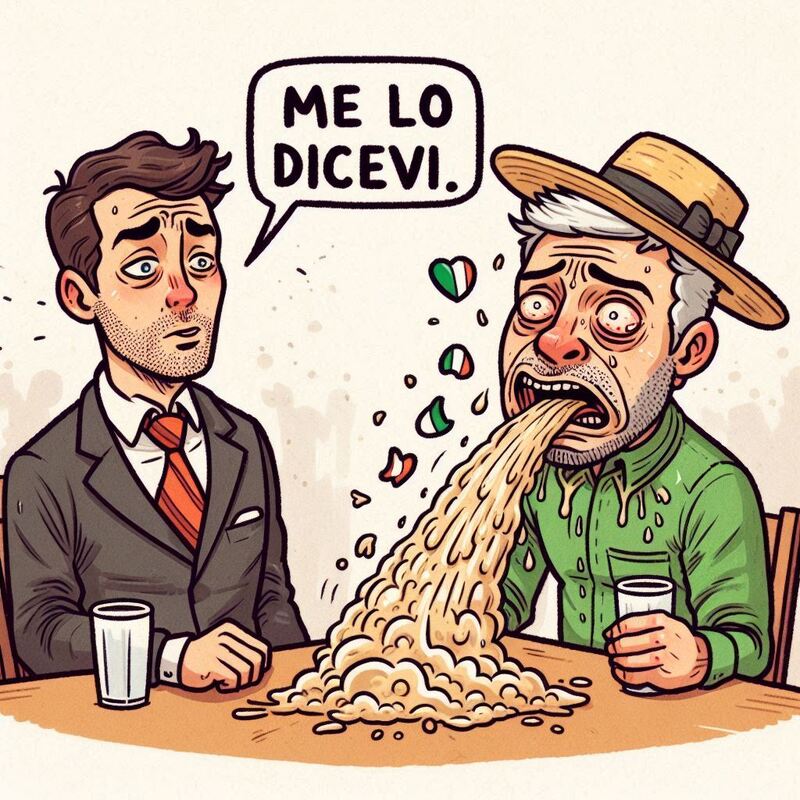
Even after years of language lessons and a stay in Italy, you sometimes still hear strange uses of verbs. Like when our friend Roberto asked Nico to go with him to Milan for something or other. At the scheduled hour before departure, Roberto came to pick him up, but Nico turned out to be weak, sick and nauseous. “Me lo dicevi!” Roberto exclaimed when he heard that. You said it to me? I thought. How so? Nico had not let Roberto know in advance at all.
After some thought I came to the conclusion that “Me lo dicevi” in this case something like “If only you had told me,” “You only had to say it (and I would have asked someone else).” At least much shorter than it “Ma perché non me l'hai detto prima” of “Se me l'avessi fatto sapere prima” that I would have improvised together.
5. Coincidenza
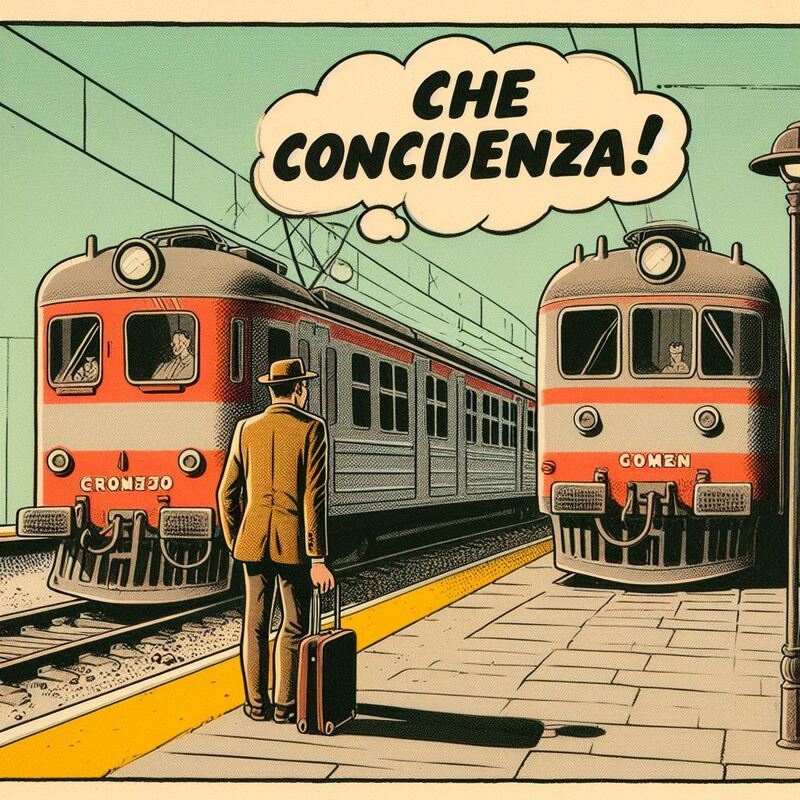
“Che coincidenza!” you say, for example, when you suddenly encounter an acquaintance where you did not expect that person at all. "What a coincidence!"
Strangely enough, in public transport a connection is also called a connection, which then neutrally means the meeting of 2 different lines. But because of the reputation of the Italian state transport companies you are of course unable to shake off the reference to coincidence. “What a coincidence: I can switch immediately, the connection is ready. That would never happen otherwise!”









Comments