

 Steve Smulders
At the end of one of the streets in the picturesque village of Marciana on Elba we find a small square with a tree, a bench and a pump. A resident is frantically filling the plastic bottles she brought with her with water.

An elderly man is waiting on the bench with a battery of empty jerry cans next to him. We watch the scene in amazement for a while, until Nico steps forward and questions the woman about her peculiar occupation.
'Ma perchè non usa l'acqua del rubinetto? Why don't you use the water from the tap?'
I feel embarrassed at his direct, cheeky question and keep quiet. With pricked (writers) ears, that is.
Somewhat disturbed, the woman looks up and replies in a stern tone: 'The municipality sells the good water and delivers the bad water to its inhabitants.'
Aha, the well-known conspiracy theory, which stems from the distrust of the average Italian towards all government agencies. There's no arguing against this, I know, and I hope my husband will leave it at that and quickly withdraw.
But no.
'E l'acqua in bottiglia? Di sicuro quella e buona? And the bottled water is certainly good, isn't it?'
The woman doesn't even look up now. She replies curtly that the water in those bottles has been tampered with. Nothing beats water straight from the source! That's the healthiest of all.

Oh well, the usual (not exclusively Italian) aversion to anything not pure nature but painting is. Sometimes (or often?) the reasoning will be correct, but in the case of bottled water we believe we know that this is thoroughly checked.

The first time we ordered water in a restaurant in Italy, we saw that aqua frizzante is in a bottle with a blue label and design has a red label (Italy has its own resources and disregards the general standard of Spa), on the label an extensive chemical analysis, carried out by the University of Pavia. Even the professor's name was there, so you could get a story if you didn't like the taste or it made you sick. That looked really reliable.

Fortunately Nico didn't bring this up and we walked on, smiling at the mistrust of the resident. But was that right?
When I got home I did some research on the Internet and had to conclude that the water companies (even) in Italy nowadays are as transparent as… water. They continuously monitor tap water, publish the results in detail by freely consulting every citizen on their websites and are implementing a major European plan to further improve quality and safety.
However, it is apparently not enough to convince the users. It also does not help when, as in 2018 in Brescia, a large number of residents suddenly become infected by a bacterium that is mainly found in water.
"The tap water is contaminated!" Everyone then shouts in panic and sees his right confirmed when the municipality advises not to drink tap water for the time being purely as a precaution. The fact that it later turns out that the bacterium was (of all things) in the water of many public fountains is hardly heard by anyone anymore.
What also does not help is the deplorable state of the Italian water supply network, which means that 40% of the water leaks away and that Italy produces hefty European fines every year.
We experience this almost 'first-hand' because of the many (at least two a year) major leaks that occur in the water pipes in the street near our house. One hole is then repaired and then they have to wait for the next leak.
Replace the pipe under the entire street at once? No, there is no budget for that. Pap and wet (not necessary for a water supply) is the classic Italian approach to infrastructural maintenance.
Water, of course, as the essential element that makes life possible, has something magical for most people and is always surrounded by mysticism, even though scientists have figured out that it is nothing more or less than H2O.
A smart entrepreneur has responded to this on Elba by opening stores wherever he can 'Acqua dell'Elba' sells, 'Il profumo del mare!Fifty euros for a tiny bottle. Don't fall for it, I've tried it, it smells good but it's not drinkable.

A few days after meeting the 'water lady' we arrive at our residence on the other side of Elba. The caretaker looks like Sybil from Fawlty Towers (unfortunately Basil is not there) and explains with almost Swiss precision where everything is and how everything works. Just as we are about to get up to go to our apartment, she says, “Oh yes. It is better not to drink the water from the tap.'
Then she mumbles something vague about the minerals it contains and all that. 'Ma è potabile? Is it drinkable?' we both shout in unison (even me is getting crazy now).
'Si, si, è potabile,' replies Sybil, muttering another vague objection about minerals.
We decide to ignore her advice and taste the tap water first. There seems to be nothing wrong with the taste. No trace of chlorine, for example, which would be the only reason for us to use bottled water.
On the internet I find the latest analysis of all the minerals and elements that are in the local water. Everything well within the norm. But tutto a norma is a cry in which the Italians no longer believe

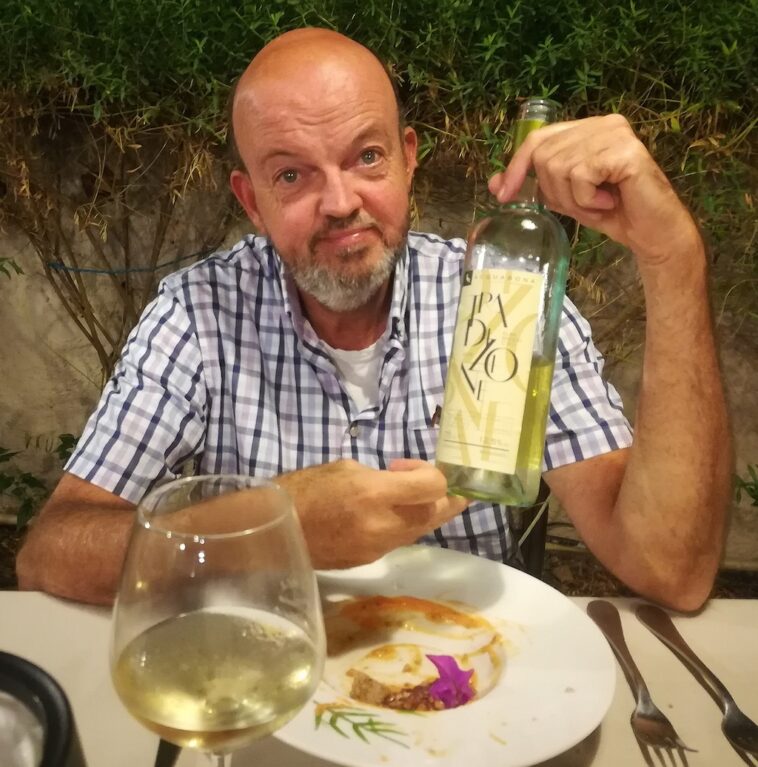
And, admittedly, neither do I always because with every dinner on Elba, I prefer Acquabona by the bottle, available in white, rosé and red.

Want to read more fun stories about life in Italy? You can find it in the three parts 'Italiaanse Status' by Stef Smulders, available at bol.com.









Comments