

 Aart Heering
Pedalare in PugliaCycling in Puglia has become a household name among active holiday enthusiasts in recent years. The Salento region in particular, the heel of the Italian boot, offers ever more opportunities for what is in Italian cycling hot.
The conditions are therefore ideal for it. The weather is almost always fine (with the exception of this spring). The landscape is flat and crisscrossed by numerous small roads. The region offers breathtaking seaside panoramas and a green, varied interior with ancient towns and villages where no one is in a hurry, and you can enjoy good food and drink everywhere.
Finally, Salento is also easy to reach. Dutch cycling tourists often fly to Bari or Brindisi and can rent a bicycle or e-bike there immediately if desired.
You can cycle in Salento for most of the year, but avoid the months of July and August, when the beaches become overcrowded and the inland areas get far too hot. Traditionally, these were the quintessential holiday months in Puglia, but local administrators and entrepreneurs have since recognized the importance of extending the tourist season.

Ciclonica: a ring of 306 kilometers of cycle paths
This is possible primarily by attracting foreigners for whom the weather in spring and autumn is still pleasant, without the crowds of mass tourism. That is why cycle paths are being built at a rapid pace in Puglia (cycle paths) laid out and routes marked out.
The most recent of these is the Cyclonic: a 306-kilometer ring divided into 6 stages along the sea, through villages and in nature in the Ionian Salento, the west of Salento. Within that ring, another 5 'modules' are indicated, consisting of day tours of about 60 kilometers each, with the same place as the starting and ending point.

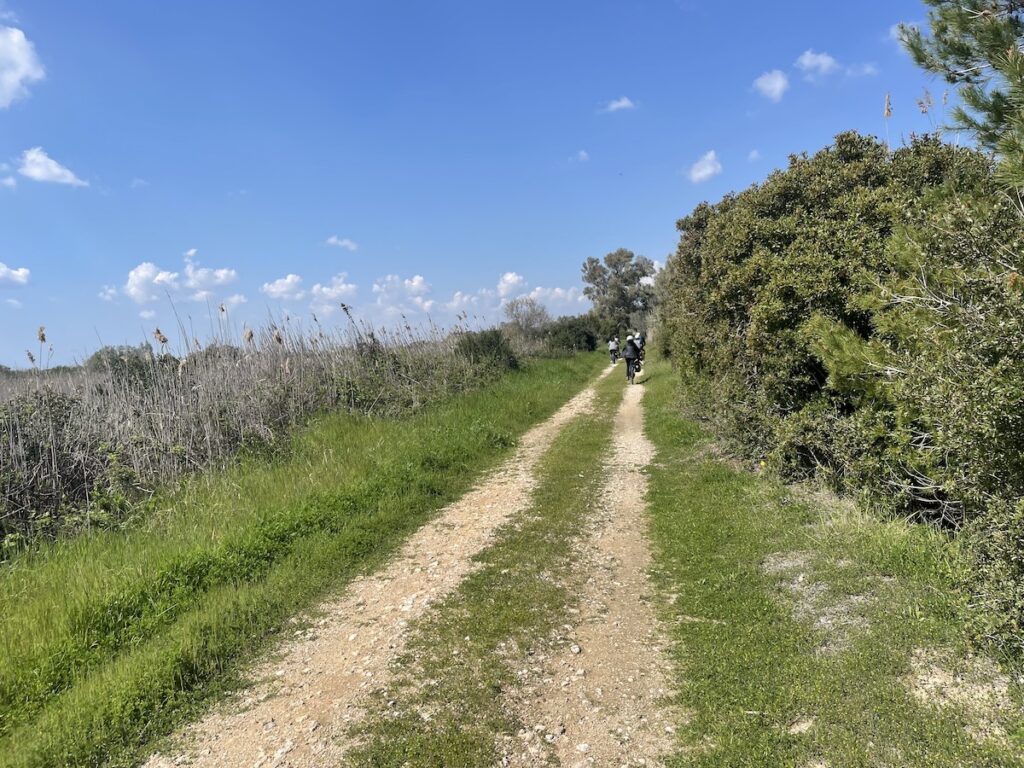
Approximately 80% of the roads are paved, from brand-new cycle paths to existing secondary and provincial roads, and the remaining 20% consists of unpaved cycle and walking paths.
The Ciclonica was conceived by a cycling journalist. Roberto Guido and carried out with the cooperation of 10 municipalities and environmental organization Legambiente. The necessary funding came from the PNRR, the Italian version of the EU Next Generation Fund.
Guido has written a handy guide for it, which has been translated into English under the title Ciclonica. The Salento Ionico Cycle Route. Sea and nature in the heart of Southern Italy (Edicicloeditore).

Day 1: from Lecce to Galatina
In late March, together with colleagues from the foreign press in Italy, I got a preview of the Ciclonica in the form of a 3-day trip totaling (only) about 90 km.

The journey began in Lecce, the capital of Salento, which is known as the città bianca due to the light yellow color of the Lecce stone, the local stone from which the entire center is built.


An evening stroll past the beautifully preserved Roman arena, the Cathedral, and other monuments of the elegant Lecce baroque It immediately transports you to a southern atmosphere. Actually, you need more than a day to let Lecce sink in, but we'll save that for another time.
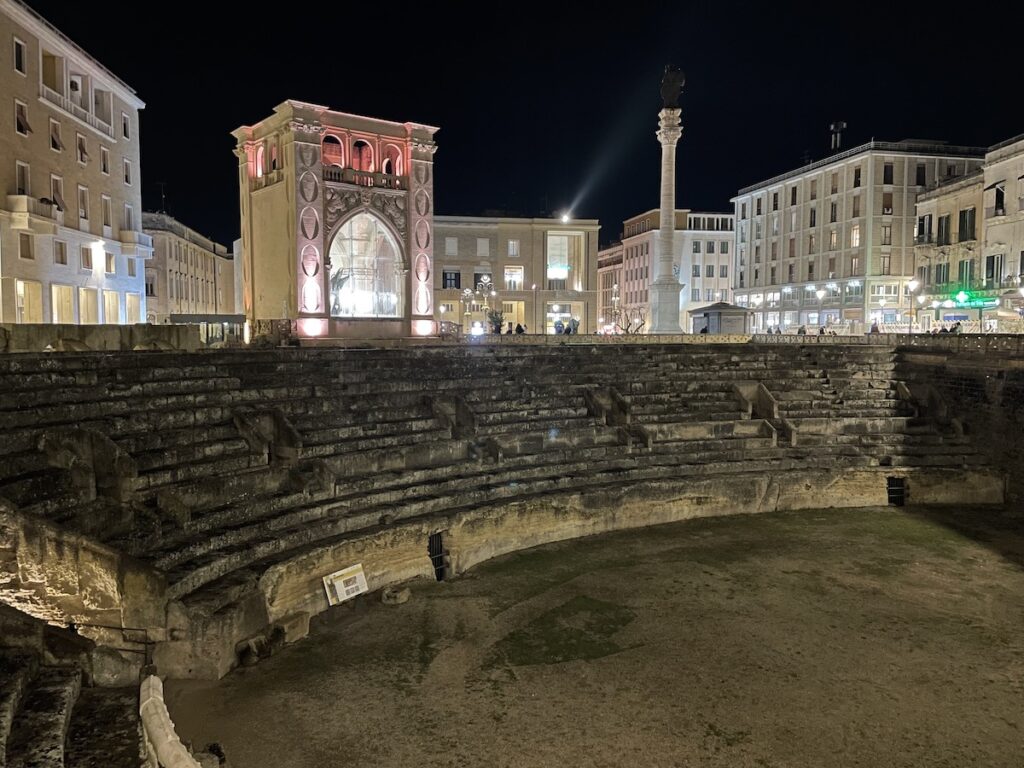
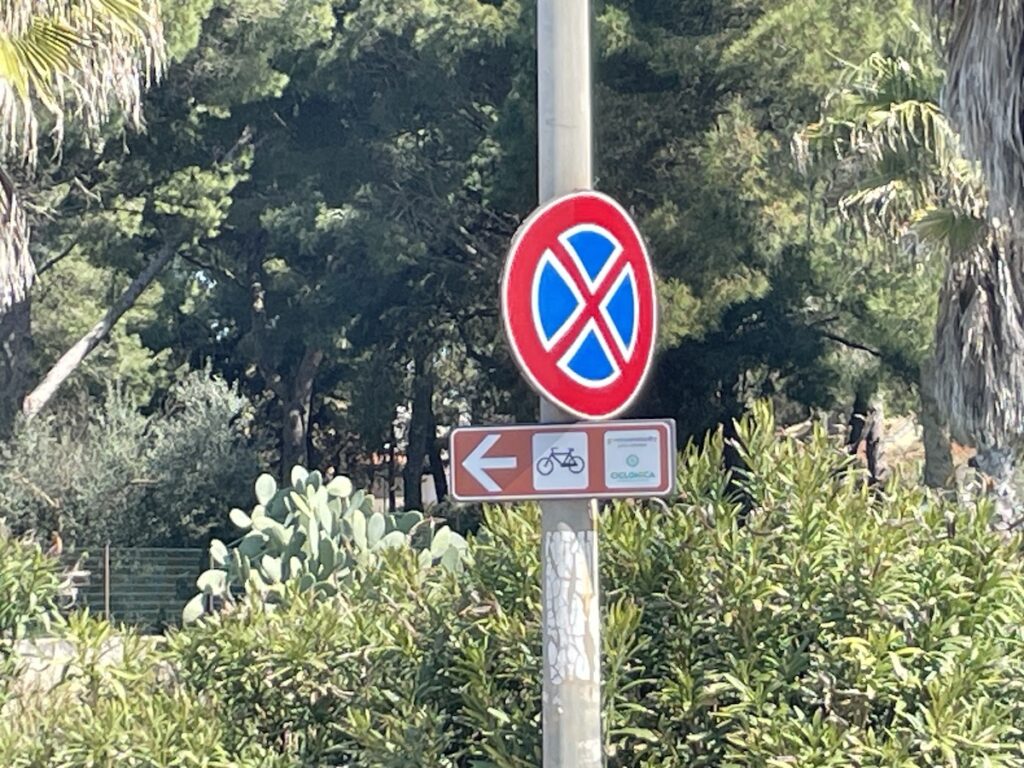
With tour operator Salento Bike Tour – which operates from March through June and from September through December – we get bikes with waterproof panniers and ride out of the city. The Ciclonica is well signposted in many places, but sometimes it takes a bit of searching and the guide or the Ciclonica App useful.
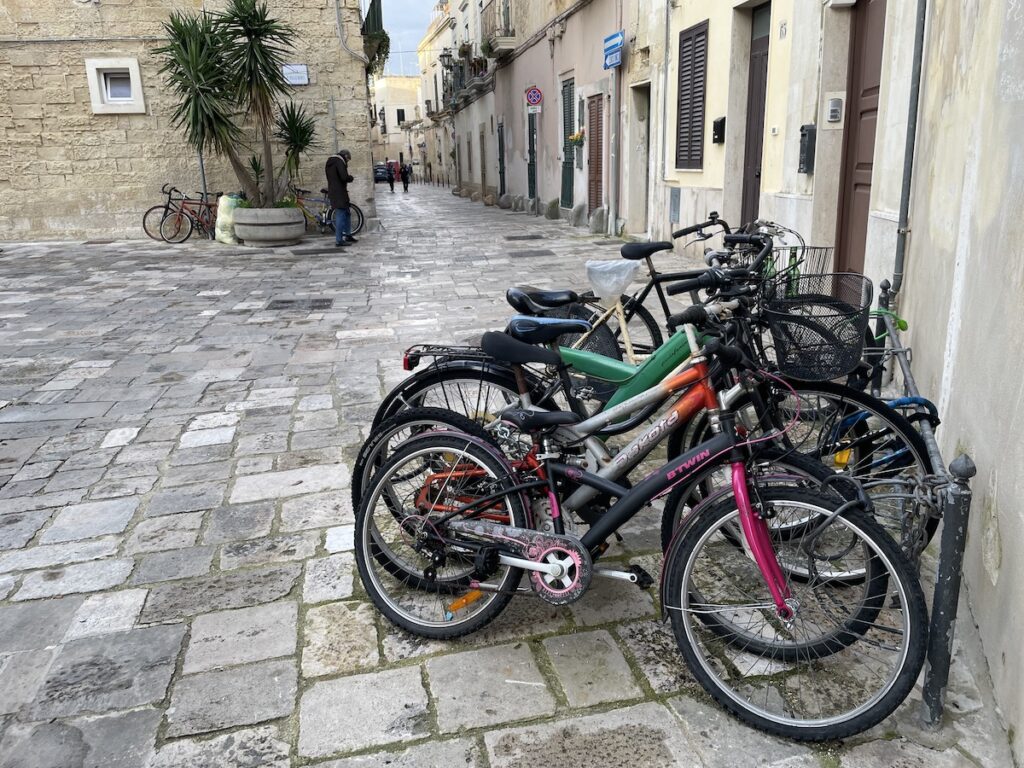
Outside Lecce, a cycle path runs through the Cupa Valley along green meadows and olive groves where many centuries-old trees appear to have been felled by dexylella, a bacterium that has wreaked havoc among the Apulian olives.
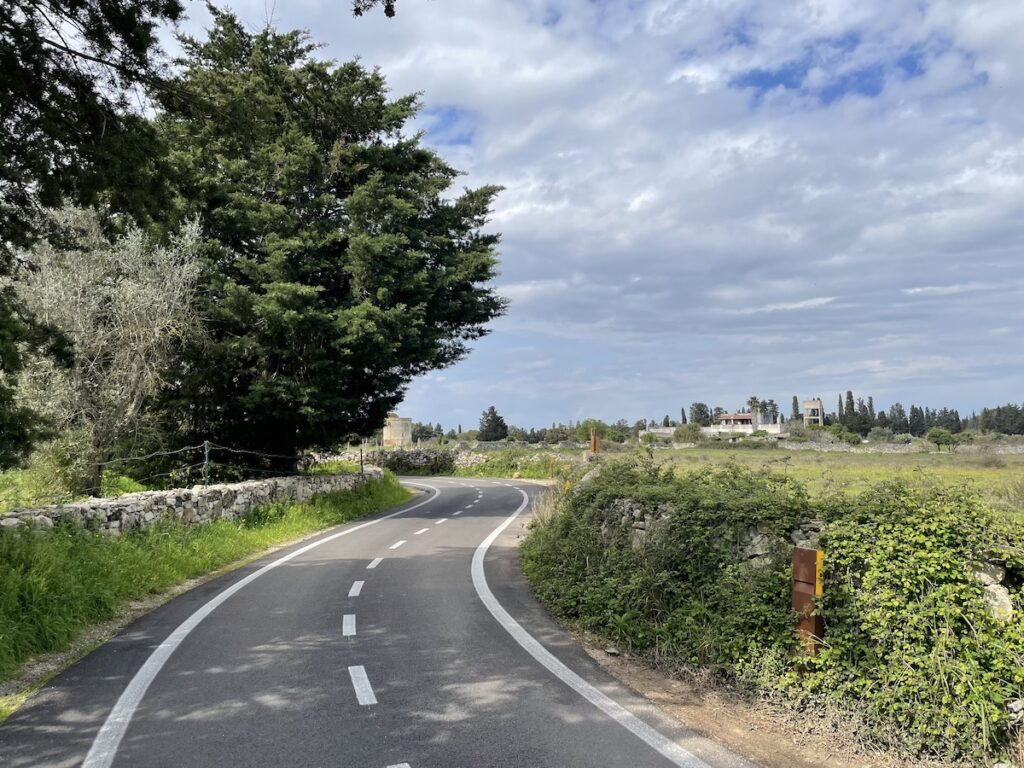
After a short visit to the recently excavated amphitheater of the ancient city Rudiae we encounter unexpected oncoming traffic in the form of a flock of sheep that causes a slight delay, but peacefully ambles around the bikes.
At Le Chiese Farmhouse In San Pietro in Lama, it is time for an olive oil tasting and a chat with owner Antonuccia. She explains that 70% of her 2000 (!) trees have been affected by xylella, but that there is still hope: young trees are often unaffected, new shoots sprout from the roots of dried-out trees, and dead trees are replaced by newly planted resistant varieties.
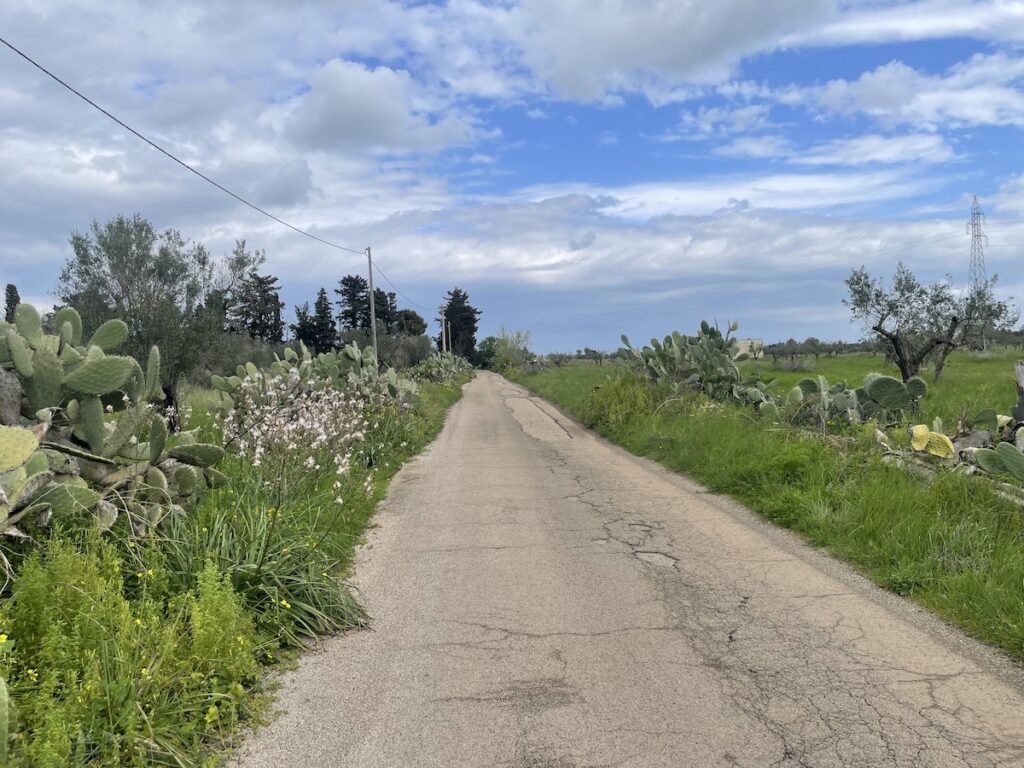
Nevertheless, she views the emerging cyclotourism as a welcome new source of income. She organizes tastings and direct sales of oil, and has furnished three suites for overnight tourists, who can also join for dinner if they wish.
In another agriturismo with a lush garden and matching swimming pool, Tenuta Donnanna, we meet a group of 8 cyclists from Vancouver, Canada, who are taking a day off here. When asked what brought them here, one of them answers succinctly: 'Countryside, weather, food, history: magnificent!'


The lady of the house, Signora Anna, demonstrates how to orecchiette (little ears) makes, the typical pasta of Puglia. It looks easier than it is, but after a lot of kneading and making a mess, it turns out okay and you gain a skill that you will carry with you for the rest of your life!

Then it is another 10 kilometers or so through green grain fields from Galatone to Galatina, where, during a walk through the ancient center, we try out the local specialty: the Typical Italian cake with custard cream filling, a pastry of shortcrust pastry and vanilla pudding.

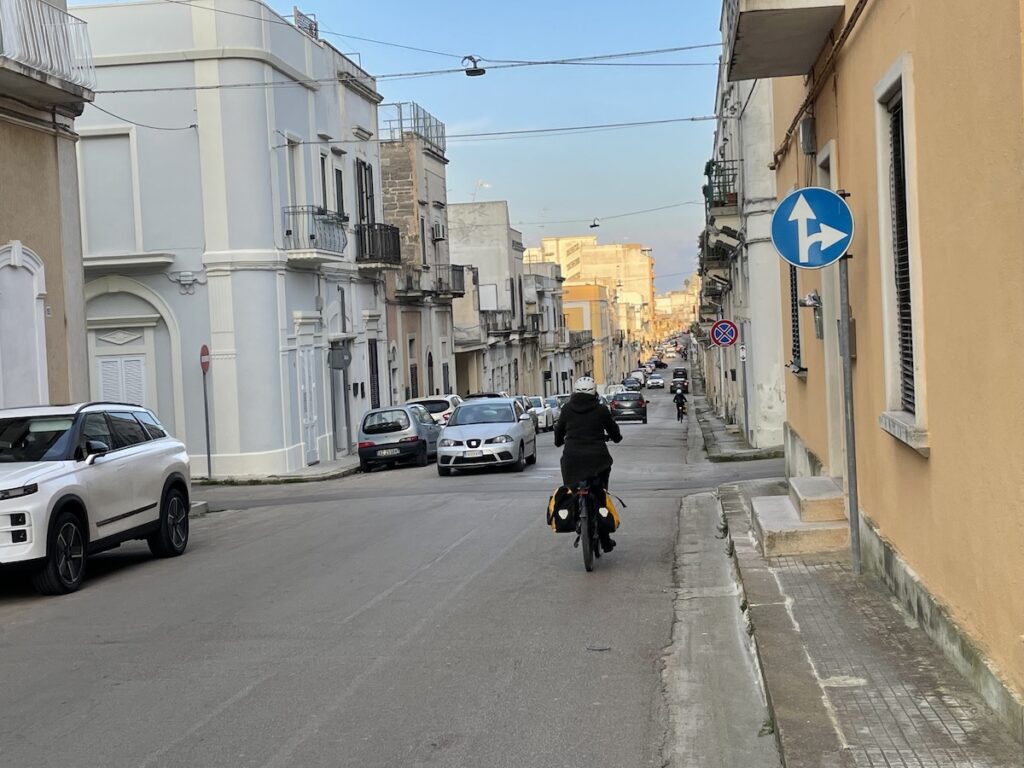
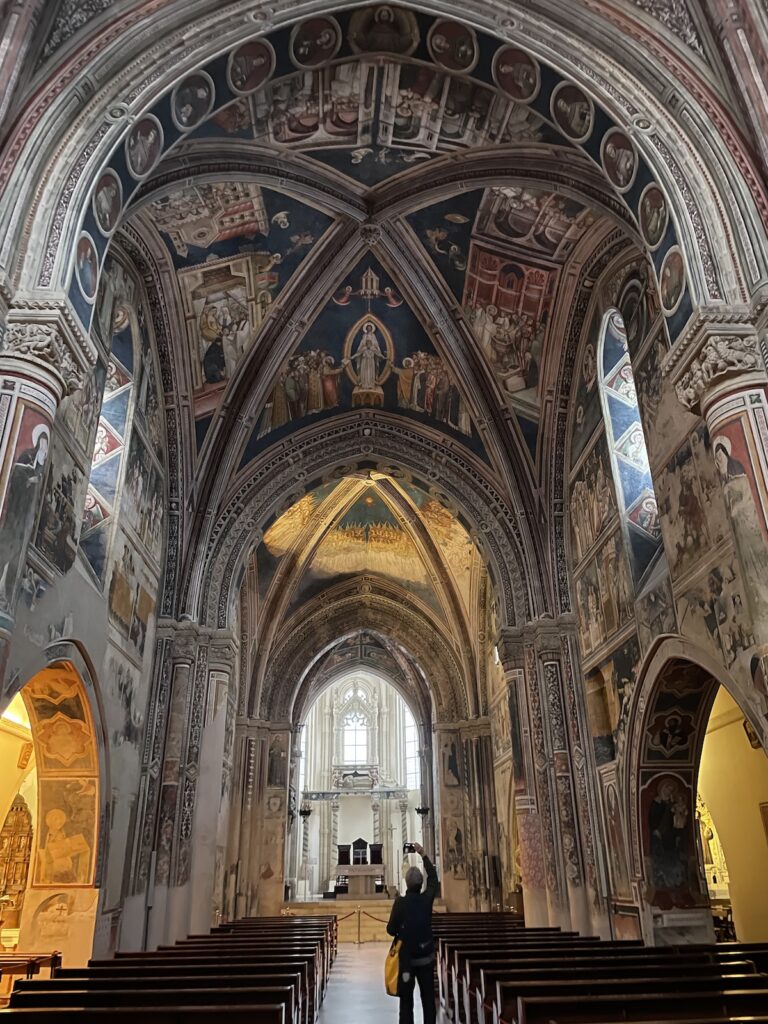
Just before it gets dark, there is still time for a visit to the exuberantly painted 14.e century Basilica of St. Catherine of AlexandriaFinally, in the village of Gemini, the owner of the hotel where we are staying has prepared a special surprise: we are dining in the Oratory dedicated to Don Bosco opposite the altar, where we are received royally, not to say divinely.
Day 2: from Ugento to Porto Selvaggio
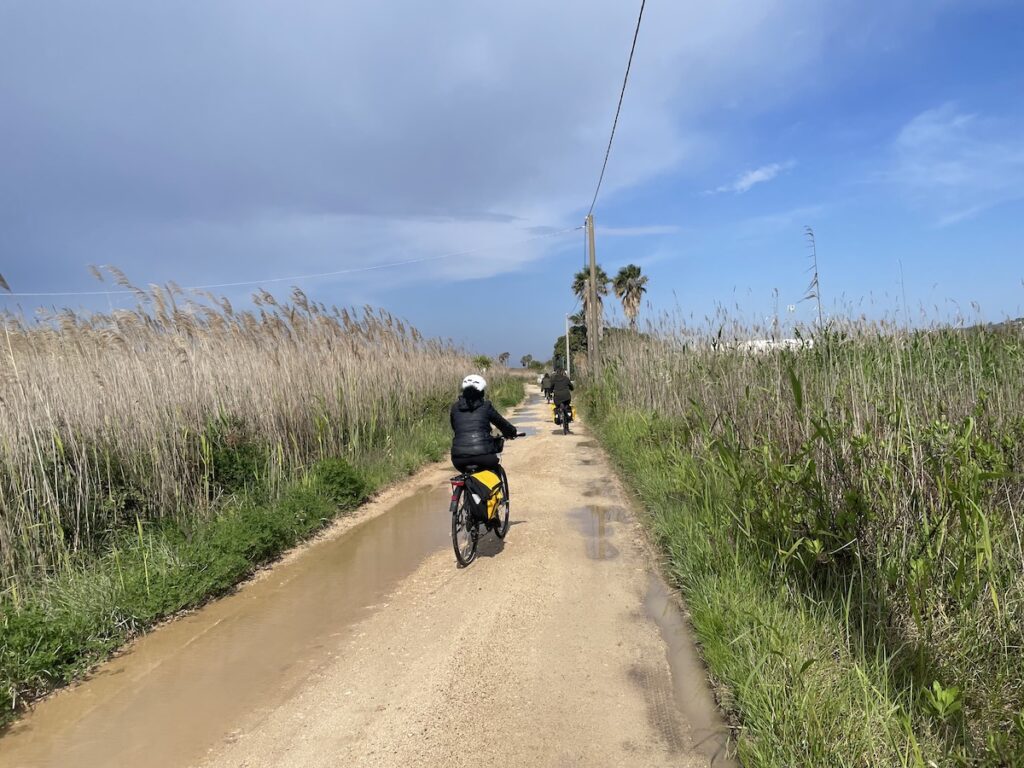
The next morning, a leads pedaling of 12 kilometers of unpaved roads in a landscape of reed beds, canals, and fens through the Ugento National Park, where the mayor explains how important it is that the wetlands be further opened up here for alternative tourism: 'We are less than a kilometer from beaches that are overcrowded in the summer, while in the reserve cyclists and nature lovers can indulge themselves all year round.'
The next stage leads along the sea from Longhair Northwards. Due to a strong headwind, it requires some serious pedaling (except for the participants who opted for an e-bike), but that shouldn't spoil the fun.
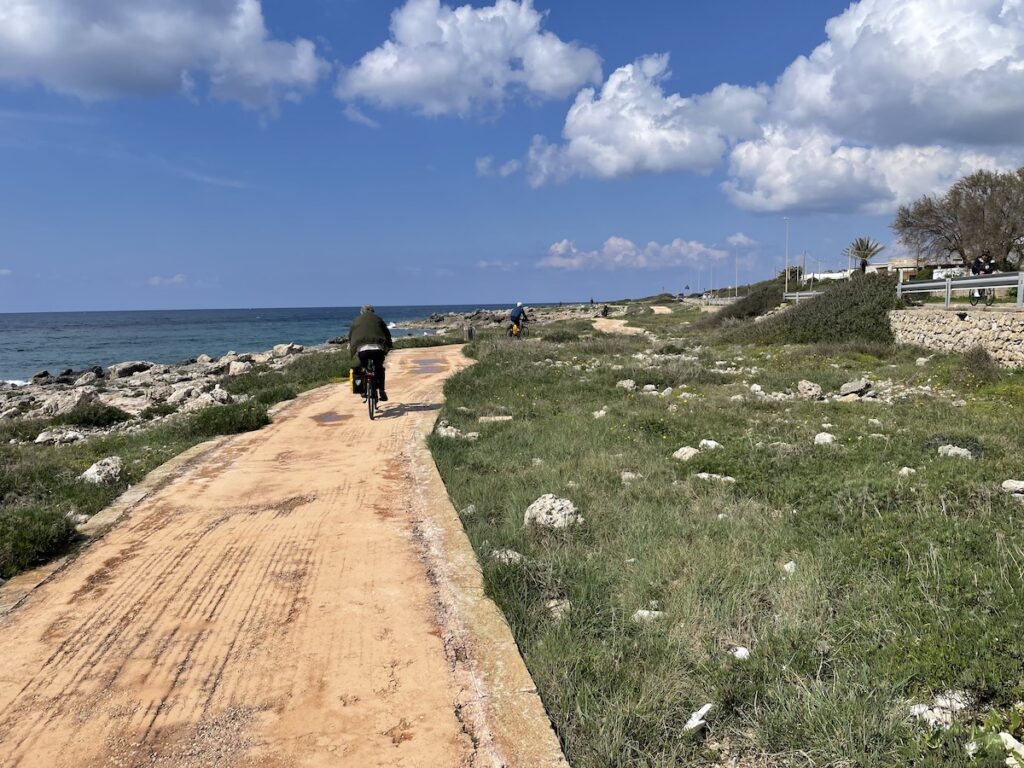
In the spring sun over the rugged rocky ground with a view of the Ionian waters, this is one of the most beautiful routes in the region. We pass the Suda Tower, a bulwark against a possible invasion by the Saracens, and a small bunker from the Second World War, when an Allied invasion was feared here.

A stretch inland leads via a light-traffic provincial road through gently rolling hills with seas of yellow daisies and broom bushes, purple thistles, and blue-flowering borage.
After a few deserted-looking seaside towns, we reach Punta Lace, from where you can see the city in the distance Gallipoli you can see lying there. This is also a nature reserve, where there is only room for cyclists and pedestrians, but it came very close to not going ahead.
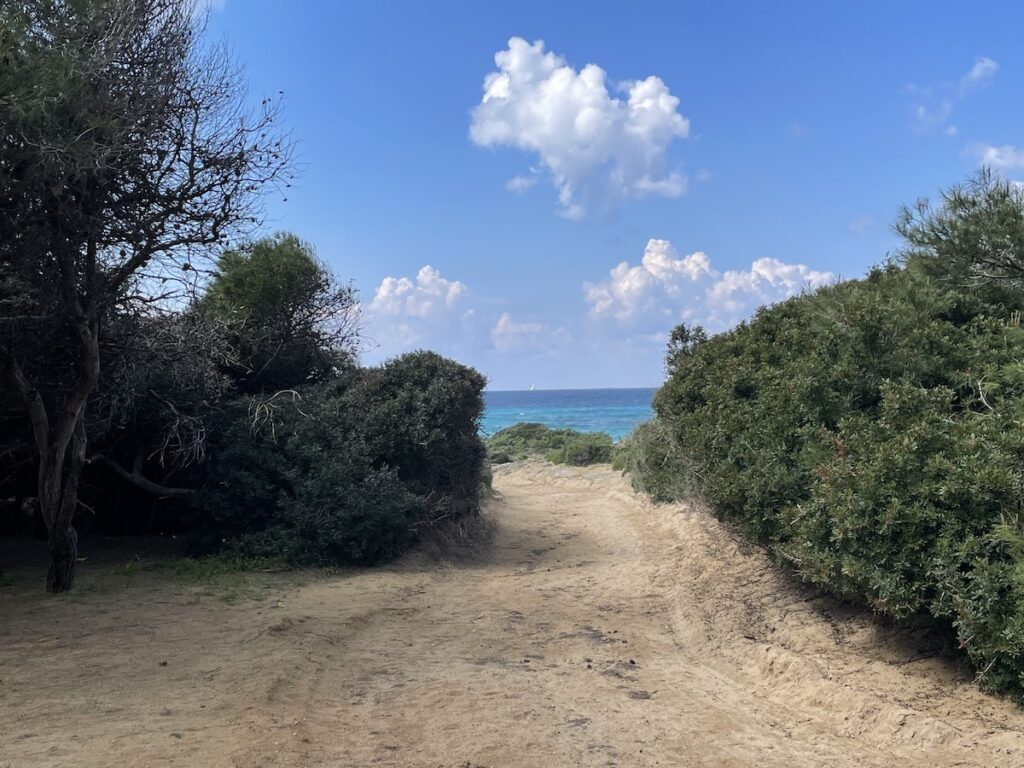
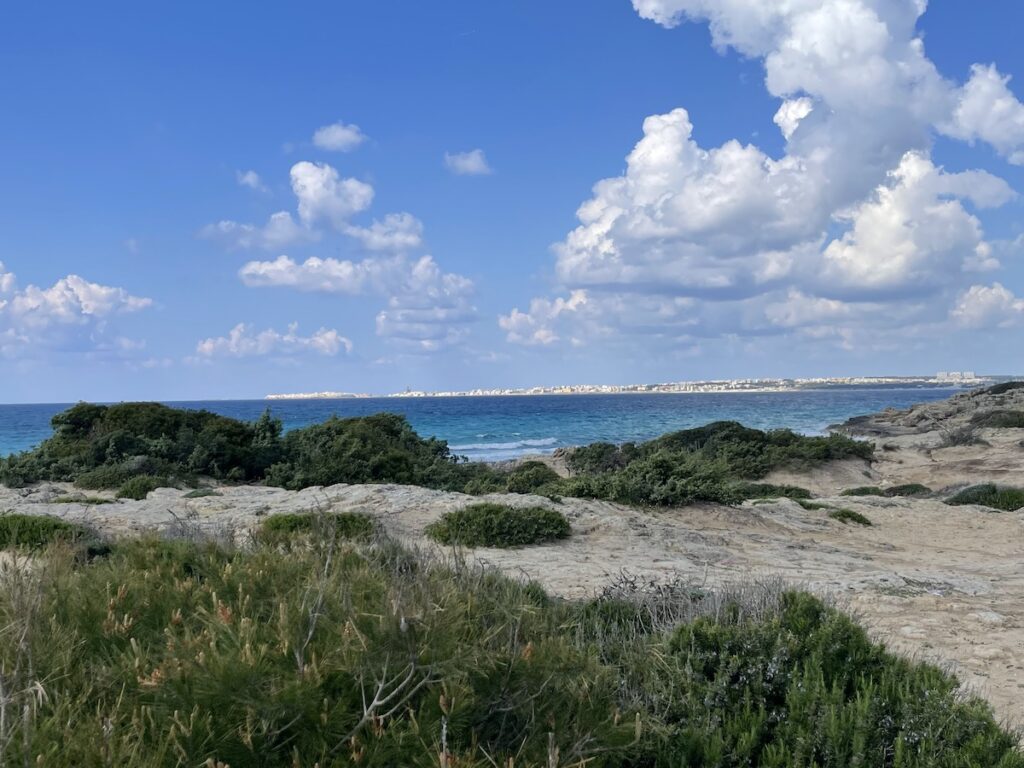
Supervisor Maurizio Manna during a picnic on the beach: 'We had to wage a hard battle against speculators who wanted to build here, but we were able to win by appealing to European regulations for nature parks. In the meantime, tourism has changed. People have more respect for nature.' As a result, Punta Pizzo is now a favorite spot for sea turtles that lay their eggs here.
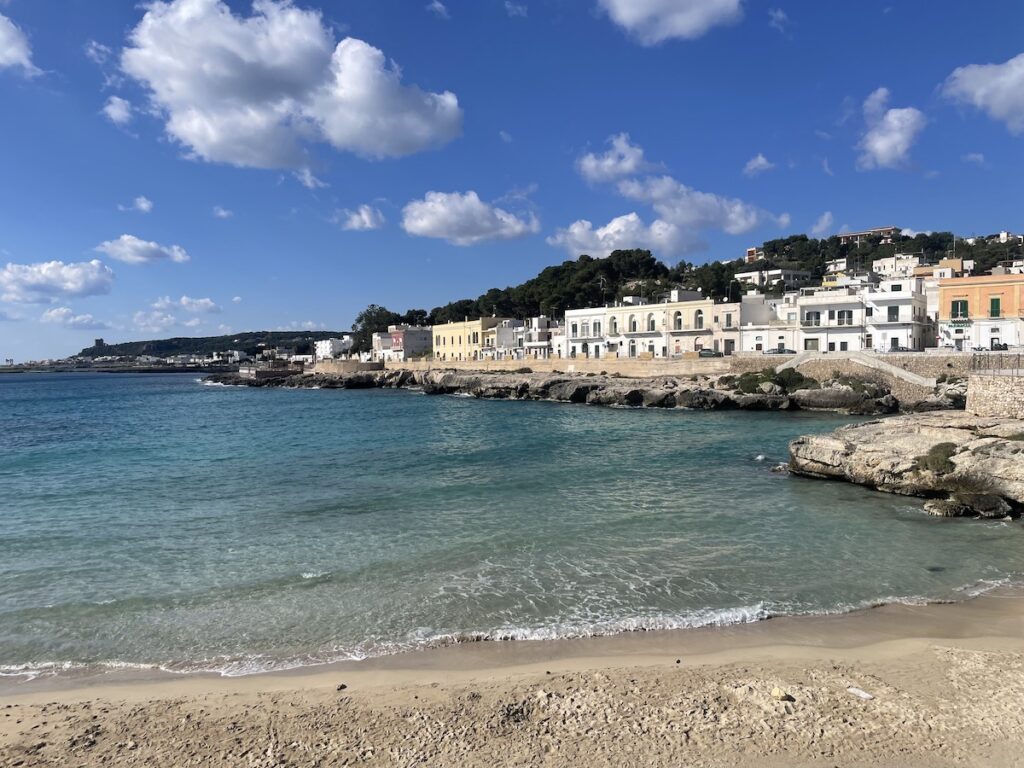
From Santa Maria del Bagno to Porto Selvaggio the road runs along the sea again, with a detour inland to Località Le Cenate, with the only real climb – 50 meters – of our trip.

After an asphalted road past a series of aristocratic residences of the 16e until early 20e century (with beautiful Art Deco architecture) leads a path that becomes increasingly rugged and rocky to a beautiful viewpoint over the Ionian Sea in the third nature park of the day, known for large numbers of prehistoric cave dwellings and special species of orchids.
This, too, was narrowly saved from people who wanted to build a marina there, says director Mino Natalizio. The Belvedere bears the name of Alderwoman Renata Fonte, who opposed it and was therefore shot dead in 1984 by a hired assassin on the orders of a fellow party member.
Day 3: from Nardò to Manduria
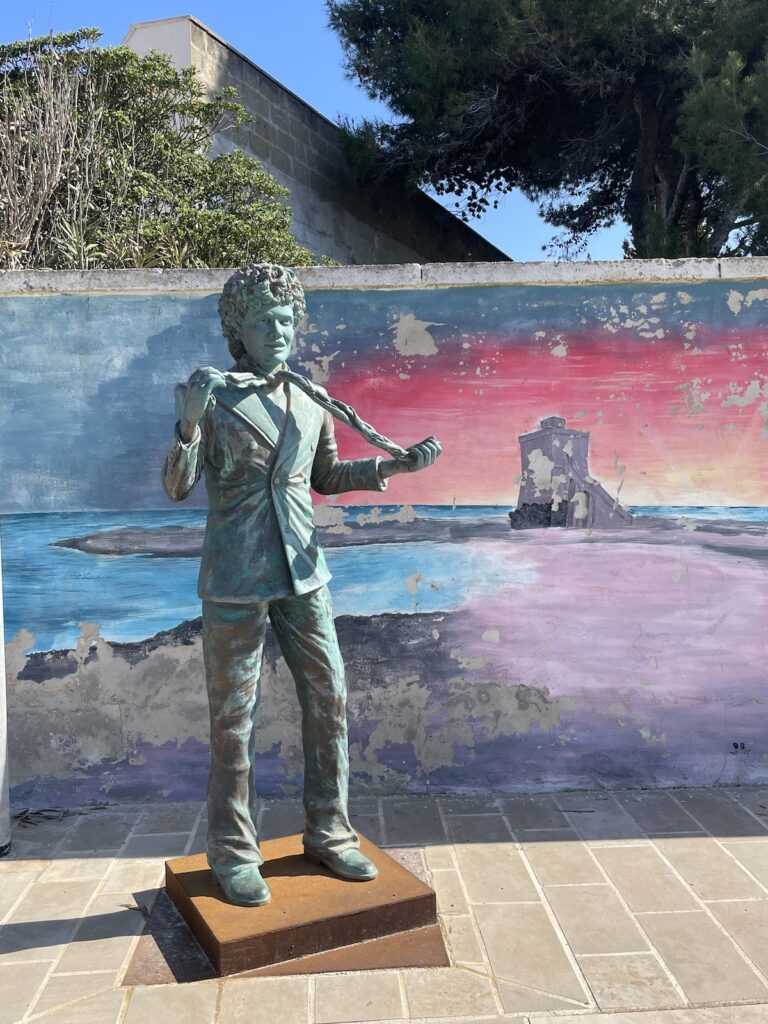
After an overnight stay in Nardò, a cozy little town where again the bright hues of the Lecce stone dominate, we depart from Squillace Tower where we are met by a hideous statue of Lucio BattistiThat is stated there because the renowned singer is said to have drawn inspiration from here for his 1970 hit. Blue water, clear water (Blue sea, clear sea).

The road occasionally crosses wooden boardwalks over salt marsh-like patches of marsh and passes through loose sand that has been washed across the road by recent storm surges. The peninsula Strea, which is a nature reserve, forms a natural bay here for the seaside resort Porto Cesareo, a long series of gleaming white hotels and summer houses that numbers 4.000 souls in winter and 200.000 in August!


The final stage goes from the (at least for now) beautiful beach of Punta Prosciutto through a dune landscape along the one dating from 1547 Torre Colimena, one of the most beautiful fortifications along the Apulian coast.


We arrive at the Salt pan of the Monks, a former salt pan that is now a reserve for flamingos, avocets, and herons, and where dune flora and samphire grow.
That was not the case for a long time, says director Patrizio Fontana: 'Salt mining ceased in the 70s, and 20 years ago this was a parking lot. When we flooded the site to return it to nature, it led to fierce protests from residents. There was also talk of vandalism, but we found an association of retired military personnel willing to look after it voluntarily. Now the situation is different. It has taken a long time, but there is growing understanding for the park and its objectives.'
It is a story we have heard many times. In Salento, the tourism sector is no longer solely focused on large numbers, and conversely, the success of the slow tourism again influence on the mentality of the population.
As Carlo, our guide in Lecce, put it: '15 years ago you were still a here loser if you used the bike. Now they are taking an example from foreign cyclists who clearly have no losers are.' The 3-day trip ends in high spirits with a wine tasting in the cellars of the Manduria producers in the city of the same name where we the pride of the local winery, the Primitivo of Manduria, to be able to enjoy in many forms.

Eat and drink on the go
Besides the weather, the sea, the culture, and the bicycle, Salento is renowned for its cuisine, which excels particularly in its wide variety of fresh vegetables. To give an idea, here follows a – incomplete – list of the dishes prepared by the wife of the manager of the Oratory of Gemini:
wild asparagus omelet, orecchiette with turnip tops (with turnip greens: the quintessential Apulian dish), potato croquettes, fried pizza, meatballs in tomato sauce, raw fennel with olive oil and salt, strong local rosé from the negroamaro grape, pasticciotti with a local sparkling wine, and liqueur of carob (Carob).
At the picnic on the beach at Punta Pizzo, we were served, among other things, purple and orange parsnips, raw young Fava beans (broad beans), eggplant (aubergines) and lamps (look like small onions, the Dutch translation is 'wild hyacinth bulbs', but almost no one knows that) in oil, fresh and salted ricotta cheese cheese and strawberries that really taste like strawberries.
On other occasions, dinner was served. broad beans and chicory (puréed broad beans with chicory, another classic), caponata (sweet, sour, and salty vegetables braised in oil) and various types of cheese and sausage.
As far as the wine is concerned, the primitive en negroamaro (both red and rosé) out, alongside the local white Verdeca in fianoAnd you can find olive oil in all varieties, from tangy to mild, or flavored with rosemary, chili pepper, or turmeric.








Comments