


 Bertine Jobse
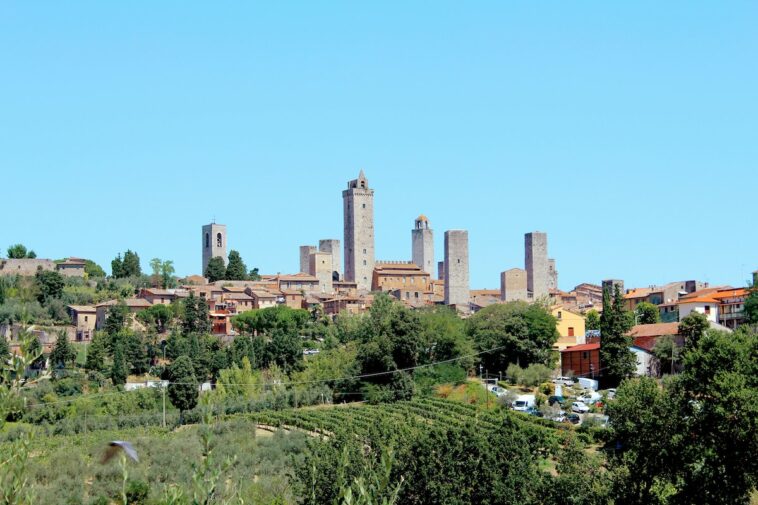
Politically, you could say that Italy is currently quite nationalistic. Giorgia Meloni's party, Fratelli d'Italia, is seen as a nationalist, conservative, and traditional party. However, I wouldn't necessarily label Italy a nationalist country. Sure, Italians are proud of their cuisine, fashion, language, and traditions. But the Italian flag only flies at sporting events, and there's certainly no such thing as an "us versus them" mentality. At least, not at the national level. At the regional level, it's a different story, and it's even been given a term: campanilismo.
Our bell tower is higher
The term campanilismo refers to the love Italians have for the region, city, or village where they live. Italians are strongly connected to their place of origin and therefore tend to stay close to that place. This connection to their homeland is more important to many Italians than simply being Italian.
Campanilismo comes from the word bell tower, which means bell tower. Every town and village in Italy has a bell tower, which stands proudly in the center of the town or village, both physically and symbolically.
A derivative of the term is the word campanilista, which refers to someone who the campanilismo-philosophy follows. Besides a derivative, there is even an Italian expression that refers to the campanilismo refers to: Il nostro campanile è più alto, which means "our bell tower is higher." This expression perfectly captures the rivalry between regions, cities, and villages. Campanilismo occurs throughout Italy, but more about that later.
Pretty or childish?
There is actually no good translation of campanilismoWhen I run the term through Google Translate, the word "parochialism" comes out. This term means something like narrow-mindedness, a focus on oneself, and a lack of interest in one's surroundings. That doesn't sound very positive... and I understand that.
On the one hand, it's certainly beautiful, that deep love for your birthplace and the traditions you grew up with. But the aversion to those who come from elsewhere, I find that rather exaggerated and, frankly, a bit childish.
For a campanilista is everyone who does not come from his region, city or village a stranger, an outsider. Sometimes I fantasize about emigrating to Italy, but with this in mind, my enthusiasm for the idea wanes a bit…
Sono Fiorentino
In the Middle Ages, there was really only one important question for Italians: who had the tallest tower? A large tower signified great power and prestige. The aforementioned bell tower also played an important role in the Middle Ages. The bell tower was more than just a part of a church. It symbolized community connection.

In the book Coffee Shops and Carabinieri, by Miriam Bunnik, she writes about typical Italian phenomena, including the campanilismo. So she tells the story that campanilismo originated in two villages around Naples: San Gennaro Vesuvino and Palma Campania. The bell tower of the former lacked a clock on its eastern side, so residents of the other town couldn't tell the time. So, brotherly love wasn't exactly the case.
Between 1860 and 1870, the state of Italy was founded. Before that, the country consisted of numerous small states, kingdoms, and duchies that were, to put it mildly, not friends. Fighting was frequent, such as between Pisa and Florence, and between Florence and Siena.
Besides the conflict between the states, each state also had its own dialect and traditions. Despite the merging of the small states into the larger Italian state, Italians cling to the dialect and traditions of their birthplace throughout their lives.
You will therefore hear an Italian say more quickly: 'Sono Fiorentino' (I am a Florentine) or 'Sono Napoletano' (I am a Neapolitan), then they say: 'I'm Italian'.

North vs South
In addition to the divide between the various regions, cities and towns in Italy, there is also a divide between the north and the south of the country, which hinders the sense of unity among Italians.
Northern Italy is considerably wealthier than the south, which is reflected in the northerners' mentality, which is much more business-like. Northern Italians are generally reserved, goal-oriented, punctual, and highly value discipline.
In the south, people have a much more relaxed and hospitable mentality. They are generally very attached to family and traditions, and they prioritize enjoying life. This also means they place less value on being on time than northerners.
Campanilismo in practice
The program campanilismo This is noticeable throughout Italy. In Lucca, for example, they have a proverb that perfectly captures the rivalry with nearby Pisa: È meglio avere un morto in casa che un Pisano alla portaThis means something like: It's better to have a dead person in your house than someone from Pisa on your doorstep. Quite a bold statement.
There can also be competition within cities. For example, every year in Siena, Palio of Siena This is a horse race on the city's famous square. Different districts of the city compete against each other in this race, which is accompanied by much passion and emotion. Siena residents who have moved elsewhere come back to the city especially to cheer on their district.

Miriam Bunnik also gives an example in her book campanilismoShe talks about the tradition that the first child born in a new year is named in the newspaper. In 2019, a boy was born in Pisa, whose parents came from Livorno. Instead of being happy about their son being in the newspaper, the parents were incredibly disappointed that their son had been born in Pisa.
I find it campanilismo A contrasting phenomenon: it can be seen as an obstacle to national unity, but it's also a key component of Italian culture and identity. It's a deeply felt love for one's own community and traditions, but it can also lead to exclusion and conflict. The trick, then, is to find a happy medium. Perhaps winning the World Cup next year could help...








Comments