

 Aart Heering

Le Marche, or The Marches, is what you would call a lovely region. The gently sloping hills that slowly descend to the Adriatic coast are planted with a large number of different crops – wheat, lucerne, grapes, sunflowers, olives and, for a few years now, solar panels – which provide a fresh change in the soft green landscape.
When you drive along winding country roads through ancient small villages and hamlets built in tuff, it feels like you are on a journey into the past. Rightly so, because De Marken is full of history.

Where does the name De Marken come from?
The name alone: in the early Middle Ages, a mark was a border shire of the Carolingian Empire. For example, in the north you had the Denmark, in the east the Mark Brandenburg and on the south side a few counties that were known together as De Marchen, which is now the name of this central Italian region.
From Rome to The Marches
De Marken also produces tasty wine and that's a good reason to go there at least once a year. From Rome it is a trip of about 250 kilometers (280 to the coastal town of Fano) on the Strada Provinciale 3 through the Apennines past medieval gems such as Spoleto, Foligno and Gubbio.

An alternative route goes a little further north, from Città di Castello to Apecchio – the road is also called the Strada Apecchiese – over the crest of a ridge through a beautiful nature reserve where last weekend we saw not one or two, but at least a dozen wild boars in the evening twilight. and encountered piglets.
After the border between Umbria and De Marche you arrive in Acqualagna, which is known as the truffle capital of central Italy and where you can indulge in every trattoria truffle tagliatelle.
Past Acqualagna it is worth leaving the Statale for a while and instead of the tunnel the ancient, still constructed by the ancient Romans, Via Flaminia through the Gola del Furlo, a breathtaking canyon with well-secured hiking trails along the river Condigliano.

In the nature reserve of the same name you will come across the Ristorante Albergo Antico Furlo, which has been renowned for more than 80 years as a stopping place for Mussolini. The Duce used to travel back and forth between Rome and his hometown Forlì in the Romagna, stopping halfway here to enjoy truffle food and the mistress of the moment.

He is said to have stayed in the Antico Furlo no fewer than 57 times in the same room, still decorated in the XNUMXs style, which is still popular among nostalgics and for which you can therefore pay double the rate. (I never wanted to do that, but I did eat well.)

Furlo has another fascist surprise in store. If you walk or drive upstream, at the top of the Pietralata you can see the profile of Mussolini's face carved into the rock. The idea of immortalizing Mussolini in the rock here was realized in the early 100s. It is over XNUMX meters long and clearly visible from a great distance.

Descending to the Passo del Furlo you enter the Valle del Metauro, known for the Battle of the Metauro of 207 BC. smashing Hasdrubal Barkas, Hannibal's brother, and liberating Rome from the threat of Carthage.
When you go on a wine tour like this, you sometimes end up in places you would never go otherwise. This time it was Fossombrone, a medieval town built against the slope, beautifully situated on the bright green river Metauro. The central Via Garibaldi is flanked by ancient, if not always well-maintained, summer palaces of Renaissance families such as Malatesta and Della Rovere.
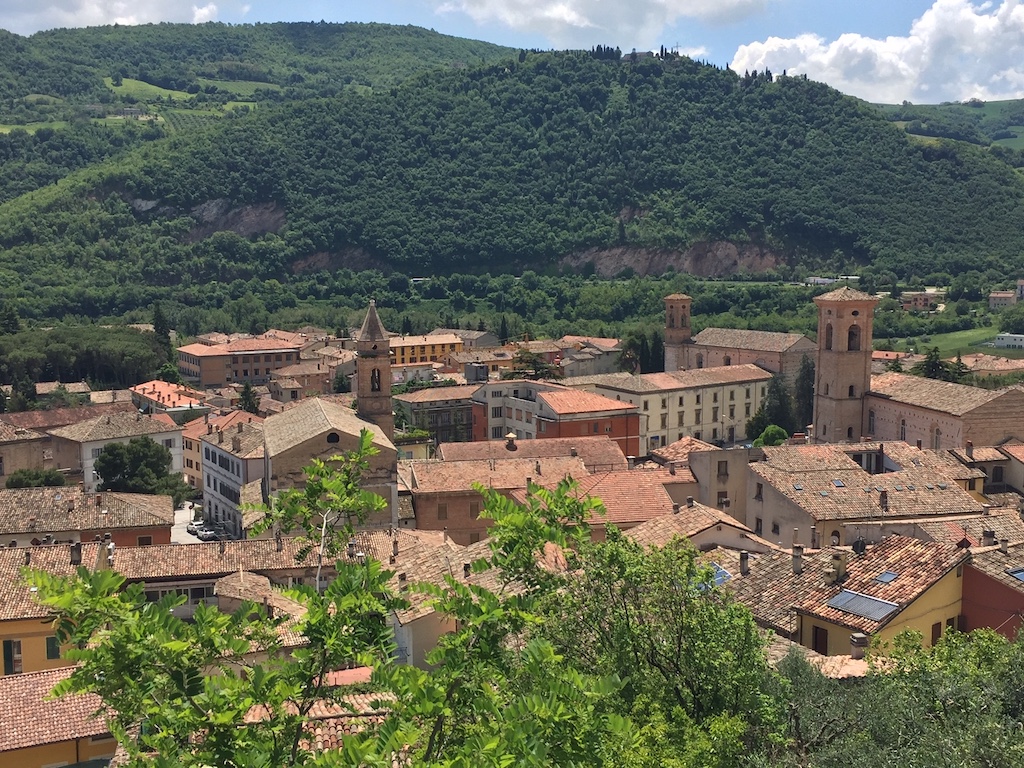
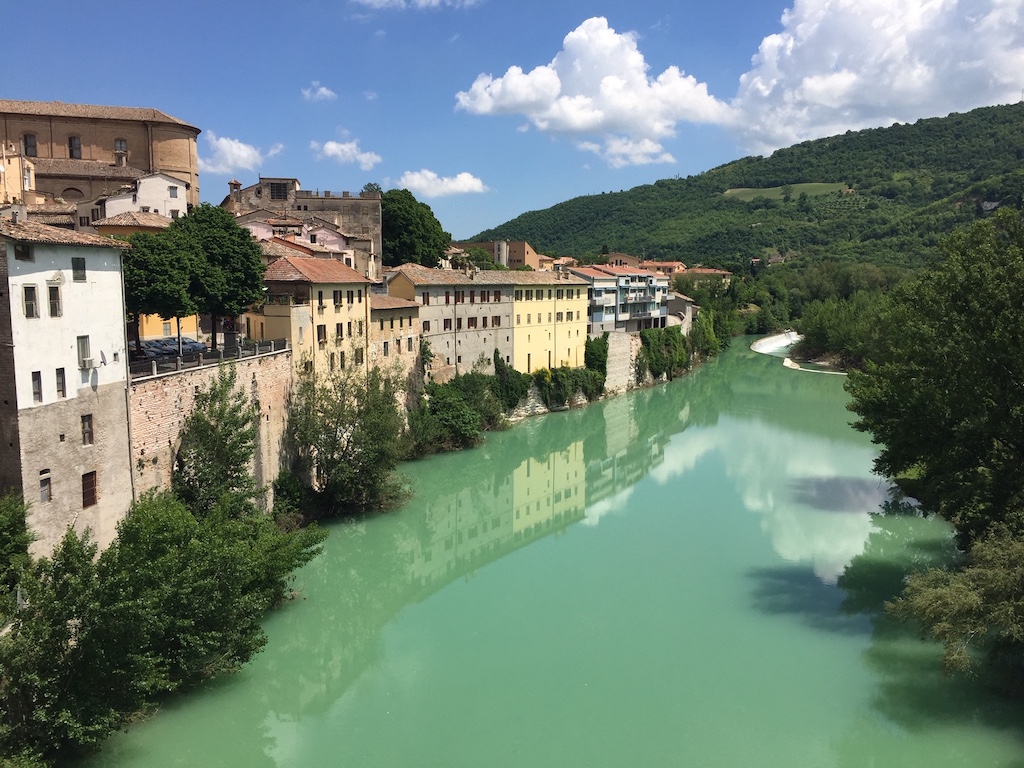
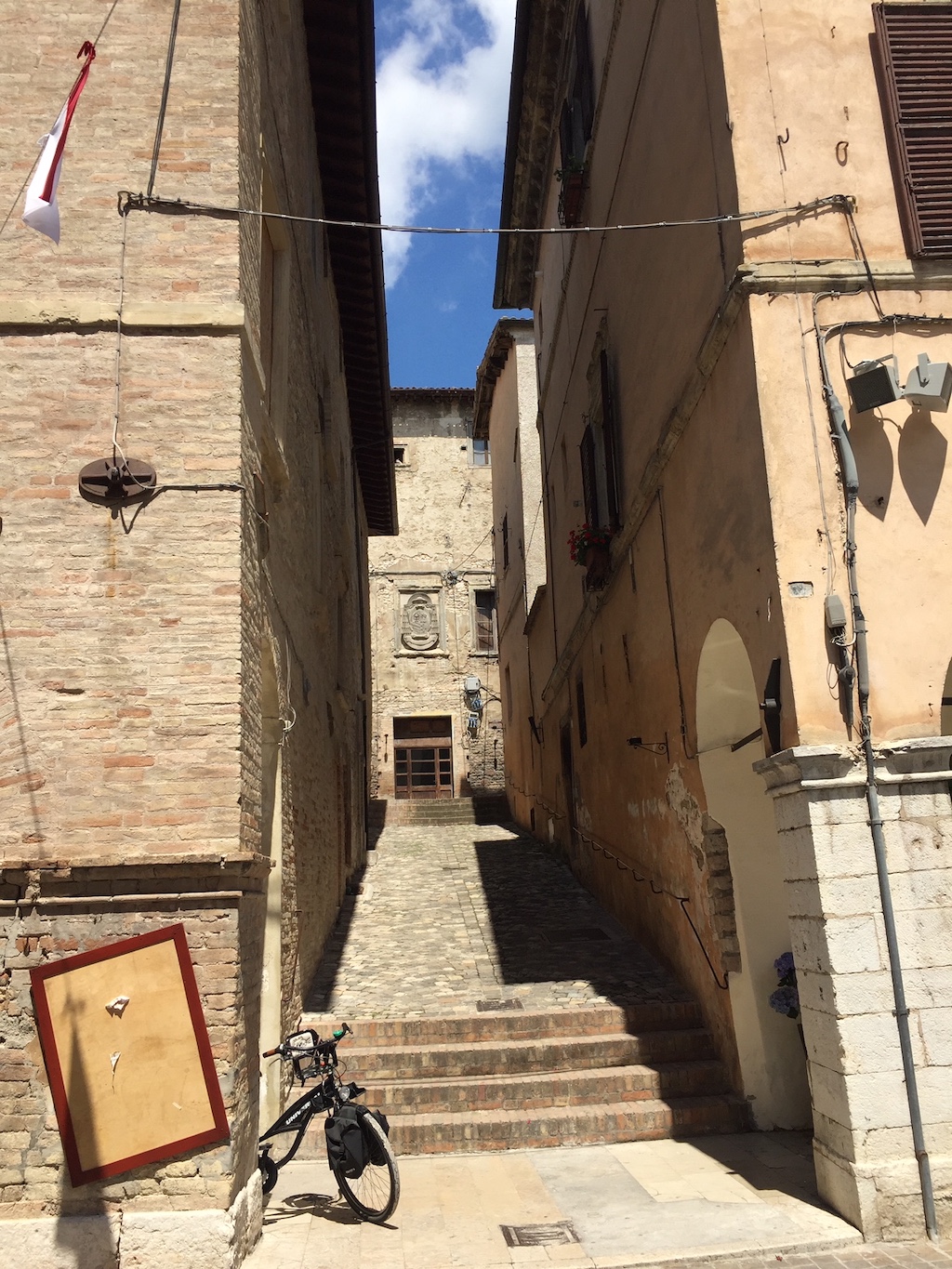
From the higher Corte Alta, built in the 15th century by Federico da Montefeltro, the warlord who had a corner cut out of his nose to get a better view of the battlefield, you have a magnificent view of the city.
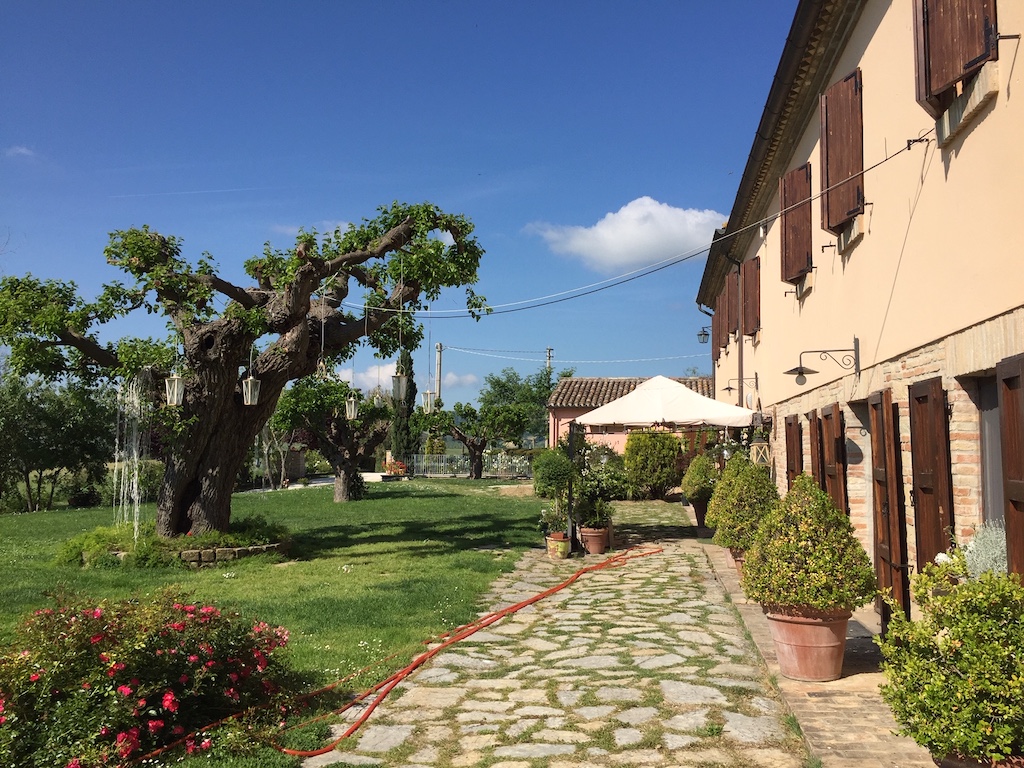
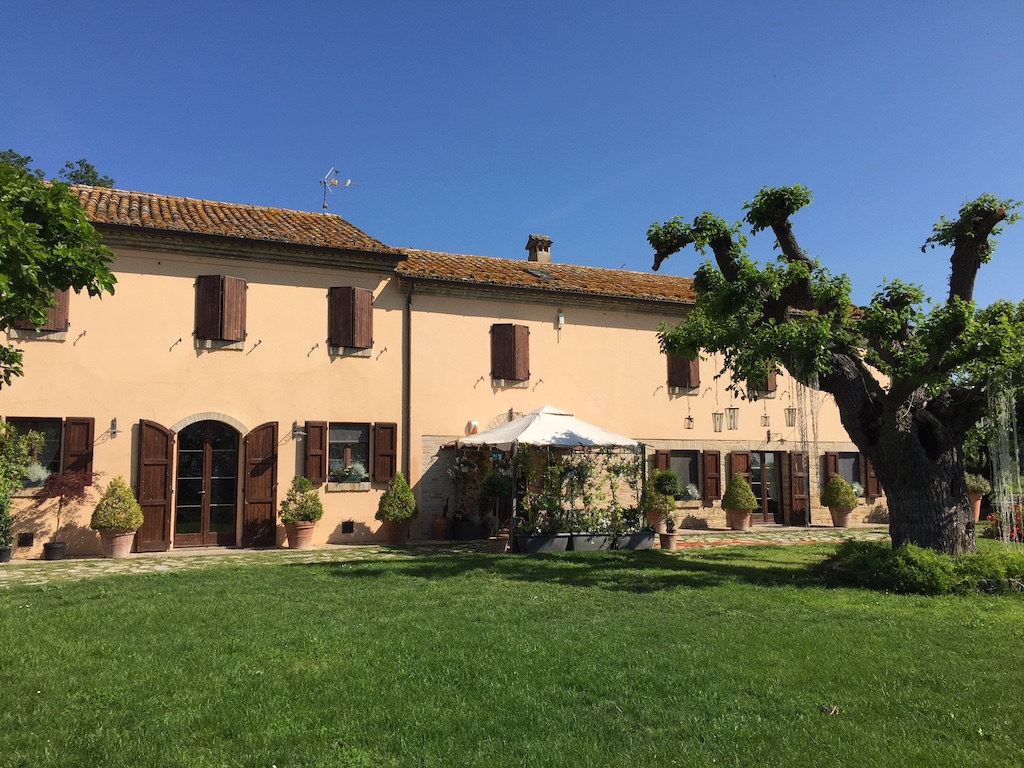
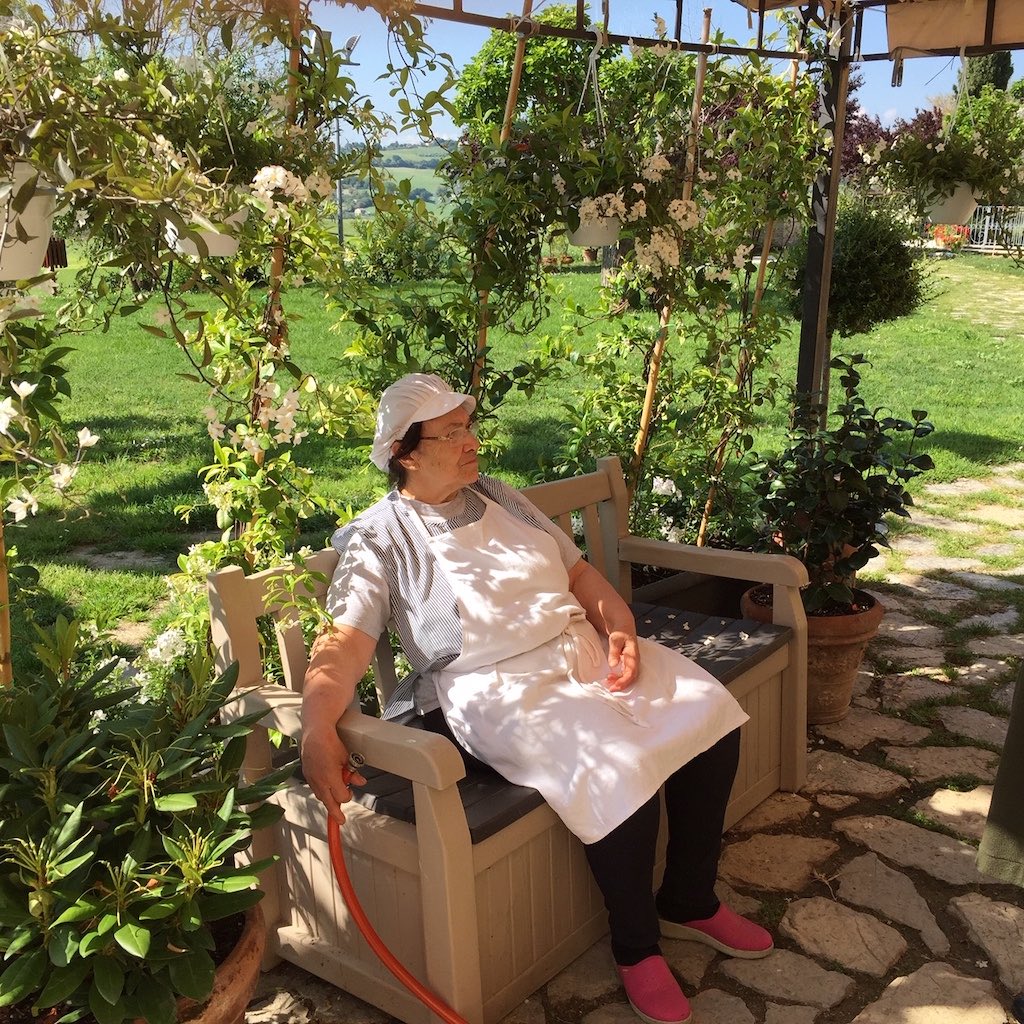
But our goal was the village of Cartoceto, where we stayed the night in a rural agriturismo, which takes its name from a few large mulberry trees, the Locanda del Gelso. Manageress Signora Rosaria, who often has Dutch customers in the summer from nearby Fano on the Adriatic coast, served us the local passatelli. Short thick fresh spaghetti made from a mixture of flour and Parmesan cheese, with porcini mushrooms and tomato, followed by a hearty grilled platter with a taste of the wine we were going to buy the next morning.
Buy Marchean wine
We did that at the company of Robert Lucarelli, a winegrower who has grown quite a bit since we bought from him, but still offers attractive prices for his poured straight from the reservoir vino sciolto (literally 'loose wine').
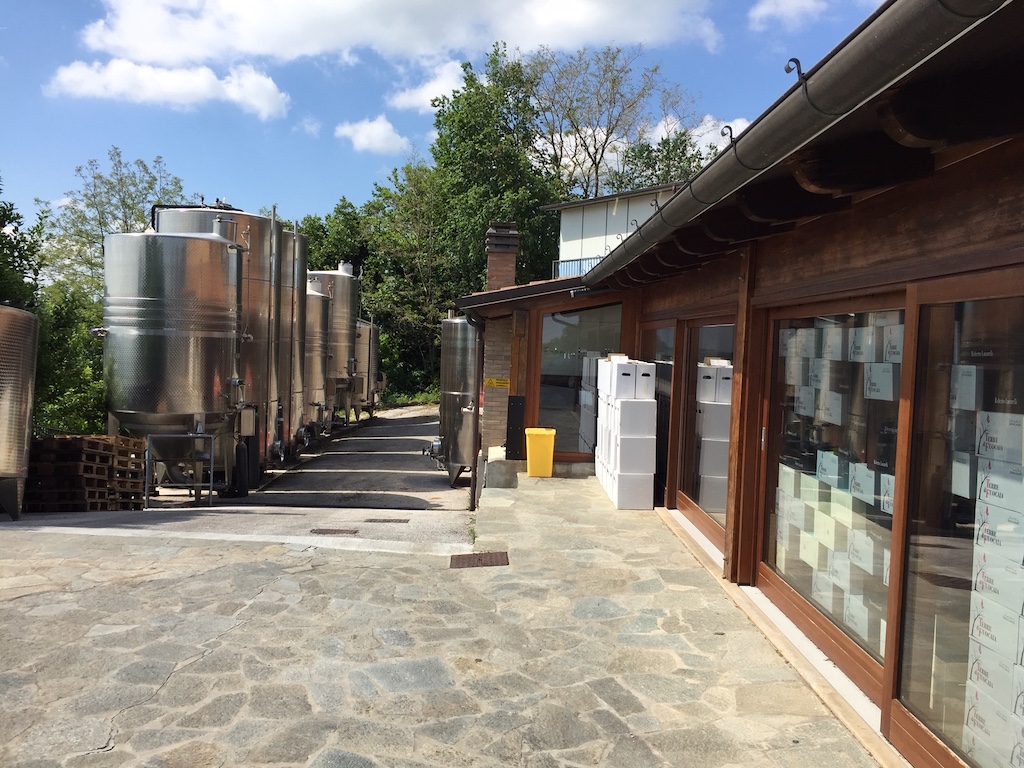
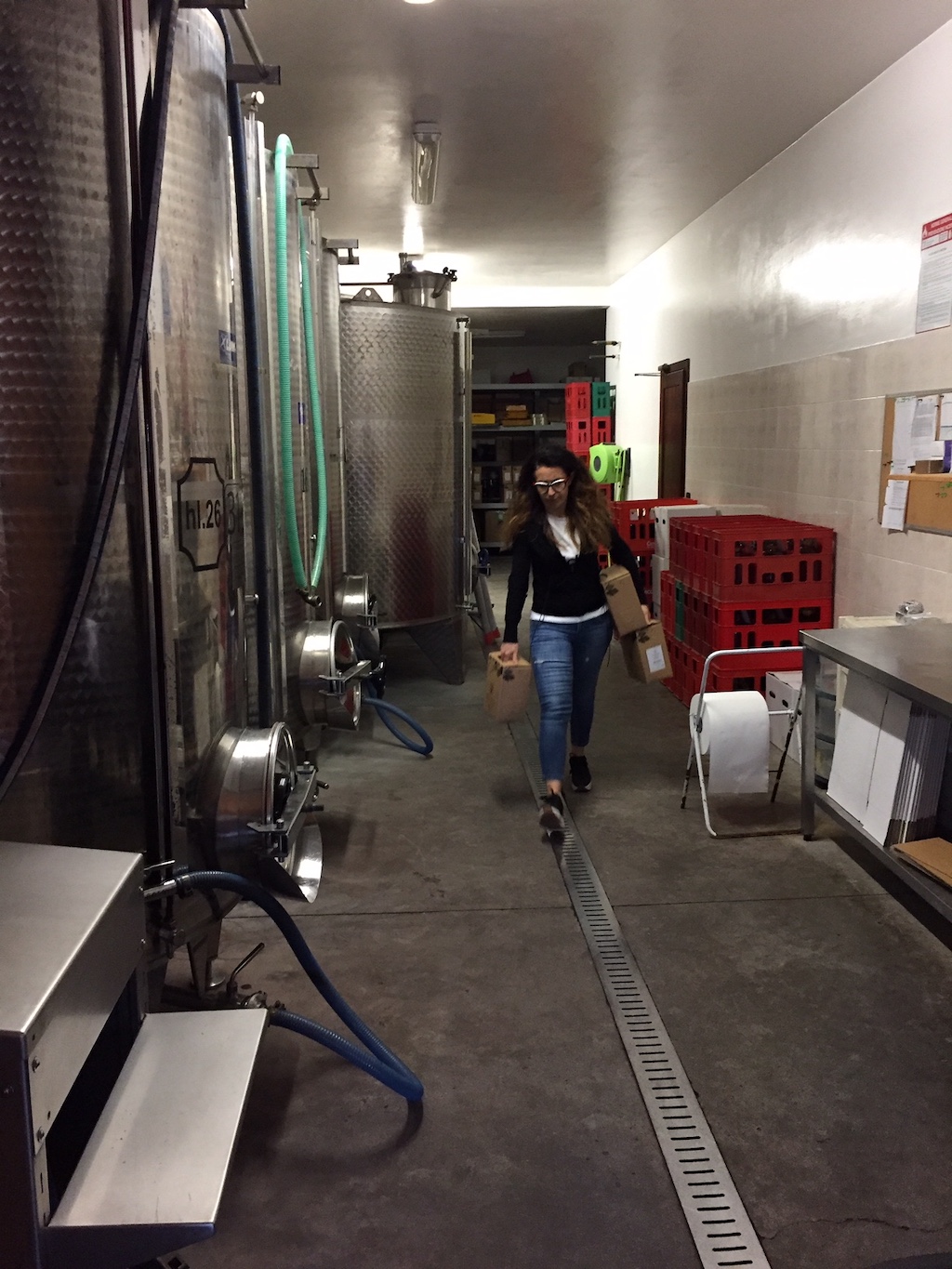
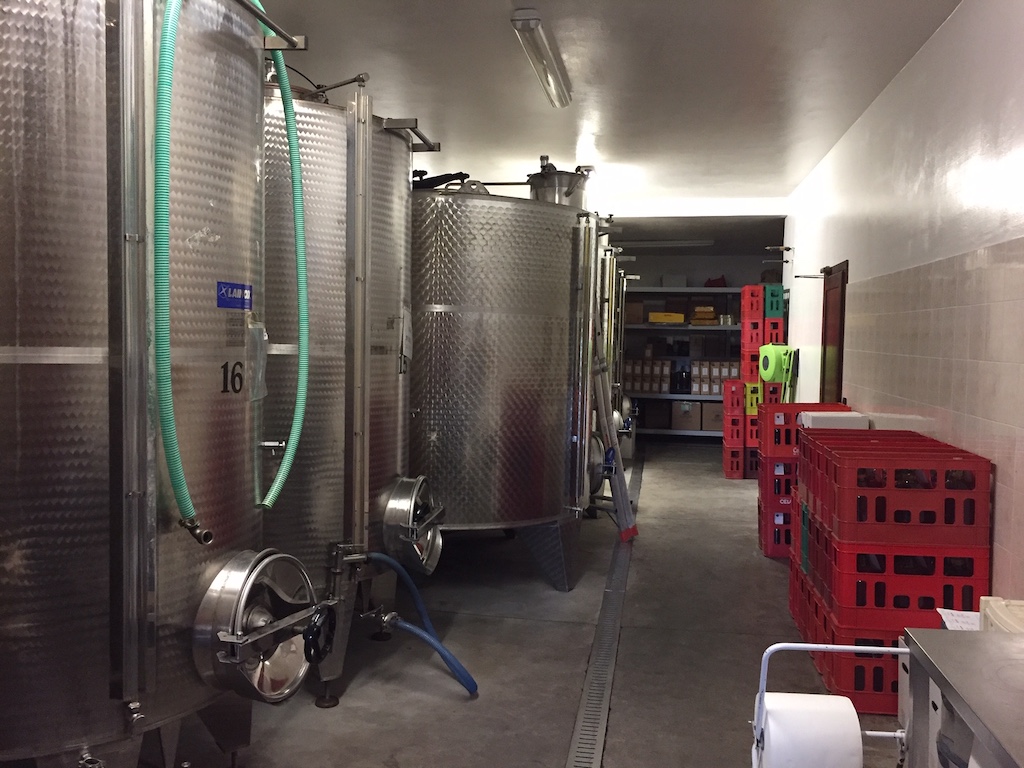
I mainly come for the local white Bianchello del Metauro, but also the red, somewhat strong Sangiovese is very good to drink. And you don't have to worry about the price. The red wine, for example, as a Sangiovese DOC costs € 6,80 per bottle, but if the maximum quantity that can be sold as DOC is exceeded, the rest is sold as Rosso Marche for € 4,60. And if the same wine does not have to be bottled, you get five liters for € 12,50. Count out your winnings!

In the past we came up with a demijohn, a 55-litre carboy, to be bottled at home, but now we use the bag-in-box system: five-litre cartons that fit in the fridge and have a handy tap attached. Less bucolic, but just as handy. Cheers!








Comments