

 This Is Italy
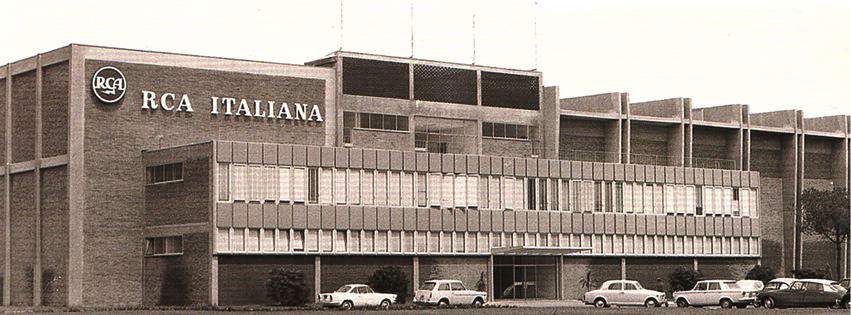
All films were shot in Cinecittà, but most of the soundtracks were recorded in the RCA Studios. All the great composers worked there: Ennio Morricone, Riz Ortolani and Alessandro Alessandroni.
The studio, with the legendary studio A the size of a hangar and the only place in Italy where you could record an orchestra and a choir at the same time, is located on Via Tiburtina, on the outskirts of the city in the XNUMXs, and was part of the Italian division of the American record label RCA.
Founded in 1951 as part of the Marshall Plan, RCA Italiana was 90% owned by the US parent company and the remaining 10% came from the other bank of the Tiber, from the Vatican.
The Vatican money did not hinder artistic freedom. In fact, Pius XII has been a strong advocate of investing in modern culture in Rome, encouraging RCA to invest in local artists.
Until 1954, RCA Italia was mainly concerned with the distribution of American artists, sales did not go as desired and the company threatened to close. Pope Pius XII urged the construction of studios and proposed as director Ennio Melis, he was an ex-secretary of the Sant'Ufficio. Under his leadership, RCA Italiana prospered.
In addition to film music, almost all Italian pop stars recorded, from Mina, via Patty Pravo and Domenico Modugno to Francesco de Gregori and Paolo Conte.
In fact, that studio complex is the cradle of Italian pop music, but many foreign artists also came to Rome to record. The RCA always had the latest technological advances, but at the same time was cheap. Cheaper than London, Berlin or Los Angeles and also an artistic mastermind Lilli Greco, he joined the company in 1958, who was not afraid to invest and experiment.
Greco was also a man who had a nose for talent and gathered it around him: lyricist Franco Migliacci, composer Ennio Morricone and sound engineer Sergio Marcotulli. The latter, a true button magician, has been behind the buttons on thousands of records, including many soundtracks. Like these.
Franco Micalizzi mentions him as his favorite sound engineer and a man full of stories. Marcotulli was born in Rome in 1930 and still lives there. The first contact has now been made and I hope to have a definite answer soon whether I can meet him.
The peak of RCA Italia and the studios on Via Tiburtina is in the late 1983s and early 1986s. Towards the end of the seventies, the company deteriorates, in XNUMX the German BMG seems to be interested, a deal that is closed in XNUMX. The recording studios will also close with the takeover. Now the legendary RCA studios on Via Tiburtina are a warehouse for shoes and clothing.
Frequently asked questions about the RCA
The Vatican's involvement with RCA Italiana had no negative impact on artistic freedom. On the contrary, Pope Pius XII encouraged RCA to invest in local artists and modern culture in Rome. So Vatican money did not hinder artistic choices in the studios.
Ennio Melis, a former secretary of the Sant'Ufficio, played an important role in the success of RCA Italiana and its recording studios. When the company threatened to close due to disappointing sales, Pope Pius XII insisted on the construction of studios and appointed Ennio Melis as director. Under his leadership, RCA Italiana flourished.
The takeover of RCA Italiana by BMG in 1986 led to the closure of the recording studios on Via Tiburtina. BMG's interest in 1983 and eventual takeover in 1986 marked the end of an era for the legendary studios. After the takeover, the studios were closed and converted into a warehouse for shoes and clothing.







Comments