


 Lottie Lomme
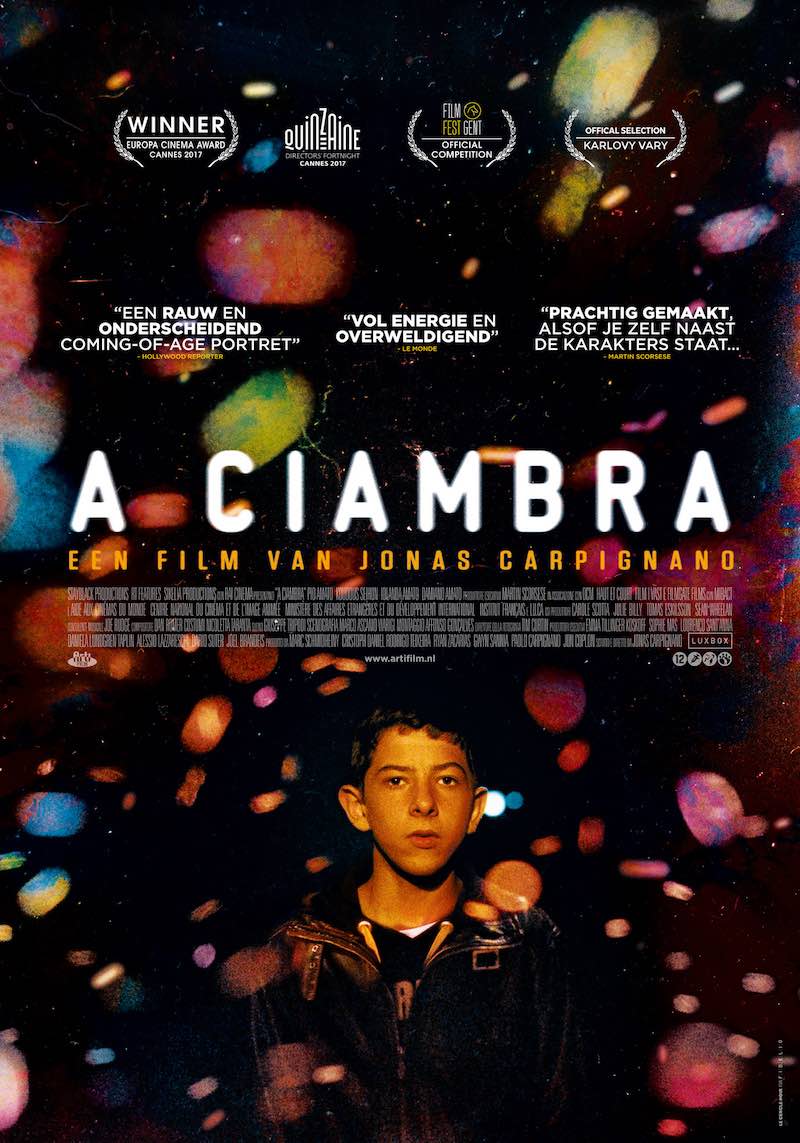
The Italian film A ciambra, released by Arti Film, can now be seen in various art houses. It is the story of a gypsy boy.
The story of Pio
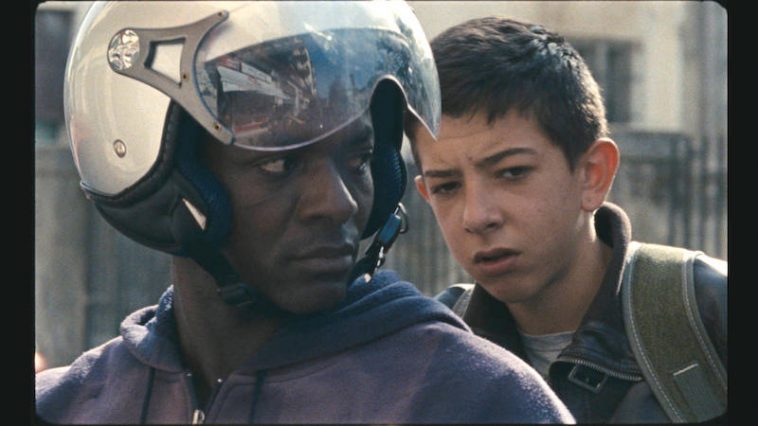
Pio takes over the criminal path from his father and his brother. Because of the latter, they are caught during a burglary and end up in prison. Fortunately, the gypsy boy gets help from Ayiva when he finds himself alone. He is a bit older, but he lends the boy a hand and takes care of him a bit. Although care might be a strong word. Pio wanders a bit between different cultures. Ayiva is part of a group of (clandestine) Africans and on the other hand there are also the Italian mafiosi who should not get in the way of his criminal family too much.
It doesn't help that Pio is forced to commit crime. The fact that he has to find his way there without the help of his brothers and with lack of experience, naturally leads to problems.
The culture
The result is a rather desolate. In his environment you see children with cigarettes in their mouths, a lot of swearing, a strong dialect and school is absent. They live in a dilapidated apartment between a lot of dirt, weathered concrete and tapped electricity. The family lives on petty crime: stealing briefcases from trains, stealing cars and copper theft. It usually yields between 50 and 300 euros, but the outstanding bill for electricity is no less than 9.000 euros. Companions live in the other apartments. Gypsies who play cards together for money and only seem to be able to laugh when drinking.
Associations
The music is uplifting, as with Slumdog Millionaire. The movie reminded me a bit of that in terms of atmosphere. You feel the adrenaline when you see Pio stealing a briefcase on the train for the first time, he is still a child. Will he be caught? With this film you see few uplifting images, which are present in Slumdog Millionaire film. Life has no chance and will remain no chance, if you are not lucky enough to win a million by chance.
clever realism
What is special about such films about slums is how realistic directors can capture these lives. The director went to Ciambra with an idea, and there he came into contact with gypsies who basically just play themselves. The main character of the film – in real life he is also called Pio – actually comes from that environment.
They therefore seem more like documentaries: the dialect, the dirt, the clothes, the headlines, the use of words, the situations, the look in Pio's eyes. You have to have guts as a director to make such a film. I think Jonas Carpignano has succeeded well and the film also has a political twist: the social position of gypsies and boat refugees.
Italian seamy side of society
The bottom of society was also beautifully portrayed in the film Ugly dirty and bad by Ettore Scola from 1976 or indivisible, which came out in the fall of 2017. In that last film, however, it was more about the Italians themselves from the region around Naples in the desolate flats there. And how about the movie and the series Gomorrah? Life at the bottom fascinates Italian filmmakers, that's for sure.
However…
Honesty compels me to say that I too need beauty and aesthetics to be truly touched. I therefore had indivisible found a better entry for the Oscars, in which those beautiful girls are and in which the music appeals to me more. Less exciting and exciting, but more sad and melancholic.
There is also less realism and more poetry in that film, in the images and in the texts. To each his own, to each his own, the Italians say.








Comments