

 This Is Italy
'When God created Italy, He was shocked: He thought His creation was so beautiful. He feared that the rest of the world would become jealous. That is why He decided to let the Italians inhabit the land.'
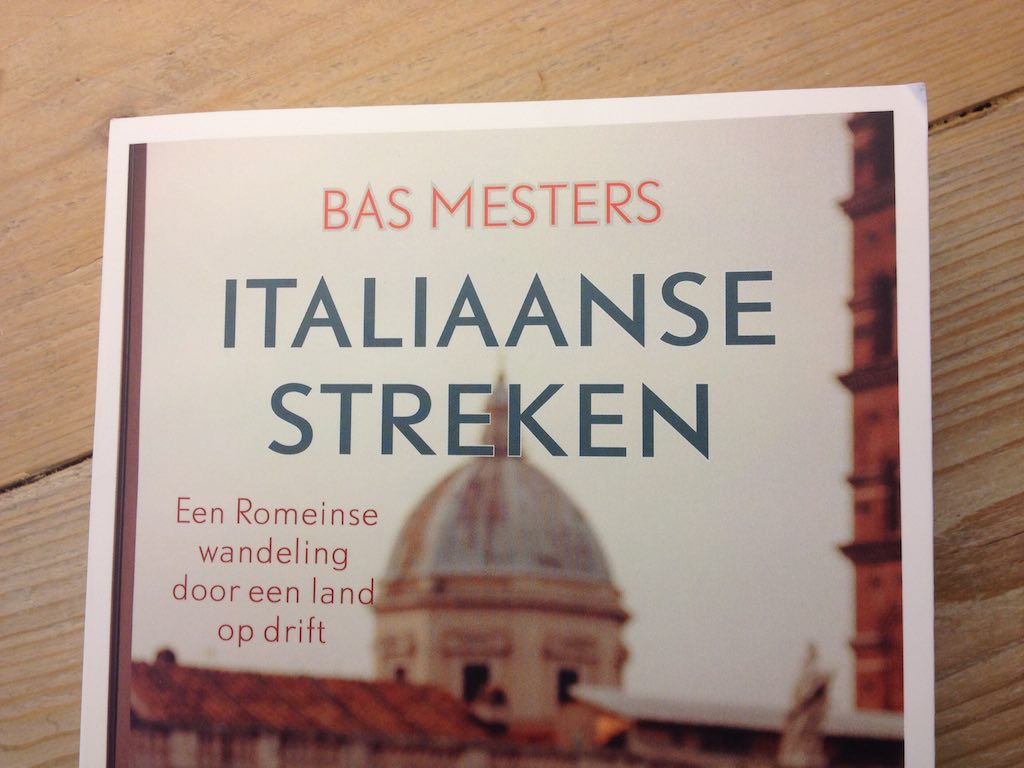
With this joke, well-known among Italians, Italian pranks – A Roman walk through a land adrift opens. According to a former Italy correspondent for NRC and NOS and author of the book Bas Mesters, this statement expresses the essentials of Italian life: beauty, morality and a sense of reality. Essentials that the book deals with in three acts and in twenty-one chapters.
The idea for Italian regions
Bas Mesters has chosen the form of a walk through Rome. On November 14, 2012, after retiring as an Italy correspondent, he took one of his many walks through the Italian capital. The idea for the book had been running through his mind for some time, but he didn't know how to go about it yet. But that idea came to me while walking along all kinds of monuments and buildings that symbolize elements from the Italian culture. He decided to walk on and make notes everywhere and let himself be carried away in writing by the circumstances, the situation and the future of the country.
In the first act of Italian regions – the facts – Mesters describes the rise of Berlusconi. How could he come to power? And which elements in Italian culture ensured that he became firmly in the saddle? In the second act – the state – Italy is painted as it now functions (or does not function). In the third act – the future – Mesters reflects on the countercurrents that are trying to cure the country of its ailments and have provisionally led to Matteo Renzi taking office as the youngest prime minister ever.
A walk through Rome
A map of the city center of Rome is included at the front of the book. This outlines how Bas Mesters walked and which significant places he visited. It seems to me strongly that Mesters actually covered in one day, but that is of course not important either. The great thing is that this route gives rise to a discussion of Italy as he got to know it during his ten years as a correspondent.

The 'hotspots' in Rome that Mesters visits at a glance:
1. Netherlands Institute
2. Villa Borghese
3. Il Pincio
4.Piazza del Popolo
5.Piazza San Lorenzo
6. Palazzo Barbara
7. Piazza Sant'Apostoli
8. Palazzo Grazioli
9. Piazzo Margana
10. The Capitol
11. Largo Argentina
12. Tiber
13. Tiber Island
14. Lungotevere
15. Palace of Justice
16.Piazza San Pietro
17.Piazza della Cancelleria
18.Via Vittorio Veneto
19.Piazza San Giovanni
20. Palazzo Chicago
21. Termini Station
So it is mainly squares and large buildings on which Mesters hangs his stories. Easy to read stories about Italian culture. Mesters, for example, uses the bar in Piazza San Lorenzo to talk about the daily ritual with cappuccino and a cornetto and how you can get a crash course in Italian courtesy in such a bar. About the excessive use of titles, which no one has the courage to put an end to. And about the state that disappoints people time and again, forcing Italians over and over again to crawl into the shell of their own family.
Berlusconi
Of course there is a lot of room for the rise and fall (?) of Berlusconi. Italy connoisseurs know by now how he managed to come to power and consolidate it. But Mesters explains it all very clearly and pleasantly, making it a good book to read for people who don't know much about Italian culture yet. After reading you will also understand more about how other strong men in the past also managed to get the Italians under their spell.
Personal experiences
Mesters also writes about his personal experiences with the Italians. For example, about the vicissitudes surrounding the birth of his daughter Marieke Tiber, who was born in the hospital on Tiber Island. How do we get to the hospital in the busy traffic of Rome? "Simple, honk the horn, wave a white handkerchief and accelerate." And only if you pay 6.000 euros extra you can be sure of a room and a gynaecologist.
He also tells of the numerous encounters he had with Italians, such as a descendant of the Pope Urbanus Barberini, who did on a large scale what Silvio and his generation of Italian rulers did. His distant cousin tells of the Pope's raids, which ensured that the Barberinis lived in wealth for centuries. But now the responsibility of all those buildings and art is starting to weigh heavily and he says he has to work hard for it now.
Good and evil
Bas Mesters also talks about the paradox between good and evil that has fascinated him so much during his ten years in Italy.
“In Italy people use the words good and bad much less than in the Netherlands. Beautiful and ugly much more often. A good deed is often called beautiful in Italy, a bad deed ugly. By also naming behavior in aesthetic terms, people seem to want to put its morality into perspective. Aesthetics takes precedence over ethics. One has experienced that good and bad are part of life. That everyone is capable of both and that the circumstances determine what you choose.”

Everything that's wrong with Italy
Of course the book goes into great detail about food, about the mafia (and about his meeting with the brave Roberto Saviano), about the Italian traffic, about the completely deadlocked Italian case law, about Italian products and about the always failing Italian politics.
It is partly an ode to Italian culture, but much more it is about the shortcomings and the tragedy. It is clear that Italy is not a perfect country for pizzas and good wine. It reminded me from time to time of What's Wrong With America, but where America stands you can of course read Italy here. The division into fairly short chapters makes it a great book for the bedside table: every night before going to sleep, take in a piece of Italian culture.
Finding solutions to the deep crisis in which Italy and the Italians find themselves is not easy. So if you're planning to leave for Italy, this is a good book to get you back on the ground. It is of course not for nothing that many (young) Italians are currently moving to Northern Europe.
And yet there is always that bright spot when it comes to one of the many things in which Italy is great. 'We have nothing to complain about,' says an old acquaintance of Bas Mesters. 'What a grumble in this country. And that's only because we are a little less organized than Germany or the Netherlands.'
Italian regions – A Roman walk through a land adrift
by: Bas Mesters
270 pp.
€ 14,95
Prometheus – Bert Bakker, 2015
ISBN 9789035140028









Comments