

 Morena van den Wittenboer
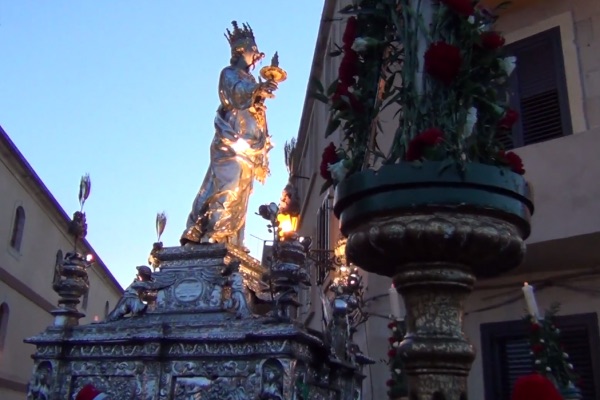
In addition to Christmas, in some parts of Italy, they have another important festival in the month of December. Santa Lucia. Santa Lucia is celebrated on December 13 as a children's party and is somewhat reminiscent of our Sinterklaas celebration.
Every year Italian children write a letter to Santa Lucia in which they declare that they have been good during the past year and in return they ask Santa Lucia for presents.
On the evening of December 12, a plate of food is left for Santa Lucia and some carrots for the donkey that pulls the cart. The children must then go to bed early and not stay awake to cheat when Santa Lucia comes into the house because otherwise, according to the stories parents tell their children, she will scatter ashes in the children's eyes.
The next day, if the children have been good, they are rewarded with sweets, treats and presents.
Regional party
Santa Lucia is not celebrated all over Italy. In Sicily, where Santa Lucia comes from, it is a very important celebration and beyond that there are only a handful of regions where Santa Lucia is celebrated extensively. Like for example in Lombardy en in Veneto.
In the regions where Santa Lucia is celebrated, you will see that during this holiday special markets are organized in cities with stalls mainly offering sweets and children's toys. The Italian moms also dive into the kitchen during Santa Lucia to prepare all kinds of delicacies. Very popular are simple butter cookies with powdered sugar.
History of Santa Lucia
Although the celebration of Santa Lucia has some similarities with our Sinterklaas (presents for children who have been good, offering food to the horse or donkey), the background of Santa Lucia is very different.
This Lucia was born in Syracuse on the island of Sicily, sometime towards the end of the third century AD. Together with her mother, she was secretly a Christian, something that was forbidden at the time and for which people were persecuted (the so-called Christian persecution of Diocletian).
When her mother became seriously ill, Lucia prayed for her healing. Her prayers were answered and her mother was miraculously healed overnight. In gratitude for this, Lucia, who had been promised by her parents to a man from an important family, decided that she was not going to get married but that she wanted to focus on helping the poor.
The fiancée obviously did not agree and had her prosecuted out of revenge for the fact that she was a Christian. Lucia died on December 13, 304 AD, after torture to convert her from her faith. A so-called martyrdom.
The saint of sight
Santa Lucia has become the saint of sight and although there are different traditions as to the reason for this, it is believed that this has only to do with her name: Lucia comes from lux which translated from Latin means 'light'.
A more macabre lore has it that Santa Lucia's eyes were gouged out during the torture. However, there are no concrete indications for this. In some places in Scandinavia and in the US, the Lucia festival is celebrated with the lighting of torches and candles.
A party that is celebrated all over Italy and also what looks like our Sinterklaas party The witch which is celebrated on Epiphany, January 6.








Comments