

 Aart Heering
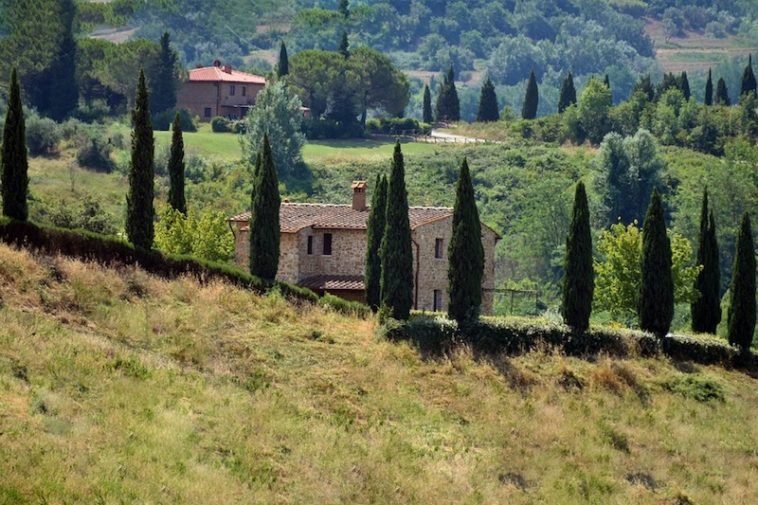
If you are considering buying a pied-à-terre in Italy, you better hurry. Prices are still relatively low at the moment, but that could change. Finally, after years of decline and stagnation, the Italian economy is slowly rising again. This also brings some life back to the real estate market, which has been closed in recent years.
The crisis has hit the Italian housing market hard. Since 2008, the average price of homes has fallen by as much as 25%. For many owners, this was a reason not to put their properties up for sale, while conversely, aspiring buyers chose to wait for the end of the crisis, so that the real estate agents have been doing bad business for years.
Booming Milan
That now seems to be changing, even though even last year the average value still fell by 0,2%, compared to an increase of 7% in the Netherlands. But the situation is by no means the same everywhere. In booming Milan house prices rose on average by 1,8%, and much more in the bustling city center, while the economically rather sluggish Rome also showed a small increase of 0,8%.
Things are generally less good outside the large cities, and the holiday home market was also slightly down last year. 0,7 and for mountain or lake stays 2016% less.
At first glance this seems strange: the economy is picking up, prices have plummeted and mortgage rates are also historically low, so you would expect that consumers would flock to the market for first and second homes. Not so, or perhaps better: not yet.
Uncertain future
Economic daily Il Sole 24 Ore recently explained why: In recent years, so little has been sold that there is an abundance of supply, which pushes prices down. Moreover, the economic recovery in Italy has been exceptionally slow, and it is doubtful, shall we say, whether under the current populist government improvement will come.
The domestic situation is therefore still uncertain, and many Italian prospective buyers are therefore still hesitant to take out a mortgage, especially when it comes to a second home. Foreigners have that problem much less, so that, for example, the prices around Lake Garda have remained constant last year due to the purchases of, in particular, Germans.
What is striking in Tecnocasa's study is that the enthusiasm for the traditionally popular, and therefore expensive, 'second home regions' seems to be declining somewhat. Last year, for example, prices for holiday homes fell in Tuscany by 4% and in Veneto by 1,6%. It was very different Sicily, which in any case scores better as a tourist destination. Here prices went up by 1,6%.
In Emilia-Romagna a decrease of 0,2% was seen, in Campania of 0,4% and in Sardinia and in Liguria of 0,5%: minus, but less than average.
Rental to tourists
After all, interesting is the information on specialized sites about cities where Italians like to buy properties for rent to tourists. It will come as no surprise that Rome and Florence predominate. In recent years, thousands of homes in the city centers have been converted into holiday homes or B&Bs and that still counts as a good investment.
The number is also increasing in Naples and Palermo, beautiful cities where you can easily spend a long weekend these days. In the north, Verona is sought after, with its Arena and nearby Lake Garda, as well as Turin which has definitely been put on the tourist map since the 2006 Winter Games.
In Milan, on the other hand, homeowners mainly focus on families and students. Venice is not on the list, presumably because there are really no more bargains to be had there.







Comments