

 Aart Heering
At the beginning of the 70s, as a high school student, I bought a few copies of the American magazine MAD (of which a Dutch version also existed) in a book dump, with comics with a now rather old-fashioned humor. One of those stories involved pizzas being thrown across the room like Frisbees and smashed against the ceiling. It took me a while to understand because I didn't know what a pizza was at the time!
No wonder when you consider that the first pizzeria in the region, Nino Contini's in the Peperstraat in Groningen, was only opened in 1971. (That was 4 years earlier than in Vienna and 7 years before Copenhagen.)
Those first Groningen pizzas were prepared with pickled mussels and bell peppers from a jar, not to mention wine, but the formula was a success. 4 years later, Contini's pizzeria had 5 busy floors and had colleagues such as Rinaldo at Schuitendiep and Carlo at Zuiderdiep.
As a popular student eatery, the pizzeria replaced the old cheap Chinese with the greasy noodles and the glasses in which the beer fell to death. The pizza came, saw and conquered in record time, and not only in Groningen.
The pizza business is now worth around 230 billion euros per year worldwide and the growth has not stopped yet. This raises questions about the origin of the pizza and the secret of its success.
Poor man's food
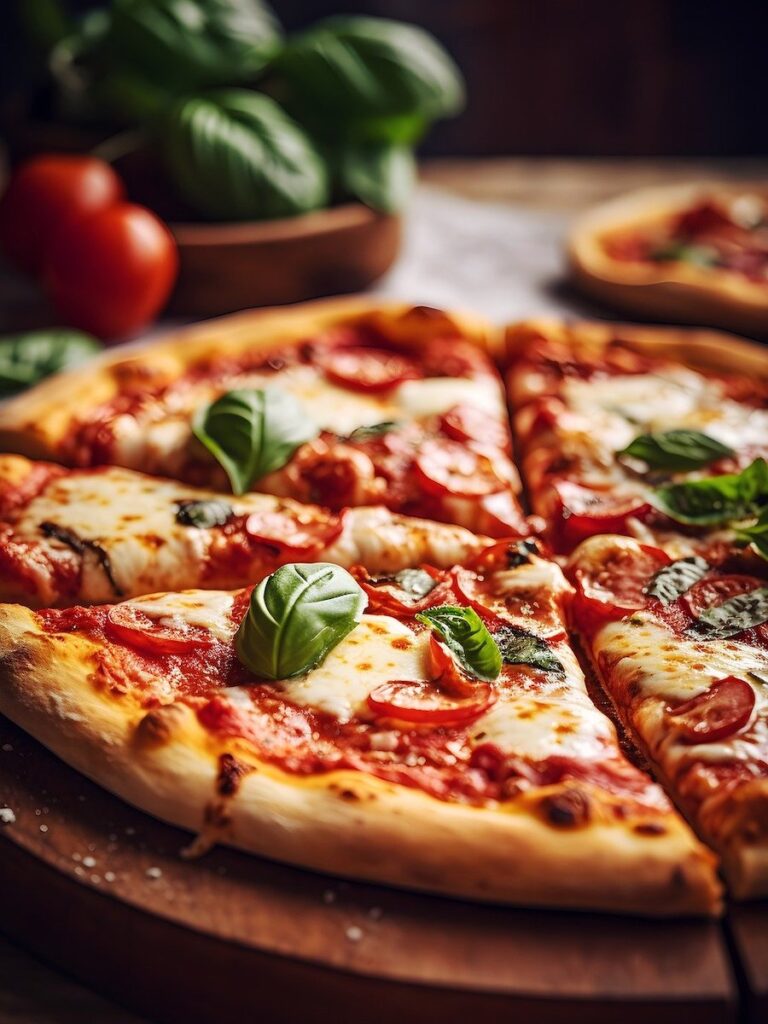
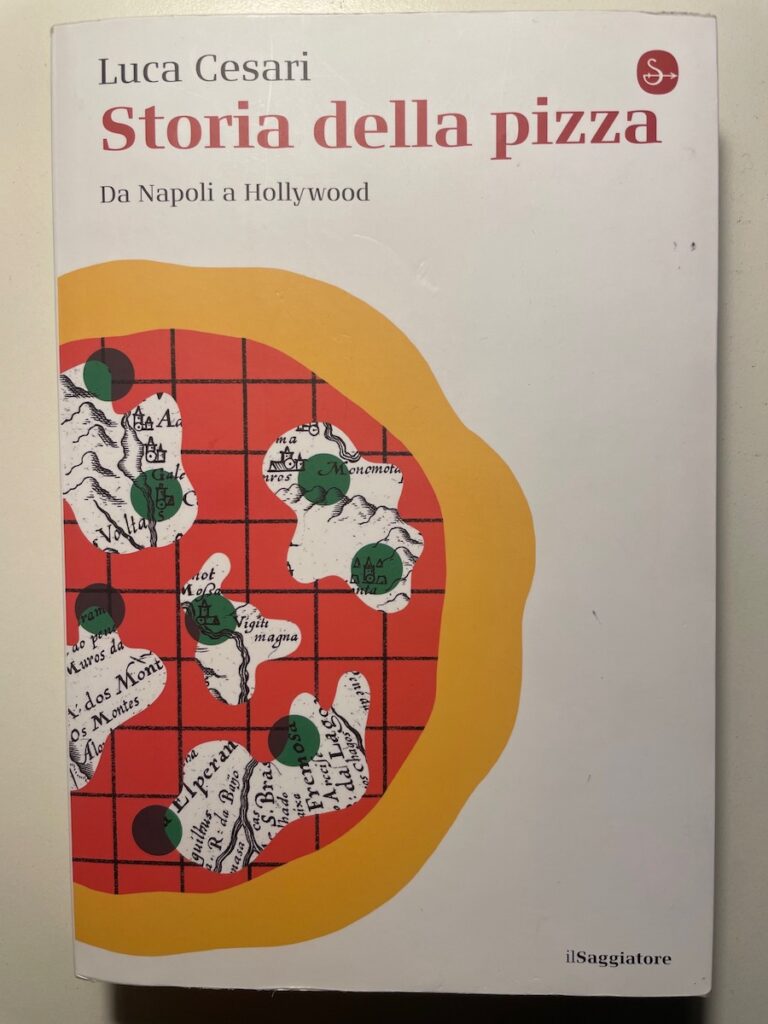
Well, the cradle of pizza is in NapelsEveryone knows that, but pizza as we know it today is primarily an American product. "If the pizza is a Neapolitan invention, then the success of the pizza is an American invention," is the remarkable conclusion of gastronomic historian Luca Cesari in his recently published History of pizza closely follows the pizza's long journey and busts a few persistent myths in the process.
According to him, it is nonsensical to look for the origin of the pizza in Greek or Etruscan ancestors: all peoples who had flour, water and fire used them to make flat cakes that look somewhat like pizza. Naan, pita, enjera, Flammkuchen, carasau, flatbread, piadina or pancake, just to name a few.
The word pizza is also ancient, but for centuries it mainly referred to sweet rolls. The term still lives on in the pizza pizza, a (delicious) heavy sweet cake full of nuts and candied fruits, which you can still get in Rome at the Jewish bakery at the Portico d'Ottavio.
The first savory pizza indeed dates back to Naples, sometime in the 17e century, and was a poor man's product there, sold by peddlers such as street food was sold to an urban proletariat that could not afford its own kitchen.
At that time, it still involved small round slices of dough baked in the oven with some salt and lard and sometimes pieces of fresh anchovies, cheese or tomatoes, which were considered an abomination by foreign travelers. In Naples, these types of pizzas are still sold, folded twice as wallet pizza are consumed as a snack on the street.
The myth of the margherita
Over the course of the 19e century, when an urban middle class began to form, the first pizzerias also appeared where customers could enjoy their pizza at the table with wine or water. Even in the palace there was interest in this curious folk food, so that in 1889 Raffaele Esposito, the owner of the nearby Pizzeria Brandi, was asked by Queen Margherita to bake a few pizzas for her.
This gave rise to the myth of the pizza margherita, a story that is actually too good to check to death, if it were not for the fact that Cesari, as a conscientious scientist, had to devote a chapter to 'the true history of the pizza margherita'.
Legend has it that Esposito had designed a pizza especially for the queen in the colors of the Italian flag, with mozzarella, tomato and basil. It was said to have been her favorite, after which Esposito named the pizza after her and nicknamed his shop 'Pizzeria della Regina d'Italia'.
Unfortunately, basil would only appear as an ingredient decades later, and it is also not referred to in the very detailed account of the meal kept in the royal archives. Moreover, the thank you letter from the royal secretary, which is still on display at Brandi, is most likely a forgery, as graphological research has shown.
Cesari suspects that the story was made up in the 30s by the then owners, but that does not make the pizza from Brandi, one of the oldest pizzerias in Naples, any less good.
From Naples to New York
Until the 50s, pizza remained a Neapolitan specialty that was little known in Northern Italy. But in the meantime she had crossed over to America, where Italian immigrants arrived at the end of the 19th centurye century the first pizzerias opened in the cultural area melting pot of New York and Buenos Aires soon also attracted non-Italian customers.
It was the beginning of a rise, made possible by new inventions such as the gas oven and the frozen pizza and improved communication lines that made it possible to get canned tomatoes, cheeses and herbs quickly and cheaply.
In doing so, the pizza underwent a metamorphosis that distanced it from the Neapolitan original. The pizza, like everything in America, got bigger. She also became redder due to the extensive use of tomato sauce. Although it was well known in Naples, the vast majority of Neapolitan pizzas remained white.
Not so in Little Italy, where the pasta was also generously drizzled with red sauce. The number of ingredients also increased, olive oil replaced lard and beer increasingly replaced wine as a drink with pizza. This is how the pizza model was born that conquered Western Europe after the war, along with other American products, lifestyle and culture.
From New York back to Naples
"The ways in which pizzas are topped, shaped and consumed were reintroduced in Italy after the war, following the American example, and have therefore contributed to the spread of a style that differs from the previous Neapolitan tradition," Cesari writes.
This also applies to the margherita, now touted as 'typically Neapolitan': 'There has never been an ancient tradition of the pizza margherita in Naples, not after and not before the inventions of Raffaele Esposito. It is simply a taste that has proven to be successful and for which a well-chosen history has now been created.'
The gastronome also dispels another myth, that American soldiers were introduced to pizza on the Italian front: 'The Yankees did not need Naples for that because most of them had already eaten pizza in their own country.'
It is therefore no coincidence that the first German pizzeria was opened in Würzburg in 1952 by an Italian who had worked as a cook in the American army. A pizzeria had already been opened in Paris in 1950, in Madrid in 1959 and things went quickly from there.
Also because the pizza fits beautifully into the healthy, low-protein 'Mediterranean diet', which became fashionable in the 60s and 70s, and because of the increasing popularity of the entire Italian cuisine, which had been in the shadow of the French for centuries.
Another reason for the pizza's success lies in its great adaptability. Roughly speaking, you can throw whatever you want at it. This results in an endless number of variants, from the sober one cake with rosemary to the most exquisite gourmet pizza and fantasy versions such as, yes, the Hawaii with pineapple, the ultimate blasphemy for pizza purists.
Not for Cesari, who assumes that strict preparation regulations are a pointless restriction and that everyone should be able to eat the pizza they want.
Storia della pizza – Da Napoli a Hollywood
by: Luca Cesari
Available as an e-book for €8,99
Il Saggiatore, May 2023
ISBN 9791259811295








Comments