

 Aart Heering
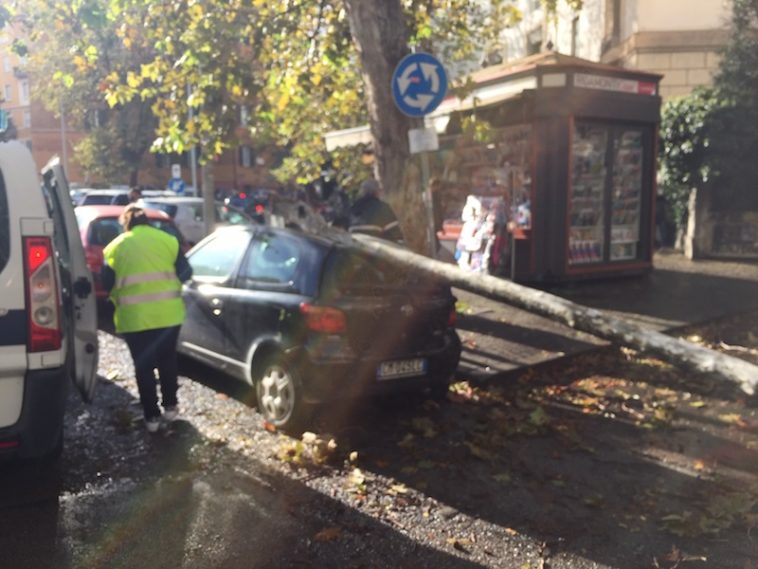
The storm, which has claimed 12 victims throughout Italy and the worst in Venice acqua alta rose to heights reminiscent of the dramatic flood of November 4, 1966, also wreaked havoc in Rome.
Monsoon downpours and gusts of 100 kilometers per hour have turned the city into a battlefield of downed trees. If you see the roads blocked by falling tribes and the wrecked cars, Rome actually got away with no deaths. Perhaps also because Mayor Virginia Raggi had closed the schools as a precaution, so that there was less traffic on the road than usual.

A remarkable, and disturbing, detail is that this kind of slaughter under trees is no longer so exceptional. This scenario has happened four or five times in the past year and many hundreds of trees have been killed. This may be partly due to climate change, but the main reason is one of Italy's biggest drawbacks: maintenance, or rather the lack of it.

You can score less with maintenance than with spectacular new projects. So managers all too often choose to spend the scarce funds on this and leave the existing structures for what they are, with the result collapsing bridges and viaducts, floods, landslides and falling trees.
Old plane trees
This is certainly the case in Rome, which has a total of 330.000 trees, but has no more than 180 staff to take care of that stock. Many of those trees are about a century old plane trees and pine trees. The plane trees should be pruned regularly, if not every year. If not, rotten spots can develop that can cause the entire tree, or individual branches, to fall.

In France they know this very well and the plane trees that adorn the village squares there are therefore thoroughly trimmed. The pine trees are sturdier, but roots shallow. (Hence the bumps on many of the roads that flank them.) So as they grow they become extremely sensitive to wind and their crowns must also be drastically thinned. And when pruning no longer helps, felling and new planting becomes inevitable, even if the neighborhood usually doesn't like it.

None of this has happened in Rome for three years. In order to cut costs, the municipality has outsourced the public garden service to private individuals and to save even more, they do not receive their money. As a result, of the 1200 people who took care of the public green space until 2015, only 200 are now left and roadsides and parks offer a view of neglect and spontaneous jungle formation.

Corrupt Gang
Mayor Raggi has withdrawn the concessions to the previous green workers, because they were just a corrupt gang. That's right, but in the 28 months she's ruled the capital, nothing has replaced it. The public tender is stagnating as officials refuse to sit on the committees responsible for appointing the new executives, fearing that they will in turn be accused of corruption. And when the proceedings appeared to be just getting started, it was halted by the national anti-corruption authority after an official made changes to a document by hand.

After all, many companies do look forward to applying, because you never know when and if you will ever get your money with the municipality of Rome with its billions of debt and inscrutable bureaucracy. There is therefore a good chance that the Roman tree park will also remain unkempt this winter. A sturdy umbrella is recommended.









Comments