


 This Is Italy
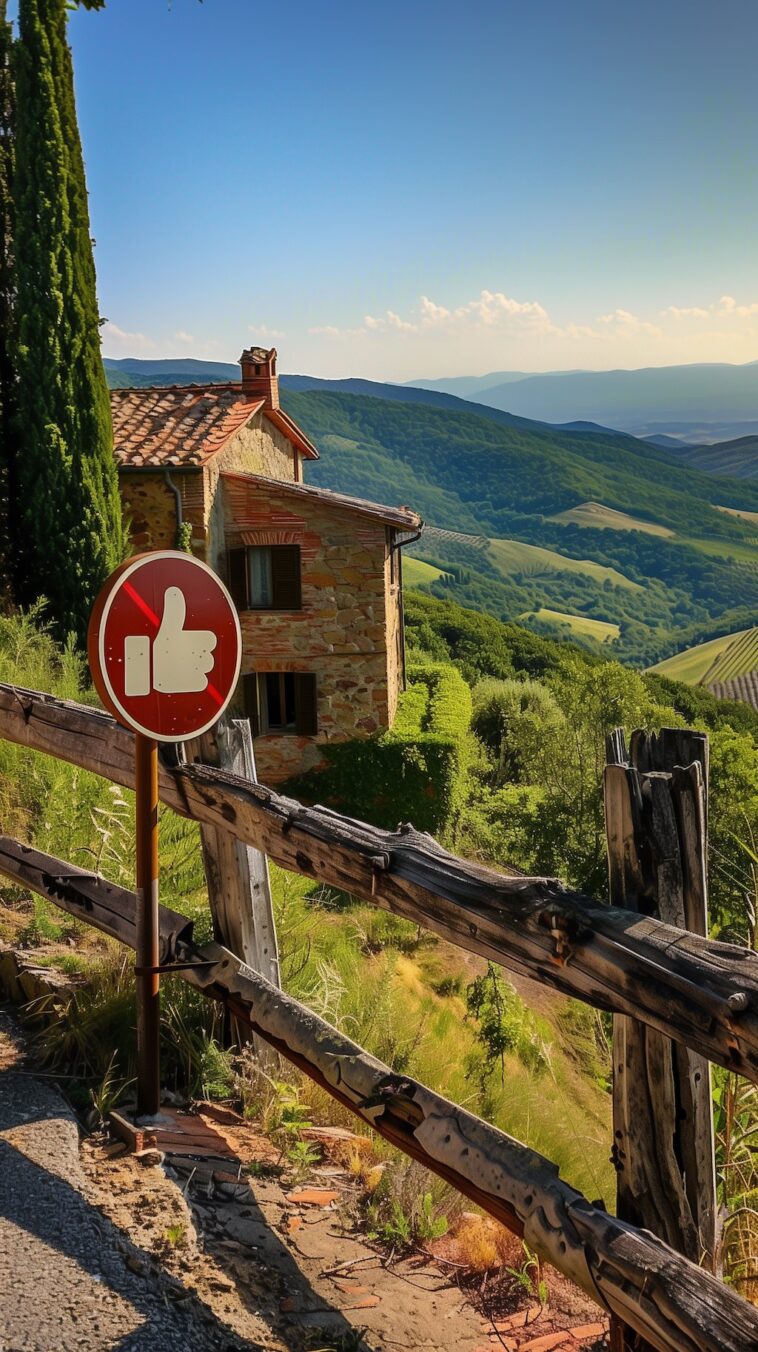
This is the first part of a two-part series on Italian culture and manners: do's and don'ts in Italy. First we will discuss the 'do's' for your holiday in Italy. By 'do's' we mean what you should do when you go to Italy.
Well, whether you really follow the tips is of course entirely up to you. We only give them to you based on our experience with Italy. They teach you to appreciate the culture and get more out of you holiday in Italy to get.
If you feel like immersing yourself in Mediterranean culture, at the very least check out these dos and don'ts in Italy. In the next part, which we will publish in a while, we will cover the 'don'ts' for a pleasant stay in Italy.
Do's when you are in Italy
1. Don't plan your holiday too full
Italy is a holiday country that has a lot to offer in terms of culture, nature and other highlights. You run the risk of wanting to see too much during your vacation. As a result, you run from hot to her. That can never be the intention of a 'la dolce vita' holiday. Therefore, make a lot of room in your schedule for 'dolce far niente'.
2. Adapt to the culture
The Italians are a proud people. It is appreciated if you show a feeling for the local traditions and rituals. A little bit of preparation therefore does not go amiss. You get a lot in return. Do not always compare the culture with the culture you are used to at home. You will see: you enjoy it all the more.
3. Connect with the locals
Italians like it when others show an interest in their country and culture and are more than happy to help you if you have any questions. No matter how bad your Italian is, if you try it you will certainly get a lot in return.
4. Take your life as it comes during your Italy vacation
What applies to the Netherlands may apply even more during your holiday in Italy. Especially if you stay a little longer: not everything will go the way you want it to. The supermarket appears to be closed at noon, the rental car has already been reserved by someone else and the restaurant is still closed if you are already hungry. Don't worry, just adapt. Then you last much longer.
5. Dress appropriately
This point is also a bit of adapting to Italian culture. Italians attach great importance to dress codes. No matter how old, fat or ugly you are, your clothes are in your own hands. And to please yourself and your fellow man, it is best to pay a little attention to that. Walking through the city in your swimming trunks (even if you are close to the beach) is not appropriate. And if you're going to visit a church, don't dress too naked. Covering bare shoulders for women and wearing a sleeved shirt and long pants for men is widely regarded as a real 'do' in Italy. Be aware that Italians are very fashion conscious and you will be judged by how you dress.
6. Get off the beaten track
Because everyone is going to look at that one attraction in that beautiful medieval town, you don't have to too. Of course, if you've just come for that, you should just do it. Just don't be fooled. You'll create a more special experience if you try to avoid the piazzas that everyone else goes to. useful to you lunch so just not in that tourist restaurant, but in that little place in a side street where only Italians are seated.

7. Beware of the 'menu turistico'
Also do: watch out for the infamous tourist menu with a complete lunch or dinner for 10 or 15 euros. You can recognize these types of restaurants by the menus in multiple languages or a waiter at the door trying to talk you in. Those kinds of restaurants are (the word says it all) specifically intended for tourists who want to sit in the front row for a dime. Resulting in bad food. Which by the way does not mean that food in Italy has to cost a lot. On the contrary. Use your eyes and common sense and just eat with the locals. Much nicer and tastier and it doesn't have to be expensive either.
8. Stand still in a (coffee) bar
You can enjoy a delicious espresso or cappuccino while standing in Italy, just like the other visitors to the bar. A cup of coffee on the terrace or at a table inside can easily cost you double. Moreover, by standing still you show that you know 'how it should be done' (see also point 2 of this list of do's and don'ts!).
9. Realize that you pay 'service charges' in the restaurant
If you've ever been out for dinner in Italy, you know it: the word coperto on the bill with an amount of at most 2 or 3 euros. These are the costs you pay for the 'couvert', the setting of the table, the cutlery, the water and the basket of bread (which is never missing). This service charge is also considered a tip. Sometimes you will also see the following phrase on the receipt or on the menu: 'servizio incluso'. So you don't have to feel obliged to give something extra. If you do, it will be appreciated. In Italy it is customary to leave some change on the table. Unlike here (where young servants usually have to live off tips), 'waiting' in Italy is still considered a profession for which you get decently paid.
10. Delayed Coffee
The tradition started in Naples and spread all over Italy. In the meantime, the concept of 'delayed coffee' is also becoming somewhat familiar in the low countries. It works like this: if you order a coffee in a bar, you can also order a 'delayed' one. You don't order it for yourself, but for someone who is less fortunate. A nice gesture in a country that, because of its Catholic nature, considers it a duty to care for the less fortunate. A cup of coffee in Italy almost always costs less than a euro.
11. Be careful when crossing the road
Italians have a reputation for being real chunky pilots. That in itself is not that bad, but in Italy people drive more with the heart than with the mind. The further south you go, the less European traffic rules seem to apply. Traffic lights in southern Italy, for example, are seen purely as 'advice'. So pay close attention in Italy in traffic, especially when crossing the road.
12. Kissing Twice
Kiss an Italian on the cheeks? Then you usually do that twice (and not three times, as is usual in the Netherlands).
13. Greetings
Pay extra attention to your fellow man and you will get a lot in return in Italy. It is appreciated when you kindly greet salespeople, bus drivers and passers-by.
14. Route through the tunnels
If you travel on Saturday, try to avoid the Gotthard tunnel. Here you often stand in traffic for hours. If you do travel via the tunnel (during the week or at the weekend), prepare yourself well.
15. Turn off mobile phone
While you're at that church, you'd better make sure your cell phone is off or on vibrate. Also, don't talk too loud. During (business) conversations it is quite normal to answer the phone.
16. Wear comfortable shoes
In Italy you will explore a lot on foot. When you visit Rome, you can do almost everything on foot. It is simply the easiest form of transportation and so are many other places. So you better make sure you wear comfortable footwear. Of course keep in mind point 5. No flashy sports shoes, so. Unless you want to be worn out for a German or American tourist.
17. Take a good travel guide with you
Are you going to explore an undiscovered area in Italy for you? Then think of a good travel guide. Here you will find the most beautiful addresses and useful tips that you would otherwise overlook. Lonely Planet often has good guides for the region you want to visit in Italy.
18. Enjoy an extensive lunch
Between roughly 13 p.m. and 15 p.m., public life is still somewhat quiet, although that is not so bad in the major cities. Anyway, Italians love an elaborate (warm) lunch (de lunch) to eat. Just have fun with this. It is often too hot in the middle of the day to do something active and this way you can also discover the delicious Italian cuisine.

19. Take Public Transport
Within the city, the best transport is usually by foot. Sometimes you have to travel a little further and then public transport is often an excellent option. Public transport in Italy is well organized, although you sometimes have to take the timetable with a grain of salt. Public transport is never expensive. The train is recommended for longer distances. Unlike in the Netherlands, the Italian trains usually run and you don't pay much for them.
20. Giving a present? Make it stylish!
If you want to give your host or hostess in Italy a gift (which you certainly don't have to feel obliged to), make sure it's a nice gift. As with clothing, Italians value class and style and that certainly applies to gifts. A nice gift doesn't have to cost a lot, but it's better not to give a cheap trinket.
21. Learn a few words of Italian
Even though the younger generation now speaks a good bit of English and you can get by just fine with English in the cities and tourist areas, speaking a minimum of Italian yourself is recommended. It comes across as polite and it's easier to make contact if you can say "buonasera" and "una domanda, per favore" before you start speaking in English. Your attempts at speaking Italian will almost certainly be heaped on praise.
22. Keep in mind that some things slow down
Not everything goes as fast in Italy as here. Keep this in mind if you are going to have lunch in a restaurant, for example. Fast service is more likely to be seen as bad service in Italy. Because for some things you take the time. Especially for the food. If you're in a hurry, don't plop down on a terrace or in a restaurant, but see, for example, number 38 on this list.
23. Buy your tickets in advance
Some top attractions can be very crowded. Especially in cities like Rome, Milan, Naples or Florence. It can then be useful to book your tickets in advance. Usually you can just walk past the cash register and enter the museum or attraction.
24. Save your receipt
In Italy you get a receipt with each purchase. Retailers are obliged to hand them over and you are obliged to accept them. Keep in mind that you can be checked by the tax police when you leave a store. You must then be able to show the receipt as proof of lawful purchase. In the unlikely event that you do not receive a receipt or only a handwritten copy, ask for it to avoid problems.
25. Don't order a cappuccino after 11 a.m.
In Italy, cappuccino is a coffee strictly reserved for breakfast, due to the large amount of milk. Compare it to Dad. In Italy, therefore, breakfast is often served with only a cup of cappuccino (and possibly a sweet roll). Ordering a cappuccino in the afternoon (or worse: in the evening) can raise eyebrows. They will make it for you, but don't expect enthusiastic service anymore.
26. Validate your train tickets before boarding
You can buy train tickets at the ticket office at the major stations. Before boarding the train, you must first validate the tickets in the ticket machine. Do the same to avoid a fine on the train.
27. Know about body language
Italians talk a lot with their hands. You can express positive things as well as negative things. It is therefore useful if you familiarize yourself with Italian hand gestures beforehand. For example, our gesture for 'perfect' (the circle with thumb and forefinger and the other fingers up) in Italy means 'thank you'. Waving a hand next to your head is not recognized as 'tasty' in Italy. There it is rather seen as a threat. In Italy, if you want to say you like the food, you'd better turn your index finger into your cheek.
28. Be aware of the 'Italian time'
Italian time is not Dutch time. Italian time is elastic. Be aware that restaurants can be closed for a few hours (or all day), that shops open later than stated and that the tour of that idyllic village starts half an hour later than planned. Don't get too angry. This is very common in Italian times. The motto: check opening times in advance and always have a backup plan.
29. Eat according to the local or regional cuisine
You can eat well in Italy. But in Italy, regional cuisine is much more important than national cuisine. And much tastier too. Because every region has its own specialties that are the tastiest in that region. Because of the ingredients, the climate or the art of the local chefs. That's why you still eat the best pizza in Naples and eat the best Parma ham in – right – Parma. Feel free to ask about the local speciality. You'll be happy to talk to, as the Italian is extremely proud of his local roots and the waiter will be happy to recommend something tasty.

30. Don't skip the Italian ice cream!
Perhaps a bit of a superfluous tip, because there is a good chance that you already planned this. Enjoy the real Italian ice cream that you can buy everywhere. Just eat it every day. You deserve it! If you're in Tuscany, don't miss the Gelateria di Piazza in San Gimignano. Located in Piazza della Cisterna (the main square with the well), this small ice cream parlor offers the best ice cream in Italy, according to several ice cream experts. You can get every flavor you can think of, but the most famous is the 'crema di Santa Fina'.
31. Eat your pasta with a fork
In the Netherlands it is quite common to eat pasta with a fork and a spoon. Then you twist the spaghetti strands around your fork on your spoon and – hop – in your mouth. If you eat macaroni or other pasta types, you can easily slide them in with your spoon. The Italians hate this. The only thing you use with a pasta meal is a fork. A spoon really only serves soup. Spaghetti can be wrapped around your fork by using the edge of the plate. If necessary, cut the pasta into smaller pieces. But the use of a knife is not common with pasta either.
32. Book an apartment during your city trip in Italy
Are you planning to spend a few days in an Italian city? Immerse yourself completely in Rome, Florence or Verona and rent a furnished apartment. It quickly feels like you live in the city, you have an entire apartment to yourself and it is usually cheaper than a hotel too. There are several organizations where you can book such an apartment.
33. Just eat pizza with your hand
When you are in Italy, you certainly eat a few pizzas too. They can't usually be compared to what you get here, so tasty! When you are going to eat pizza, you can cut it into slices. You then simply eat it with your hand. Buon appetito!
34. Don't feel obliged to finish all menus
The menu in Italy starts with antipasti, then primi, secondi and dolci to finish. Don't feel obliged to work through the entire menu. If you just want to eat pasta, that's fine. You can also just order a secondo. That is always meat or fish. Keep in mind that you don't get salad or baked potatoes with this as standard, as in the Netherlands. You really have to order everything you want to eat!
35. Ask for a children's portion or a plate
Feel free to ask for a small portion for children in the restaurant. Italians are used to this. If the kids eat with you, that's no problem either. Just ask for an extra 'piatto'.
36. Drink wine or water with your meal
You drink wine with a meal in a restaurant. Or water. Did you order a pizza? Then you can drink beer or soft drinks with it. Soft drinks with a good meal are roughly considered to be cappuccino after dinner (see point 25).
37. Buy olive oil in the countryside
Once you've tasted this real, thick, green olive oil, you'll never want the supermarket again. You can eat good olive oil, so to speak.
38. Go on a picnic
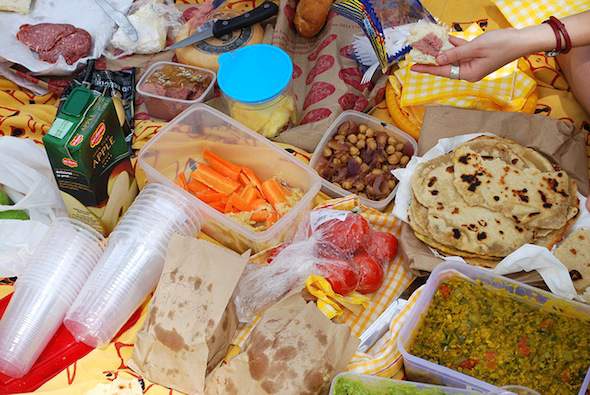
Good food in Italy doesn't have to be expensive. Buy some tasty ingredients at the market, at a shop or in the supermarket (such as tomatoes, mozzarella, fresh bread, olives, salami) and have a picnic in a park or on a village square. The simplest things are already delicious in Italy.
39. Food is real food too
No other things are done while eating in Italy. Food is sacred. That is why 'business lunches' are not an opportunity to discuss business. During your holiday in Italy, people may be surprised if you open a laptop on your dining table or when you study that travel guide in detail. Eating in the car? Don't even think of it!
40. Don't be surprised by a little less personal space
Italians are used to sitting close together. The personal zones are smaller than ours. So don't be surprised if someone for your taste comes to lie too close to you on the beach or sits next to you on a bench.
41. Open all your senses
Open your eyes, smell, feel, hear. Italy is so much more beautiful when you are open to it. Use all your senses and enjoy to the fullest, whether it be the sun, the food, the colors, the cars, the historic buildings or whatever.
42. Look beyond Rome, Florence and Venice
The lesser-known destinations in Italy usually have even more to offer than the real hotspots, if only because you don't have to queue everywhere and you are much better able to reach number 41 on this list. Once you've seen the real highlights in Italy (we can imagine that you really want to see them first), set out to explore 'undiscovered' cities and areas. Italy becomes more and more fun and beautiful the more you come and know it better!
43. Don't just visit the paid attractions
Many tourists seem to think: if I have to pay for something, then it's good. In Italy, the best attractions are often free. You can enter basilicas, parks and some museums for free. This way you keep your trip to Italy cheap and interesting! Be curious about things that are not described in all travel guides or on all websites.
44. Watch your belongings
Italy is no more criminal than any other western destination, but there are many tourists in many places. And that's where the 'crooks' come in. If you are in major tourist centers such as Rome or Florence, be aware of pickpockets and scammers with chat tricks. Just like in Barcelona, Paris or Amsterdam, actually. In many tourist spots there are also vendors walking around who will hand you a flower, a necklace or something else and want money from you if you take it. If you don't want this, be clear: 'no, grazie' and walk on.
45. Make eye contact
Italians don't feel threatened easily if you make eye contact. If you look away, when you speak to someone, it is more likely to be interpreted as having something to hide. Also, making eye contact can help get things done. To summon the waiter, raise a finger and try to make eye contact.
46. Italy is more than Tuscany!
See also point 42. Tuscany has the name, but is also a busy destination in high season. And Italy has so much more to offer than just Tuscany. So don't be guided by the name alone, but visit the lesser-known (but beautiful) areas such as The Marches, Abruzzo, Campania en Apulia.
47. Celebrate with the locals
If you are going to a village or region, immerse yourself in the local festivities for your travel period. It is wonderful to experience such a celebration that often revolves around traditions and food.
48. Use those plastic gloves at the supermarket
They are there for a reason. Italians don't like it when everyone has their dirty fingers on their vegetables. pull that plastic gloves so before touching fruit or vegetables in the supermarket. If not, you'll get the wind of old Italian ladies.
49. Hygiene is important, also at the campsite
Don't make the mistake of brushing your teeth in the washing-up area at the campsite. This sort of thing is strictly segregated in Italy. If you break such a rule, you will certainly hear about it from your Italian fellow campers.
50. Don't worry too much about do's and don'ts
With such a list of do's or don'ts, Italy may seem like a country that you must have studied before you can go on holiday. That is certainly not the case. Leave all the tips, do's or don'ts behind and just enjoy your holiday in Italy. It's all about having fun! You have to experience what works and what doesn't. So don't let yourself be steered too much, but relax and do what feels right. And remember: you can't travel to Italy often enough!
In the series do's and don'ts in Italy: those were 50 dos for your Italy holiday!
Do you have additions to this list of do's in Italy? Are we missing something very important? Leave your comment below and help others who go to Italy to fully enjoy the Italian culture! If you have don'ts, you can also pass them on to us. We now also have an article with the 'don'ts during your stay in Italy' drawn up.







Umbria is beautiful and you can just leave your phone and wallet on the table without worrying.