
 Steve Smulders

Here are another 5 useful words and expressions in Italian, which sometimes mean something slightly different than what you might think. I wrote earlier this series of 5 other everyday words.
1. Toast
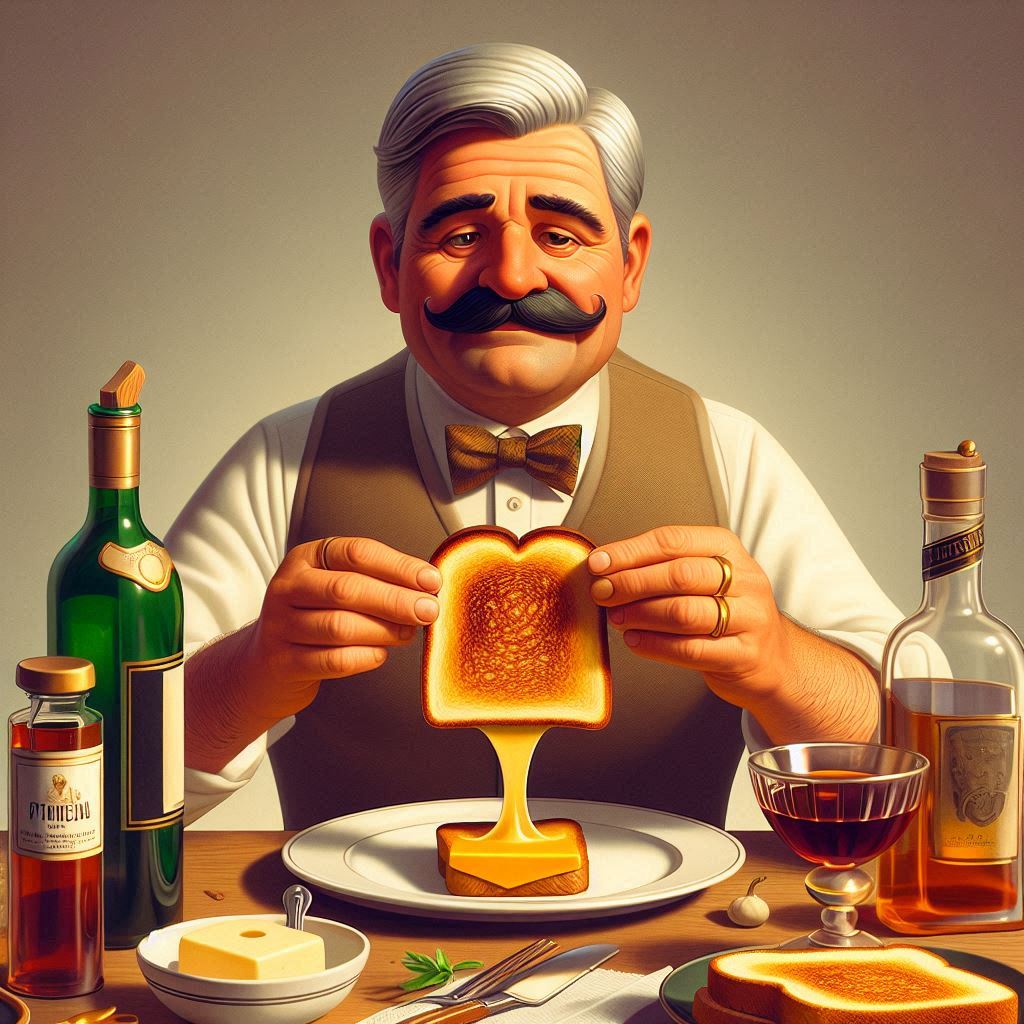
Our friend Roberto never cooks a meal for himself, even when his wife Antonica is not at home on rare occasions. That in itself is understandable because as good as she can cook, few can, and certainly not Roberto. And like real ones foodieAs a gourmet, he really can't swallow a bad meal.
No, just to be sure he makes a toast, pronounced 'toast'. That Italian toast is what we call a sandwich: two thinly sliced slices of bread that you toast together with the intermediate toppings in a sandwich maker, grill, oven, special toaster or frying pan.
'Faccio un toast,' Roberto says to us when we teasingly ask him how he will survive the absence of his chef de la cuisine.
Italian also has the word tosto which means 'difficult', but is mainly used to indicate that someone is not easy on the eyes: 'Lei è tosta', she knows her stuff, can't be tackled without gloves, tough, tough, won't let herself be wrapped up, won't eat the cheese off the bread, and so on.
Something you can also say about the current Italian Prime Minister Meloni, which the late Berlusconi and Salvini of the two coalition parties thought would capture 'that lady'. Didn't work.
In English they say 'he's toast' of someone who is ruined, which is pretty much the opposite of tosto is.
2. Neck
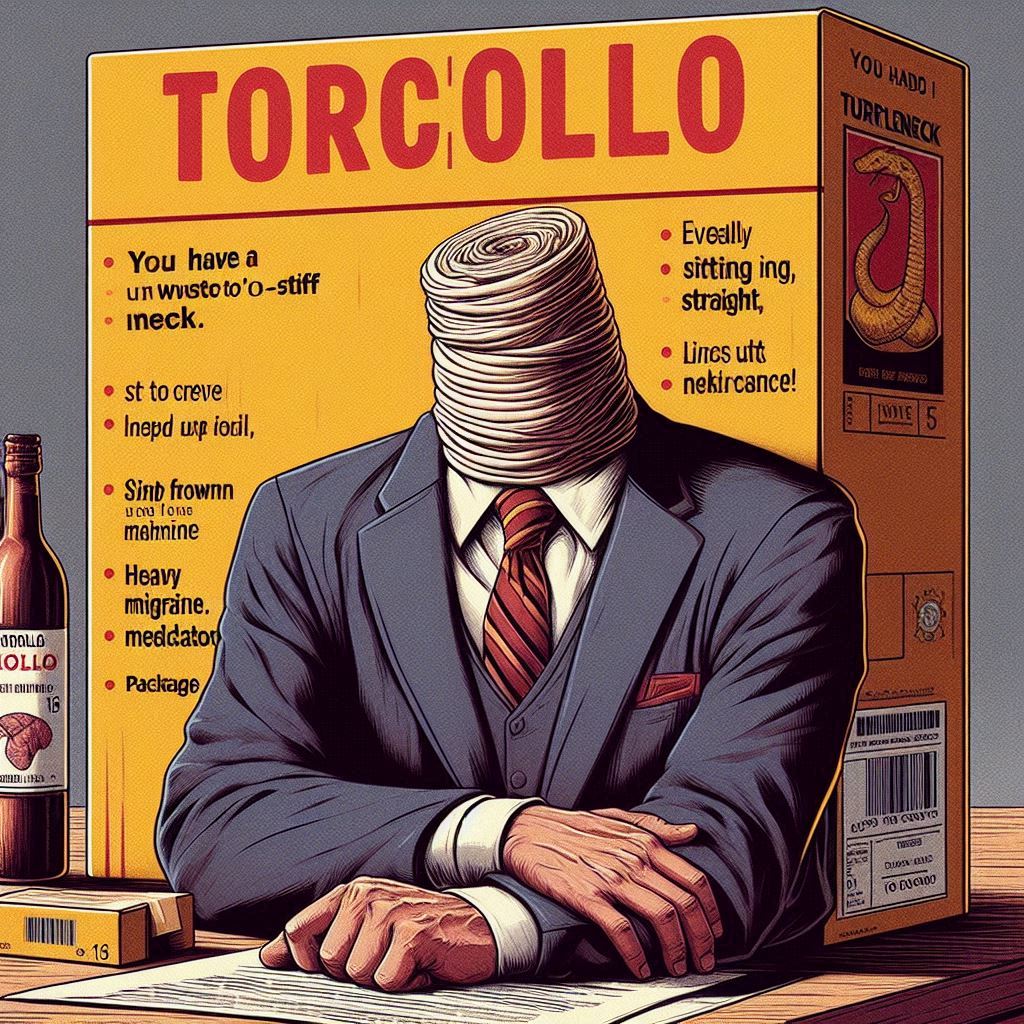
'You have one stiff neck,' the doctor said to me about the severe headache that had suddenly overtaken me. A twist of the neck, literally translated. A wry neck or stiff neck. Finally, after days and nights of sitting upright, lying down for a while, sitting upright again, and so on, a heavy migraine medication helped me get rid of it.
Neck means neck, and, it suddenly occurred to me, that is of course also where the name turtleneck comes from! It is therefore inevitable that in Italian a turtleneck is a maglia a collo alto or something like that. And indeed, in Italy a turtleneck is called a… sweet life. Hey?
Although this form of sweater has probably been around for centuries and was worn at the beginning of the twentieth century as a kind of resistance to bourgeois fashion rules (and probably indeed maglia a collo alto was mentioned), it hit after the release of Fellini's Dolce vita the name sweet life in vogue.
Not because this dress appears a lot in the film itself, but because lead actor Marcello Mastroianni wore the sweater a lot on and off set (but never on official occasions).
Why wear a high-neck sweater? Maybe for a cold on the neck, colpo d'aria to prevent? Because before you know it you'll have one stiff neck. Or, even worse, the widely feared one cervical!
Next to neck, which also means hill(top), and also each unit of a load of goods (what you could carry on your neck), you also have glue, glue. And a daredevil is a… scavezzacollo!
3. Stop
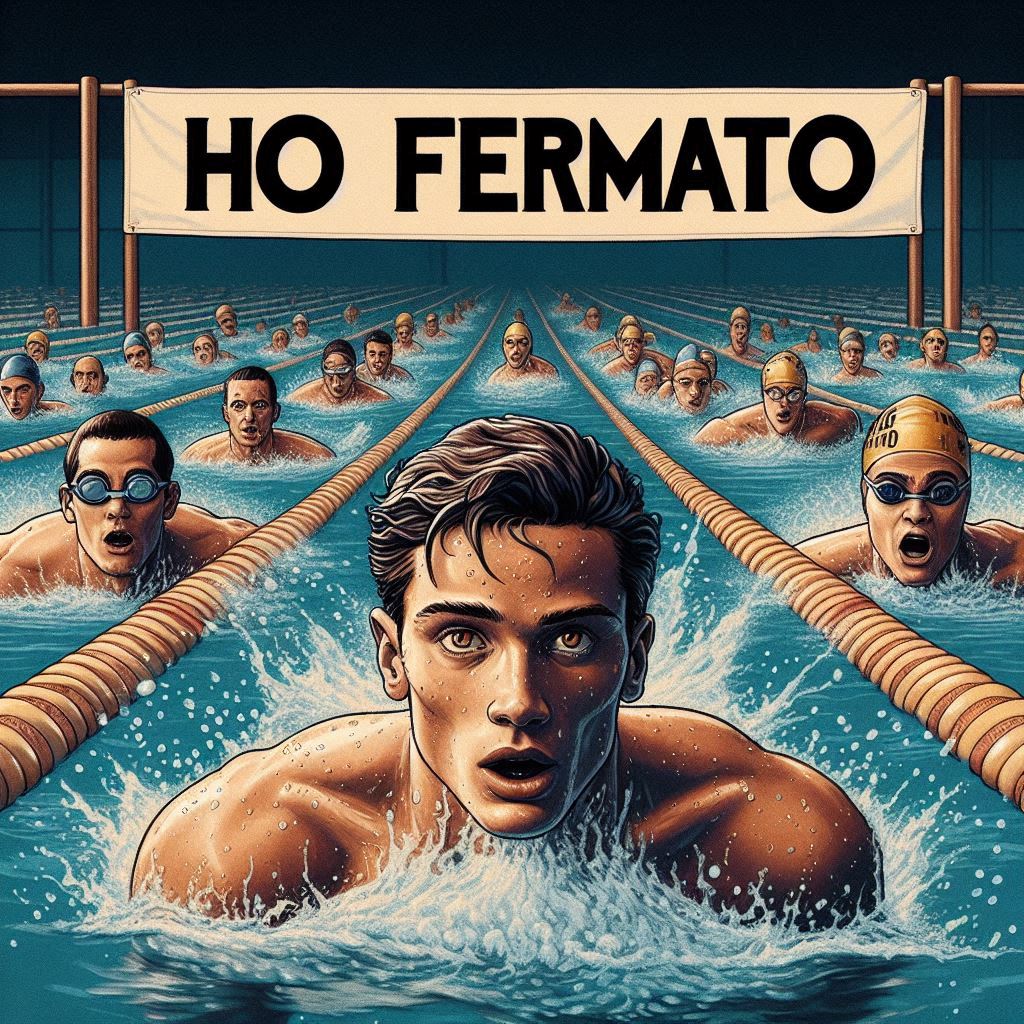
'Ho fermato,' I said to the swimmer who had just joined me in the lane I was swimming in. He politely asked for an apology for bothering me, but that wasn't necessary because I had just completed my mandatory kilometer (40 laps of 25 meters).
The word stopped I hadn't even left my mouth before I knew it was wrong. Finished it had to be. Ho finito. Because stop is to stop (for a moment), and then possibly continue again, while finite definitively to stop, to complete means. Ho finito is I stopped, is finished, it has stopped, ended.
Strangely enough, you don't read that when the store or activity is permanently closed finite is. No, that's what it's called again cessato attivita. Stop, cease the activity, business. According to Treccani (Italian encyclopedia, ed.) it can also be used in everyday life and even for a temporary delay. Finesses of the language!
4. Cappello, capelli
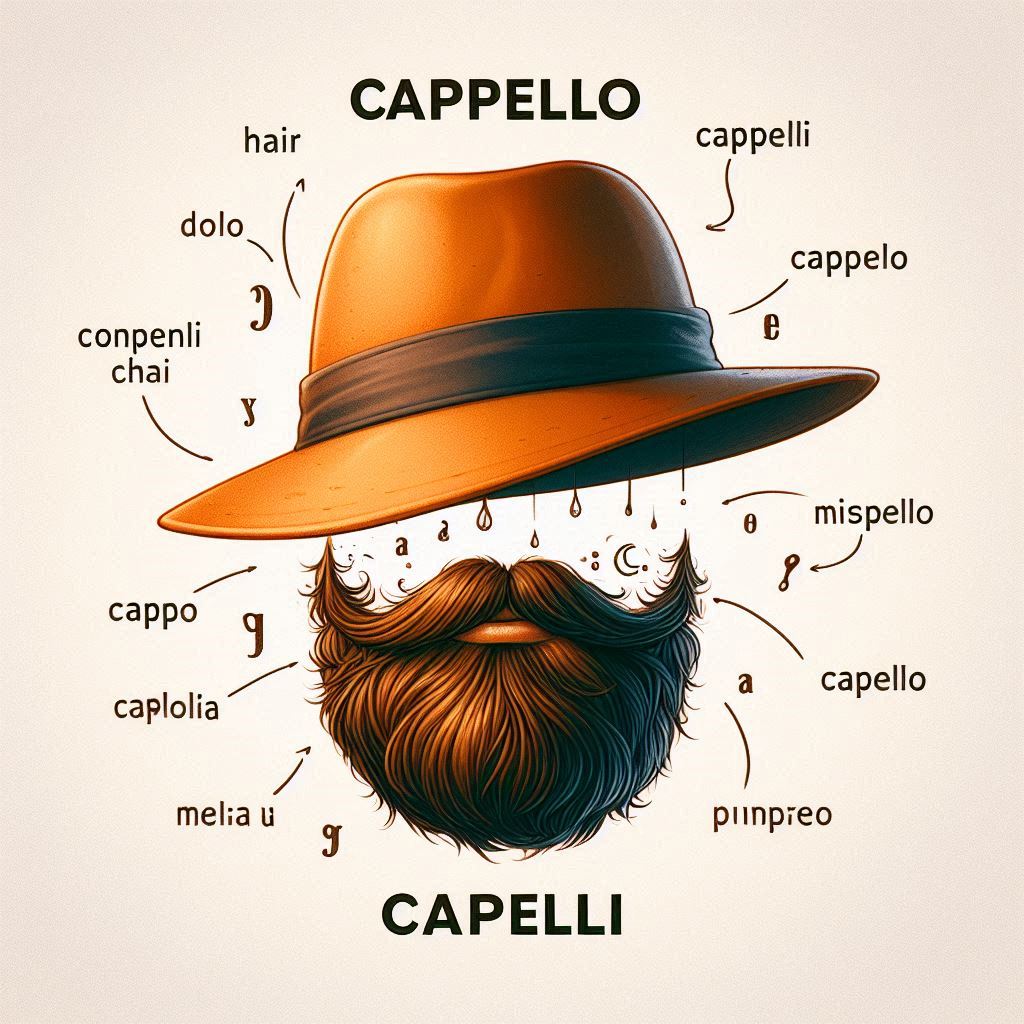
Whether or not a double consonant is one of the most common stumbling blocks when spelling Italian words. Sometimes an extra or missing consonant gives a completely different meaning and even more often those meanings are close together, which makes memorization even more difficult.
Take now hat en hair: the first is a hat, which you wear on your head, where you usually are hair, scalp hairs. A hair is a hair on the head, not a hair, by the, on another part of your body.
Hair is apparently derived from the combination of boss en game, and so you would cappeli to expect. But alas. How hat en hair then to keep them apart? I came up with the following mnemonic: a hat, hat, protects, protects, hair, your hair and therefore has an extra p of protect.
5. C.V.
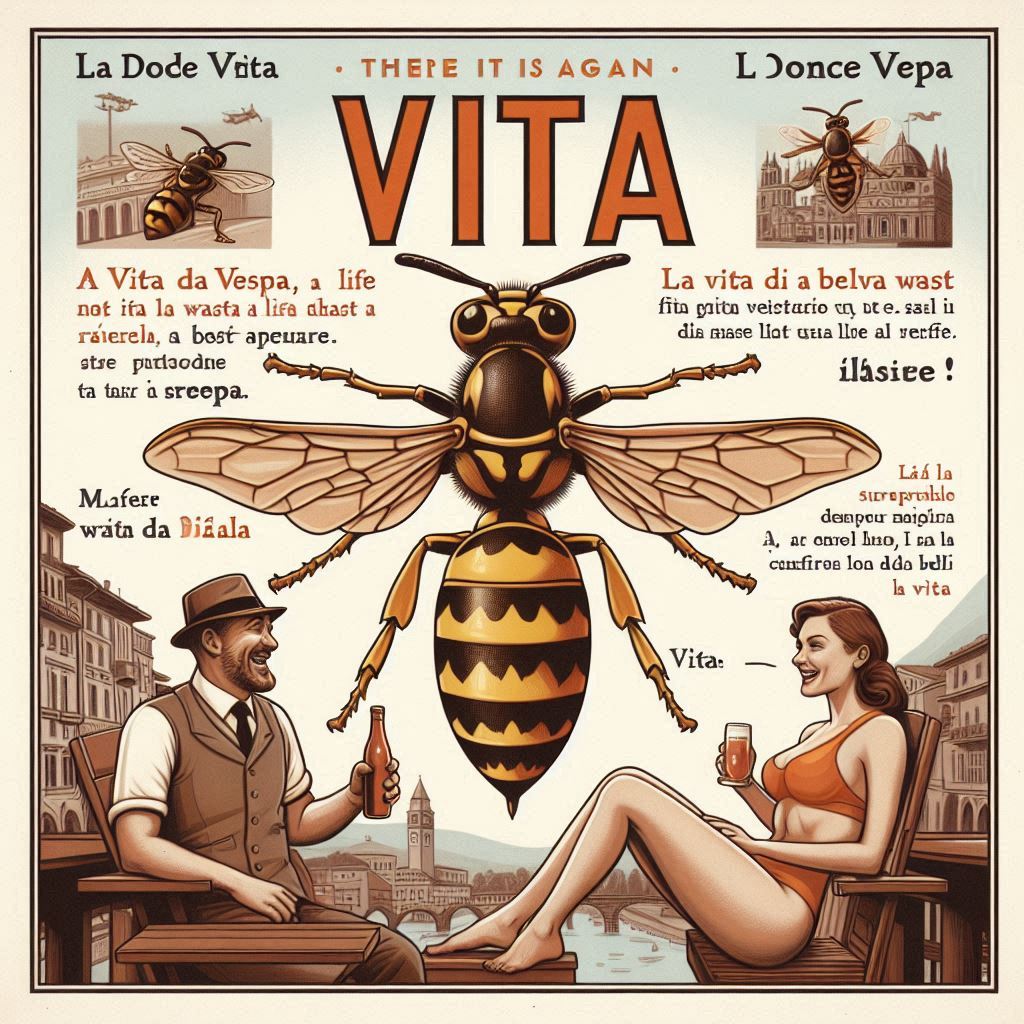
Everyone knows that vita means life, especially thanks to the slogan, there it is again, la dolce vita. But in Italy, vita surprisingly also refers to the waist of the human body. A vita da vespa for example, is a wasp waist and not a wasp life (imagine!).
Do you say 'la (tua) vita e bella' to a person, he/she can also take that as a compliment if he/she wants.
The plural of life is grapevines which, however, also occurs in the singular, screw, and then grape plant (not only life is Dolce but also the grape) or screw. A screwdriver is one screwdriver, a screw packer or chaser.








Comments