

 Myrtle Claus
2016 was definitely a record year for Italian cinema. A whole series of beautiful and above all surprising films appeared that regularly took away prizes at the various (inter)national film festivals. Reason enough to compile an overview of five Italian top films – with one encore. They differ quite a bit in genre and theme, so there is bound to be something to your liking.
1. Perfetti Sconosciuti (Perfect Strangers) by Paolo Genovesi
A brilliant comedy about friendship, love and betrayal. We join a dinner of seven friends: three married couples and one almost single-off. They decide to play a game that could pose a risk to their mutual relationships: each puts his or her cell phone on the table, at the disposal of the others. Every message that comes in is read by everyone, every telephone conversation is listened to via the loudspeaker. The target? Prove that it is not true that they know each other so well and are always clear and sincere with each other. Needless to say, all sorts of secrets are surfacing that could give dramatic twists to the story. However, the well-written script ensures that the film holds up as a comedy.
Perfect strangers is currently running in Dutch cinemas.
2. Lo chiamavano Jeeg Robot (They call me Jeeg) by Gabrielle Mainetti
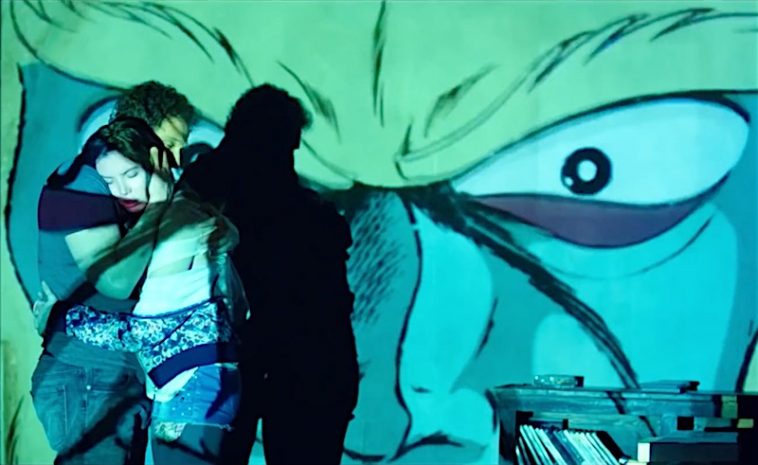
An Italian action film including superhero, as we have never seen before. Enzo Ceccotti is a petty criminal from the slums of Rome. When he falls into the Tiber during a police chase, he comes into contact with a radioactive substance. The dive gives him super powers. Enzo finds his newfound powers a boon to his criminal career, until he meets Alessia. She is convinced that he is the hero of the Japanese cartoon Steel Jeeg. He slowly changes from Supervillain to Superhero, who goes after the psychotic mobster 'Gypsy', a villain with laughable traits.
They called him Jeeg Robot not only manages to poke fun at superhero films and the typical Italian organized crime films, but at the same time masterfully uses and combines elements from both genres into an entertaining whole. A dark, ironic, pulpy film with a romantic note here and there. Recommended!
3. La pazza gioia (Like crazy) by Paolo Virzì
A hilarious and moving comedy about two women, wounded by and in search of love. Beatrice Morandini Valdirana is a theatrical chatterbox, calls herself a countess and says she is on a confidential basis with the greats of the earth. Donatella Morelli is a young woman with a painful secret, vulnerable and silent with a body full of tattoos that say what she cannot say. Both are 'guests' in a therapeutic community in the Tuscan hills for women with mental disorders. The film is about their unexpected friendship that leads to a madcap flight from the community. During their road trip, they look for a bit of happiness in the open-air madhouse that is the outside world.
Paolo Virzì tells the story from the perspective of people with mental illness, insecure persons who are stigmatized and excluded. However, he does so in a light-hearted and very empathetic way. The film is therefore never heavy or gloomy, but rather cheerful and lively. Worth watching, especially for the first half.
4. Veloce come il vento (Italian race) by Matteo Rovere
A typical American genre that you don't easily associate with Italy: a film about motorsport, roaring engines, passion and ambitions to win. But As fast as the wind is all Italian. And in the lead role we don't find a tough actor with muscular arms, but Matilda De Angelis in the role of Giulia De Martino.
Giulia is a sixteen-year-old talented descendant of a family of racing drivers. Under the guidance of her father, she is busy preparing for her participation in the GT championship. But one day everything changes and Giulia's and her younger brother's life is turned upside down. The situation gets even more complicated when her older brother Loris shows up unexpectedly. He is an ex-driver, addicted to drugs and alcohol and an unreliable person who has never cared much about his sister and brother. However, he decides to coach his sister to allow her to compete in the championship. In the film, the storylines of the race preparations and the family's problems intertwine, without becoming a tearjerker. The images of the racing cars provide the extra dynamics.
5. Fai bei sogni (Sweet dreams) by Marco Bellocchio
Make beautiful dreams is Bellocchio's film adaptation of Massimo Gramellini's autobiographical novel of the same name. This Turin journalist wrote about his mourning after the death of his mother. It is the story of a difficult search for the truth and at the same time the fear of its discovery.
Belloccchio adhered closely to the bestseller when writing the script. The film, like the book, begins on the morning of December 31, 1969. Massimo, then nine years old, sees his father standing in the hallway supported by two men: his mother has suddenly died. He refuses to accept this and continues to deny his mother's death in all sorts of ways. Growing up, Massimo becomes a journalist and continues to struggle with the ghosts of the past, women and life itself. Until, after his return from war-torn Bosnia, he meets Elisa. She helps Massimo face the truth about his mother's death and his past.
6. The Encore: Fuocoammare (Fire at Sea) by Gianfranco Rosi
No light fare as an encore, but Gianfranco Rosi's docu film about Lampedusa, the daily life of the islanders and the relentless flow of refugees should not be missing from this 2016 list.
We follow the life of Samuele, a twelve-year-old boy who goes to school and commits mischief, and his encounters with the inhabitants of Lampedusa. You will learn about life on the island and the mentality of the inhabitants, almost everyone of whom is fisherman. Just as it becomes increasingly clear how their lives are connected with those of the refugees they sometimes literally fish out of the sea.
Rosi lived on the island for over a year to collect all the footage for this film. The film is therefore partly documentary, because Rosi does not find it necessary to use fiction to translate emotions when the human dramas are so intense, and partly played by the self-interpreted islanders. The title of the movie Fuocoammare, fire at sea, is inspired by a folk song that the residents sang during the Second World War. Military ships used flares to see more in the dark nights, giving the sea a red glow and the appearance of burning. The film won a Golden Bear in Berlin and the prize for the best documentary at the European Film Awards.
Which Italian top films are you going to watch during the Christmas period?
Image: scene from Lo chiamavano Jeeg Robot








Comments