

 Aart Heering
“Since it is most preposterous and inappropriate that the Jews, who through their own fault have been condemned to perpetual slavery, (…) should think they have the right to dwell among Christians, even near churches and in the most beautiful streets, we decided to put an end to that and that (…) all Jews should live in a district separated from the Christian homes, with a single entrance and exit.”
Thus begins the papal bull cum nimis absurdum, with which Paul IV, a former Inquisitor, in 1555 jewish ghetto of rome set. That was a few years after the creation of the first ghetto, that of Venice, which also gave its name to the later Jewish quarters.
(The word comes from the Venetian ghetto: foundry, because the designated district was on the site where the city's cannons were cast before that time. By the way, in Italian you write ghetto, because ghetto would be pronounced dzjetto.)
The Jews of Rome, which had been a small but lively community since the beginning of our era, were forcibly brought together in 130 houses in the neighborhood of Sant'Angelo, where many Jews already lived, between the Tiber, Piazza de' Cenci (now Piazza delle Cinque Scole) and Via di Pescaria (now Via del Portico d'Ottavia).
At the beginning of the 19e century, another piece was added to Piazza Mattei, that of the 'Turtle Fountain'.

Table of contents
Locked up in the ghetto
For three centuries, until 1870, the Jews of Rome were literally locked up in the ghetto, the gates of which were locked every night. It was a place of grinding poverty: because Jews were not allowed to join the guilds, almost all professions were forbidden to them.
The trade in rags was allowed and from there they developed into tailors and cloth merchants. A few Jewish families in Rome still keep that tradition alive.
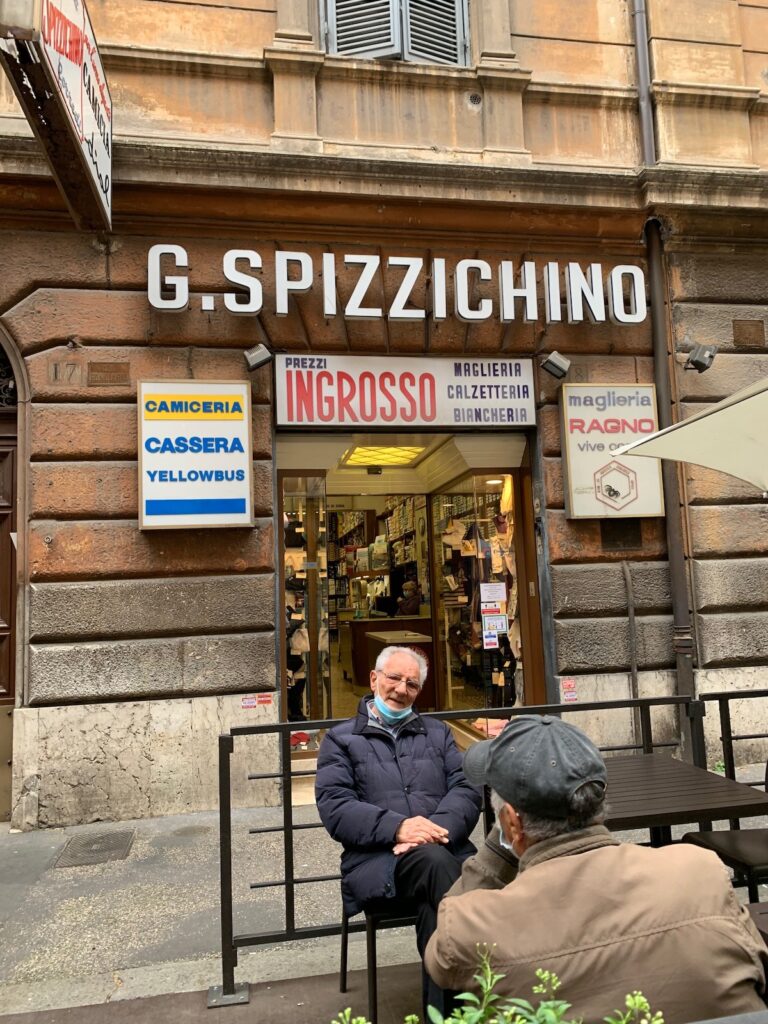
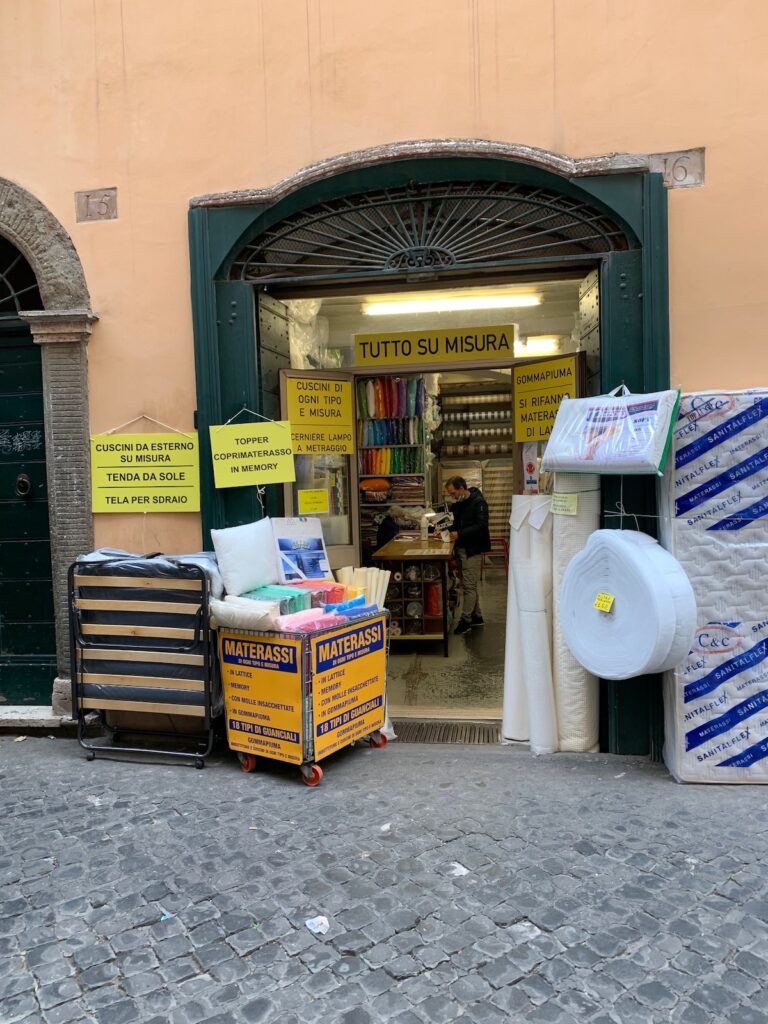
Due to its small size, the Jewish quarter was chronically overcrowded, also due to the arrival of Jewish exiles from Spain, Portugal and southern Italy. Floods from the Tiber regularly flooded houses, the popes made the Jews pay high taxes, and preachers were employed to bring them to the true Catholic faith. Incidentally, without much success.
liberated
In 1870, when Rome was annexed to the fledgling Kingdom of Italy and the Papal State ceased to exist, the confinement was over. The Jews were allowed to settle freely, the professional ban came to an end and from 1907-13 Rome even got a Jewish mayor in the person of Ernesto Nathan, who is still regarded as one of the best administrators the city has ever had.
In 1882 the slums of the former ghetto were razed to the ground to make way for wide streets, spacious houses, a large Jewish school and an impressive synagogue. At the same time, the Tiber was dammed, so that the floods were a thing of the past and the (former) ghetto got its current appearance.

But the Emancipation, as this period is called by the Italian Jews, came to an abrupt end when in 1938 the regime of Mussolini launched an anti-Semitic offensive and the Jews lost their acquired rights again. (That's well before the German occupation, so if Italians tell you that anti-Semitism didn't exist in Italy, don't believe them. But this aside.)

Continued
The sad low came on October 16, 1943, with a German roundup in the ex-ghetto, where most Roman Jews still lived. A total of 2.092 men, women and children were gathered on the small square in front of the Portico d'Ottavia and then deported to Auschwitz-Birkenau, from where only a few dozen returned.
After the war, it took a long time for the ghetto to regain its former vibrancy, but it has gradually become busier since the 80s. Before that it was a characteristic but quiet part of Rome, where tourists admired the Roman antiquities and gourmets feasted on the classic Jewish-Roman cuisine.
With the arrival of more tourists, initially mostly American, Jewish and non-Jewish, dozens of kosher eateries and shops selling Judaica have been added, making the ghetto a vibrant center of Jewish culture and a tourist attraction of the highest order.
Well, that was a long introduction, but at least now you know what it is about with the route description.
Portico d'Ottavia, the heart of Rome's Jewish quarter
If you walk down Via Arenula from the Largo di Torre Argentina, with its Roman temple remains and medieval watchtower, and then turn off into Via di Santa Maria del Pianto, named after one of the many weeping Madonnas that dot the Roman pantheon, you will you find yourself on the main street of the ghetto, Via del Portico d'Ottavia.
Number 1 is an address that every sweet tooth in Rome knows, the confectionery (pastry shop) Boccione Limentani, with such delicacies as the nocchiata, balls of nuts fried in honey, and the pizza dolce ebraica, the 'sweet jewish pizza': unleavened cakes with pine nuts, almonds and candied fruit.

Quite heavy, but delicious, and there is usually a line waiting at the door. Above the facade of number 2 you can see a Latin inscription in which merchant Lorenzo Manili mentions that he had his house built here in the year 2221 ab urbe seasoned, or after the foundation of Rome, so in 1468.

Across the street is the building of the Jewish comprehensive school, not the only but the largest Israelite educational institution in Rome. The flags of Italy, EU and Israel hang on the wall and carabinieri and citizens stand guard when leaving the school.

Via Portco d'Ottavia, with the Scuola Ebraica on the right 
Security for the school
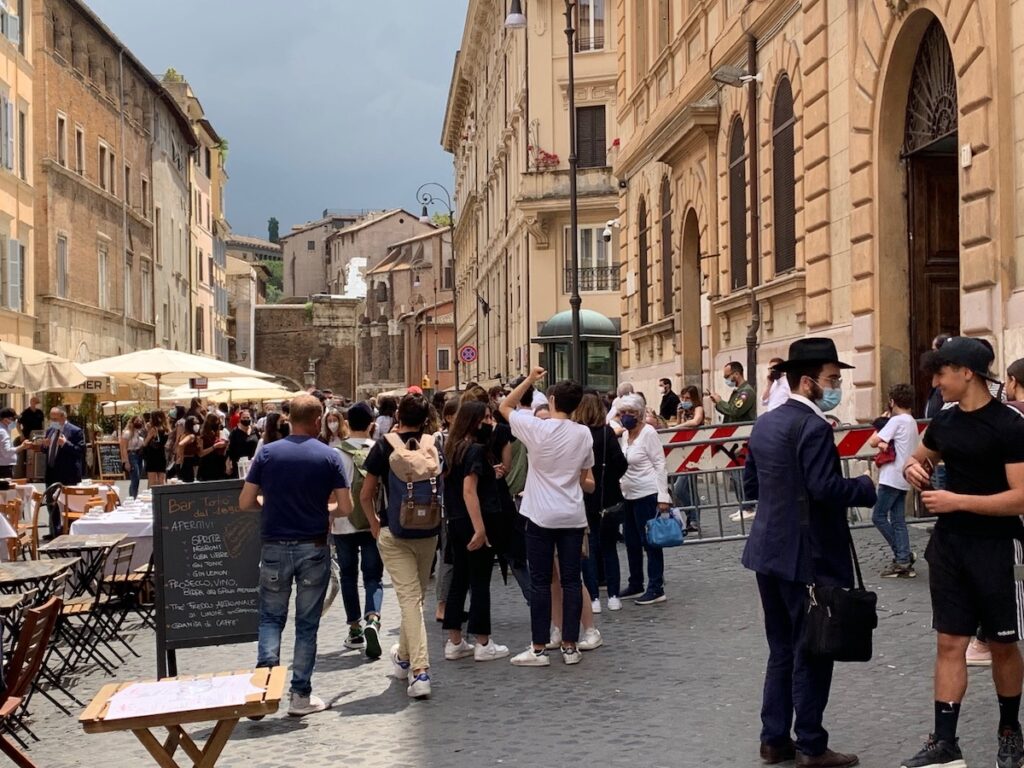
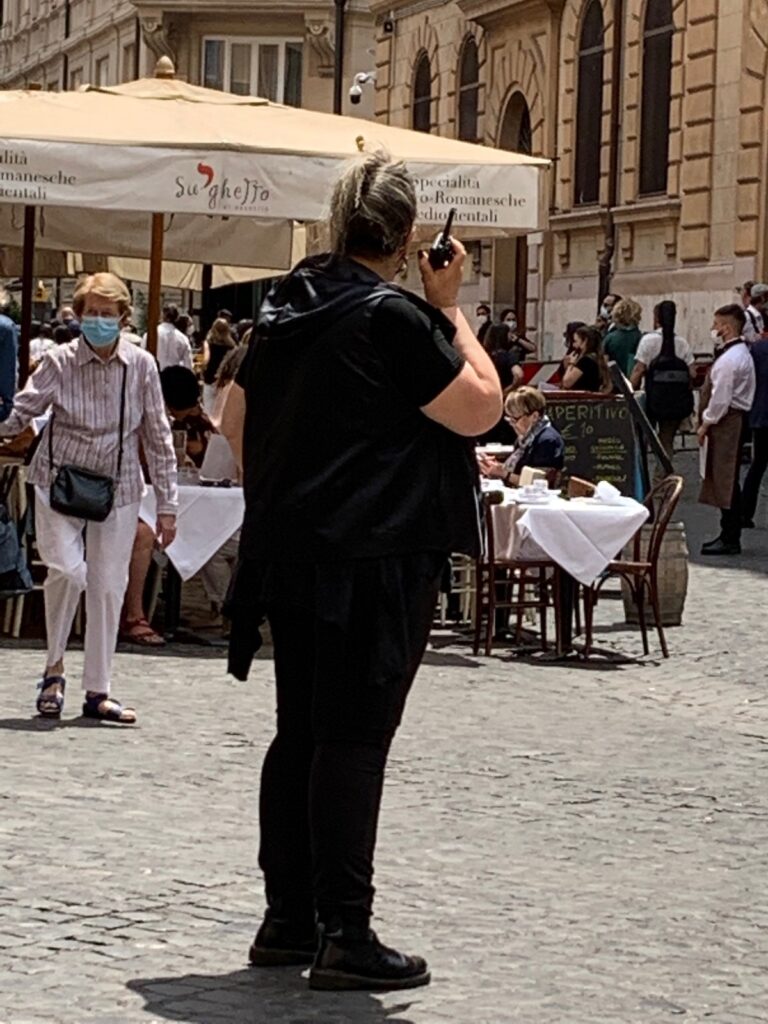
The memory of the 1982 attack, when a Palestinian commando entered the Roman synagogue with fire and killed a two-year-old boy, is very much alive in the ghetto.

Further to the right you arrive at Piazza delle Cinque Scole, named after the 5 synagogues (Downs = shul) with their different (Italian, Castilian, Catalan) rites, which stood here before the clearing of the old ghetto and the construction of the current synagogue.

Next to the rear facade of the Church of the Weeping Mary, you will find Sora Margherita, one of the few remaining old-fashioned Inns where good Roman fare is still served for a reasonable price.

The fountain on the other side of the square is a replica of the Baroque artwork, which before 1882 stood in Piazza Giudia (the former Jews' square), the then entrance to the ghetto. From there you have a view of the spacious end of 19ecentury Via Catalana on the site of the street that led to the synagogue of the Spanish immigrants before its demolition.
Street corner in the Roman ghetto Trattoria Sora Margherita
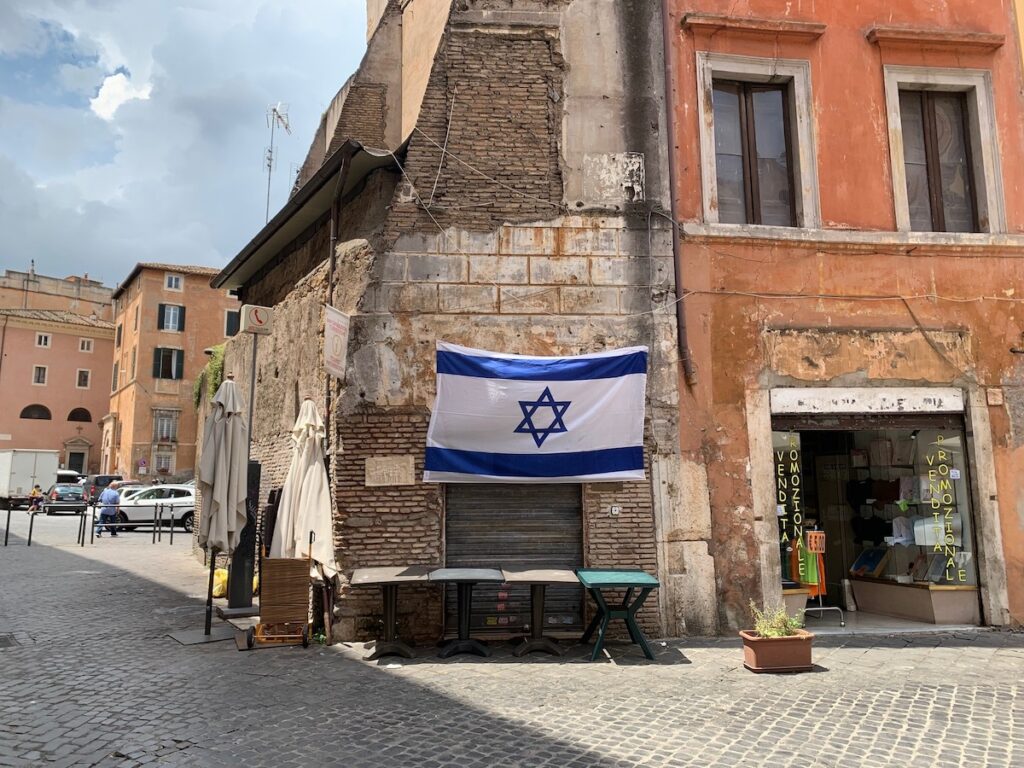
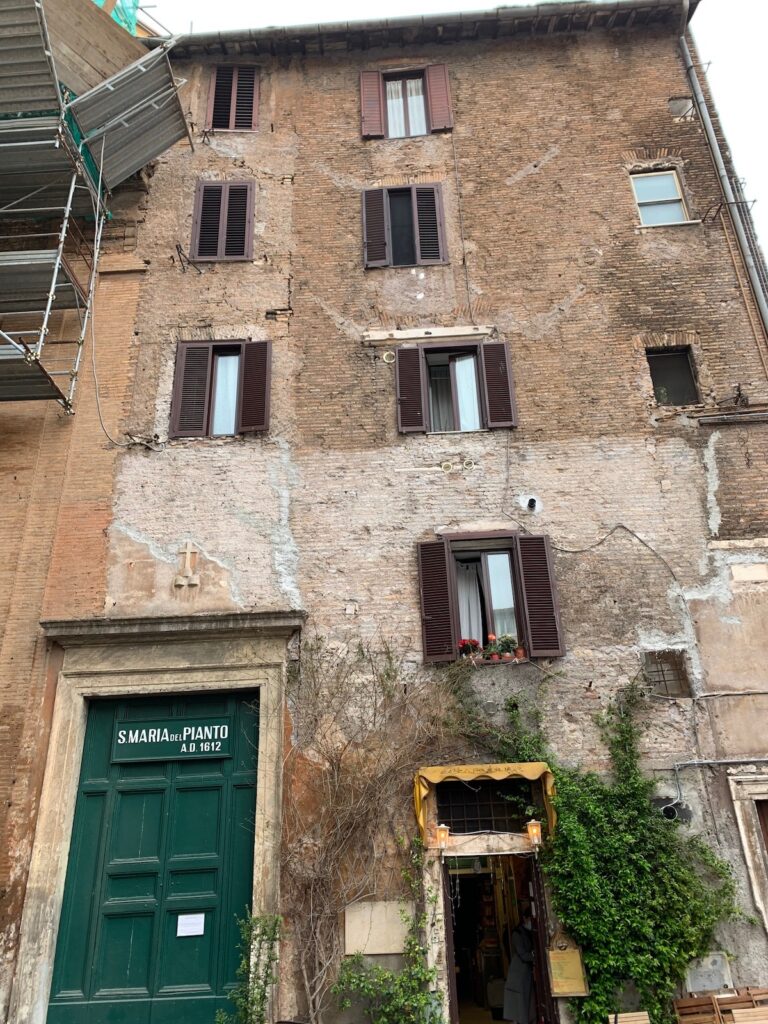
Boutiques, cafes and kosher restaurants
The first side road on the left, Via Reginella, still a neglected back alley in the 90s, is now a pleasant shopping street with clothing boutiques (e.g. Marta Ray at No. 4), art galleries such as Alefbet by sculptor Gabriele Levy (at No. 25) and the Erboristeria (herb shop) Officinaturale (no. 3), where you can buy a handy overview map of the 'old' and the 'new' ghetto for one and a half euros.
Gallery Alefbet Via Regina
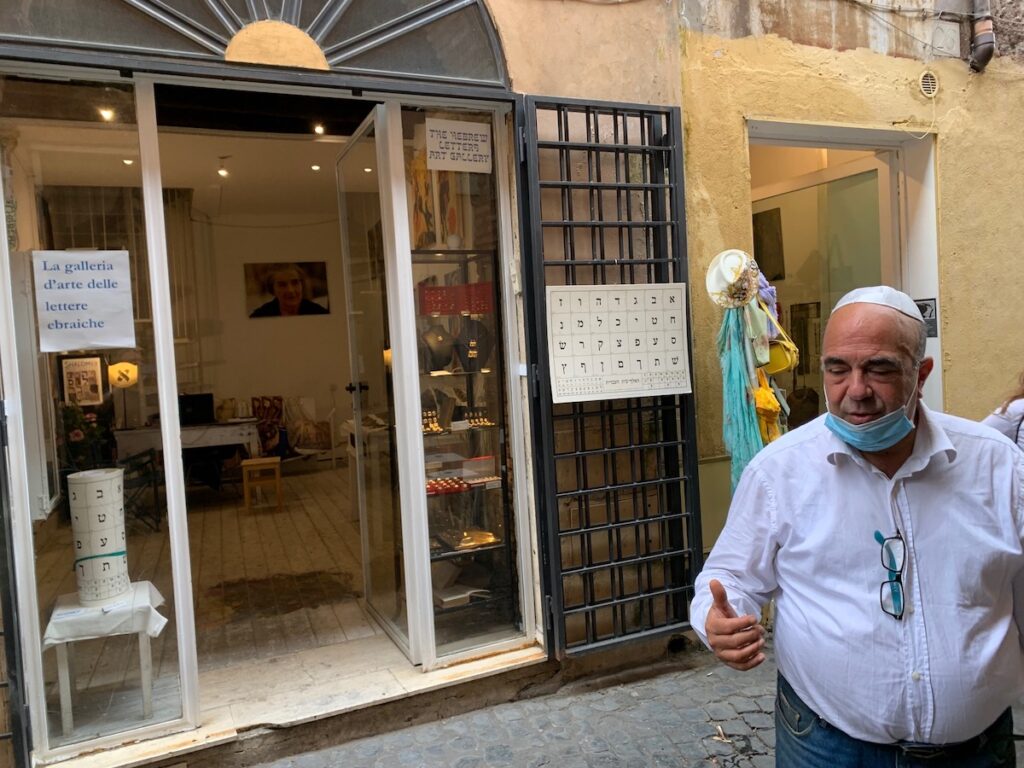
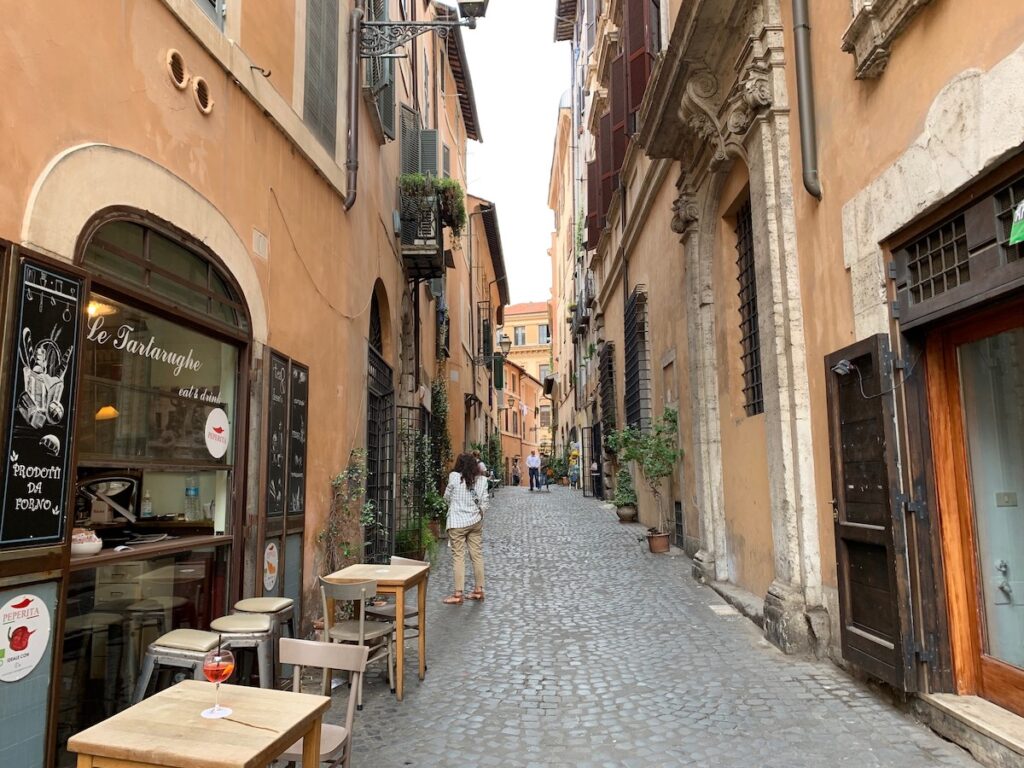
The road leads to Piazza Mattei, with the Palazzo of the same name, which once housed the family that held the keys to the gates to the ghetto. But the square is best known for the Baroque Fontana delle Tartarughe, the famous one, almost as often as the Trevi fountain photographed, 'Turtle Fountain' with its gracefully drinking reptiles.

Opposite is cafe Le Tartarughe, where you can catch your breath after a city walk, also because it is usually quite quiet here. And if there is no room at the Tartarughe, you can go to a cozy one across the street Tavern, which serves smooth San Daniele ham with matching wines.
From the square you return via the narrow, rustic Via di Sant'Ambrogio, the way of St. Ambrose: the ghetto was surrounded by churches and saints for a reason.

Back on the main street you will find yourself in a gastronomic Jerusalem. Not so long ago, Rome had two renowned Jewish restaurants: the popular Giggetto al Portico d'Ottavia and the more upscale Piperno just down Via Monte de' Cenci. Both still serve local Jewish specialties like Giudia artichokes, double fried artichokes, and aliciotti all'indivia, a savory pie filled with anchovies and endive, but also classic non-kosher Roman dishes.
Da Giggetto Ba' Ghetto
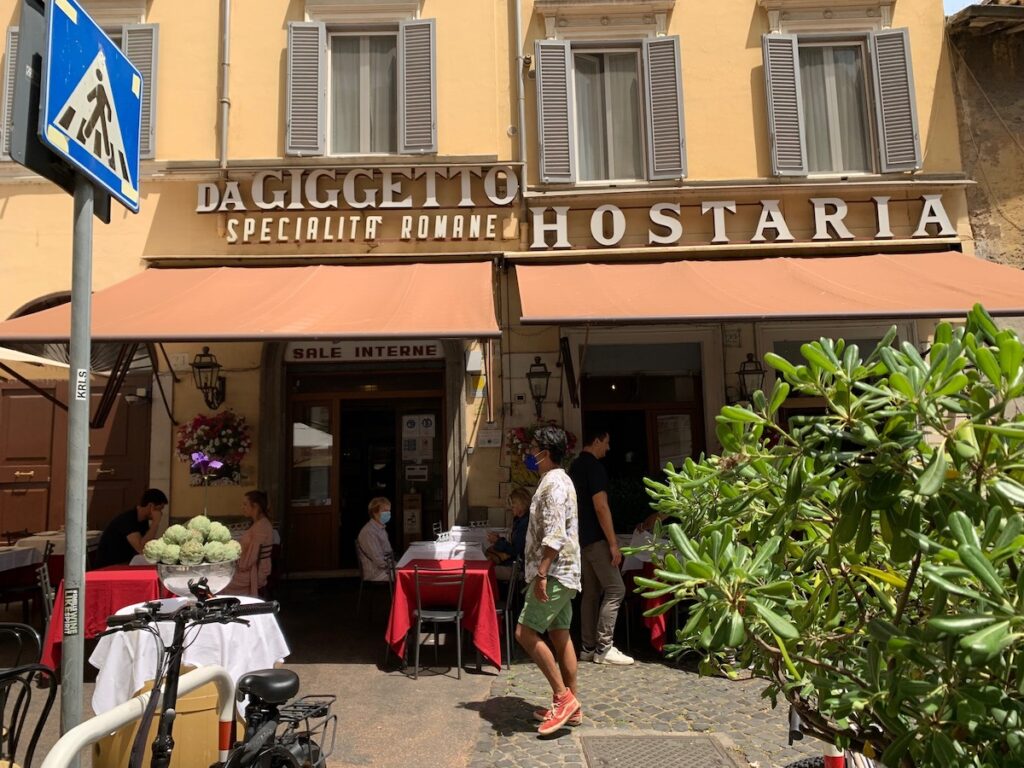
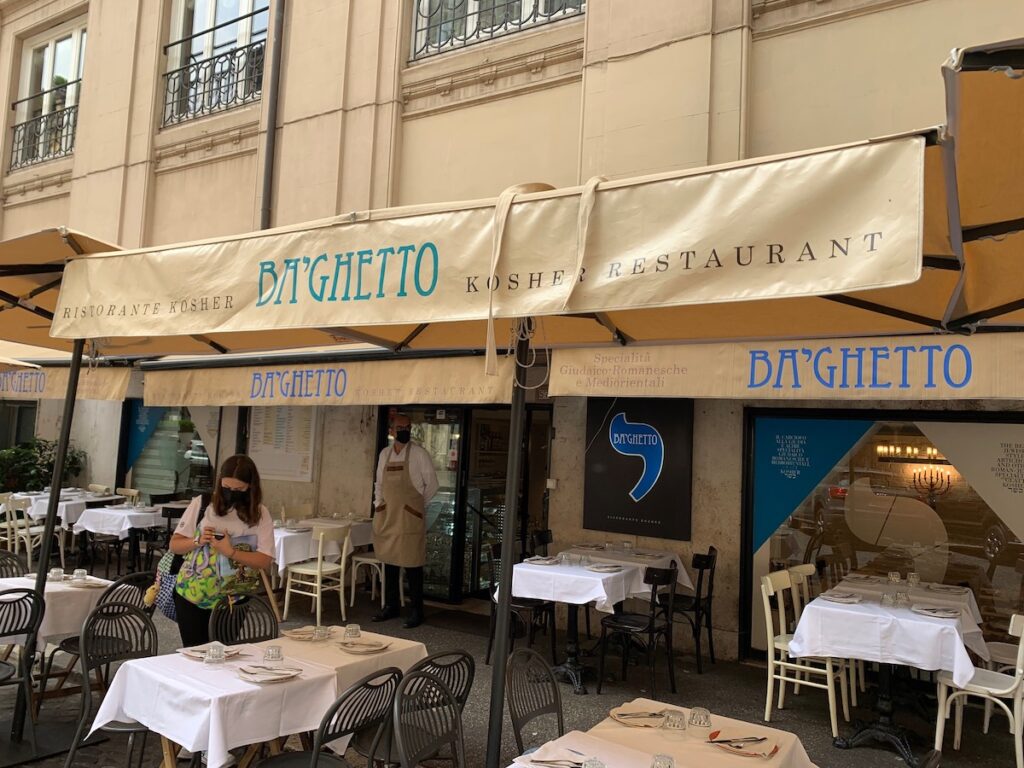
In recent years, a dozen more Orthodox establishments have emerged that want to be kosher and offer an interesting mix of local Jewish dishes and influences from North Africa and the Middle East.
This is how Ba' Ghetto . serves couscous, falafel en dotted, but also kosher pizza and bucatini all'amatriciana with dry beef instead of bacon. Those who adhere to strict dietary laws can go to Ba' Ghetto Milky, which has no meat and shellfish on its menu, but does have fish, kosher cheese and wine produced under rabbinical supervision.
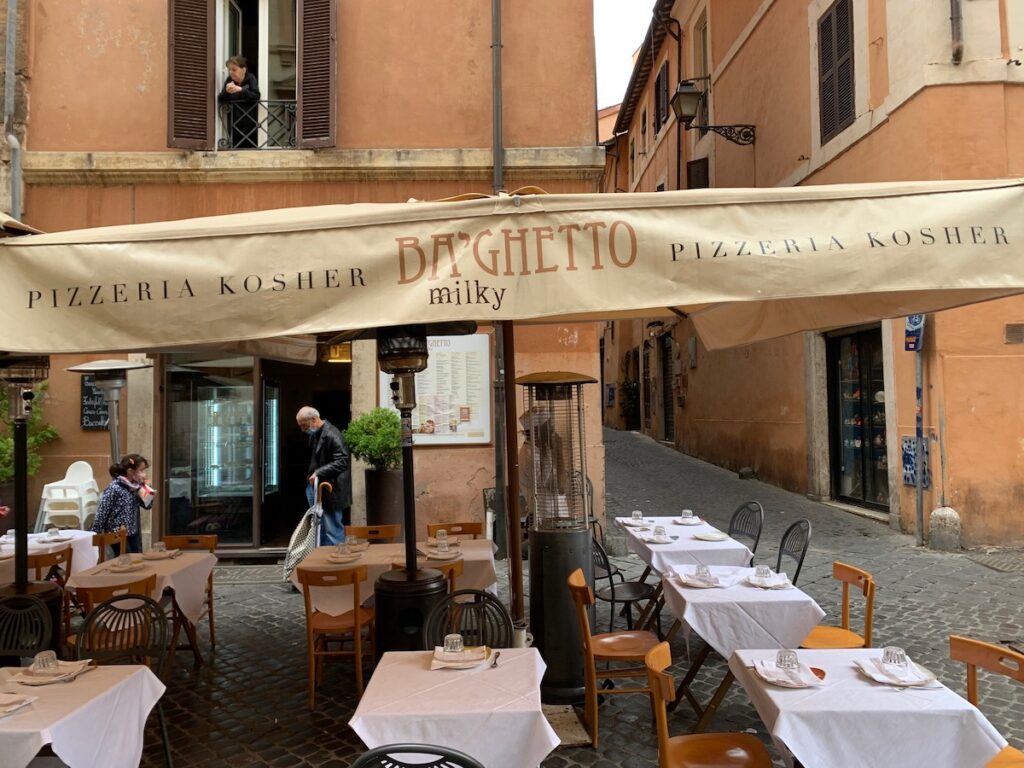
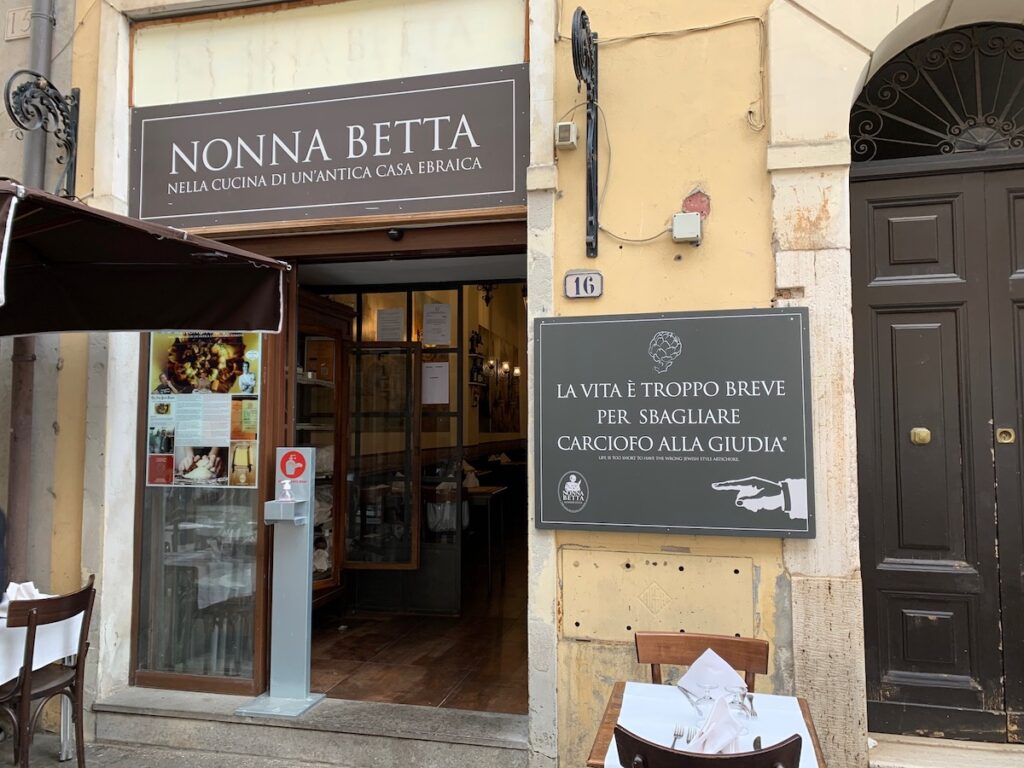
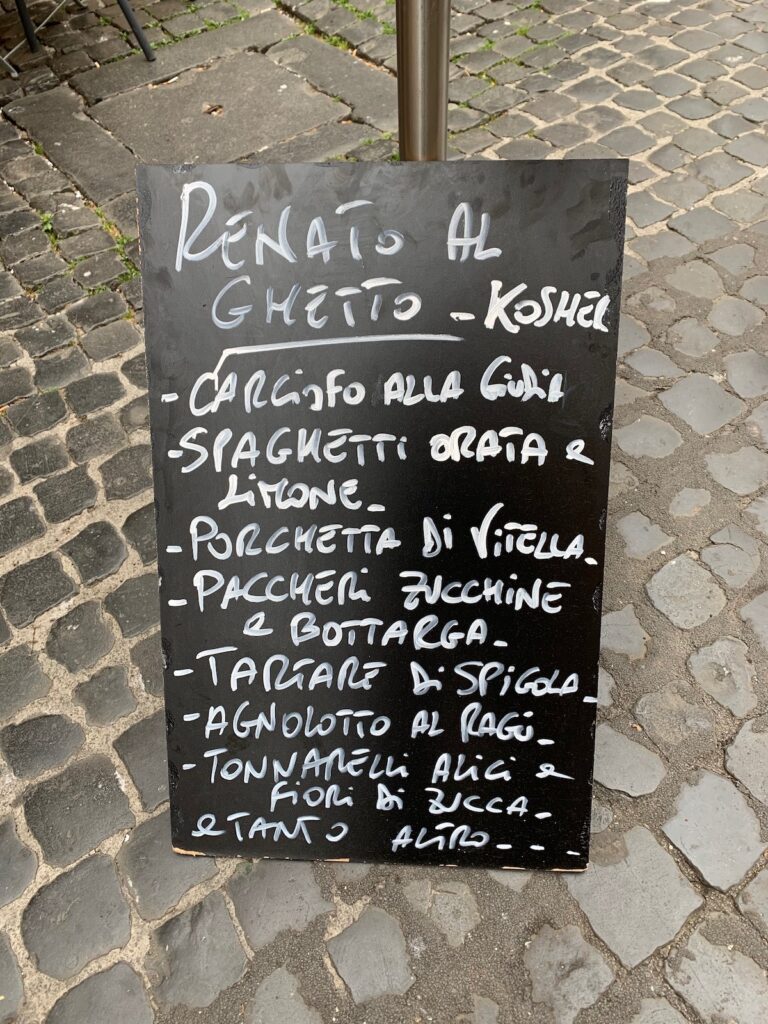
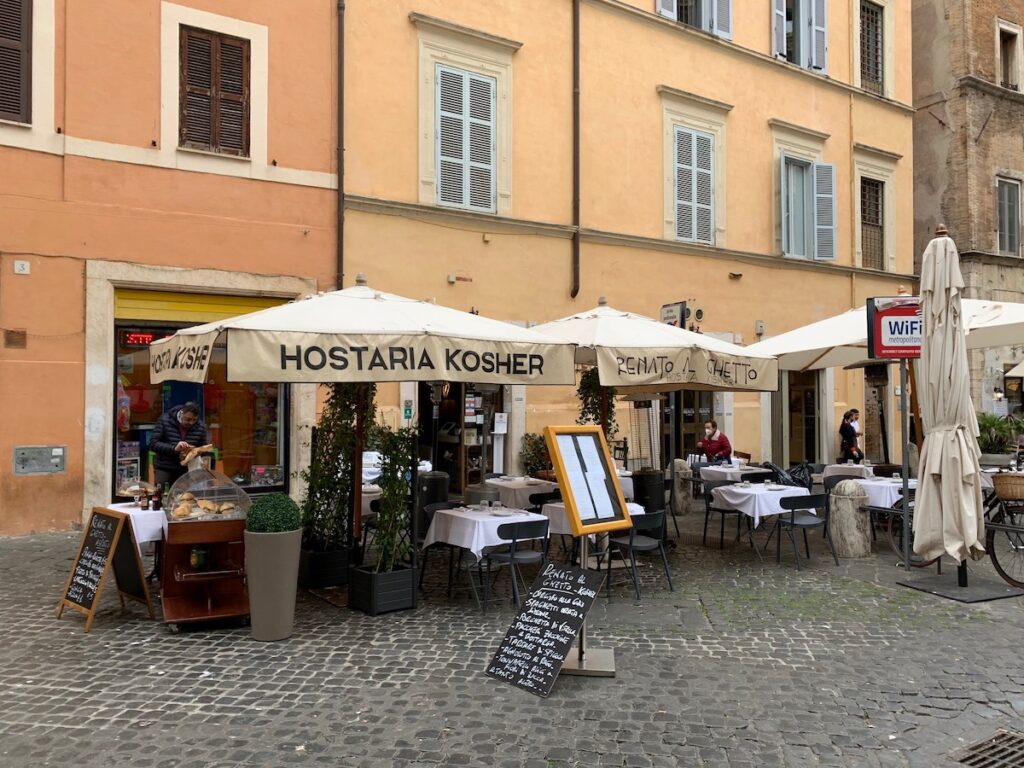
In short, a wide choice in a small street. And in the midst of the culinary delights, you would almost forget that behind the taverns on the antique side of the street there are also Renaissance facades and a medieval tower in what were then the residences of the wealthy families Fabi (at no. 13) and Grassi ( no. 25).
Limentani, a household name in Rome
Past the restaurants, where the road curves to the right, you'll pass the shop window of a Rome household name: Leone Limentani, in household goods since 1820.

The company, now run by the seventh generation, has been providing wedding tables for Roman newlyweds since time immemorial and now specializes in porcelain, silver and luxury kitchenware. A look inside is worth it. Opposite is the monumental portico, which gave the street its name.

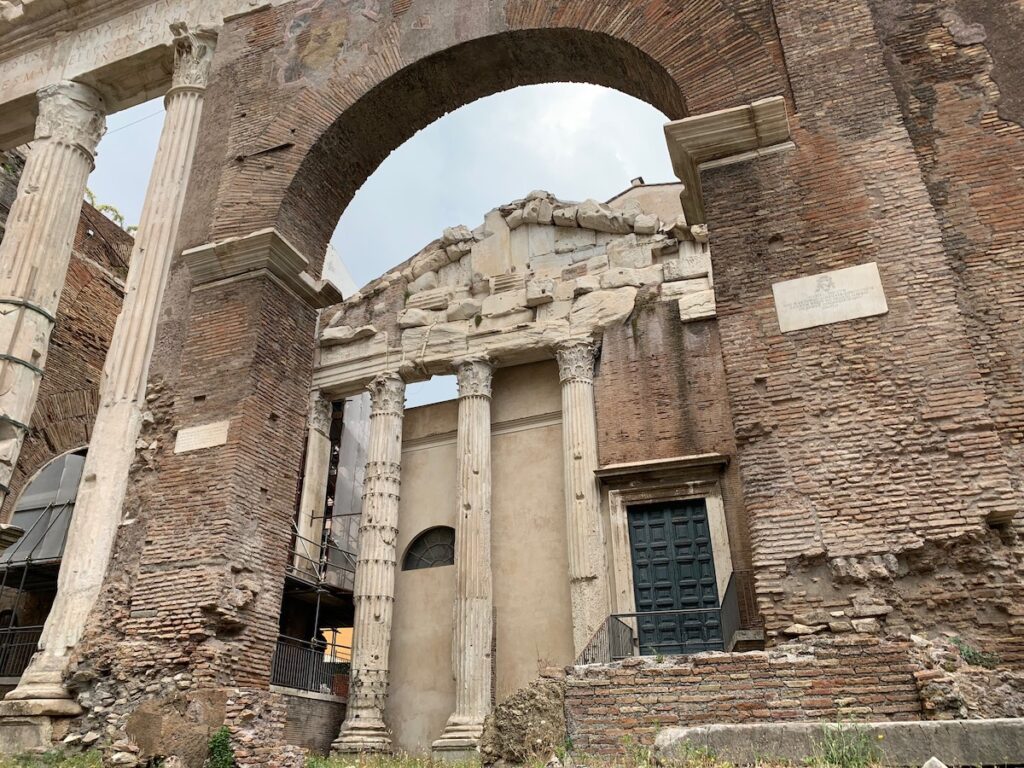
It was built between 27-23 BC. founded by Augustus, the first emperor of Rome, in honor of his sister Octavia. Then he gave access to a temple of the supreme god Jupiter and now to the Chiesa di Sant'Angelo in Pescheria. That church is called that because until the demolition of the old ghetto in the portico the urban fish market (fishmonger) was held.

Further left, on the small square where the Jews of the ghetto were herded on October 16, 1943, and which is therefore named after that gruesome date, is the Casina dei Vallati, a mansion from the late Middle Ages. It now houses a small Museo della Shoah, which opened in 2015 with an exhibition about Anne Frank.

Next to the Casina you have a beautiful view of the antique Theater of Marcellus.

'Abtransportiert durch SD'
Opposite is the synagogue – also guarded by carabinieri – which at the beginning of the last century replaced the 5 earlier Jewish almshouses that had been demolished during the renovation of 1882.
The Great Synagogue in the Jewish Quarter of Rome Carabinieri watch over the synagogue
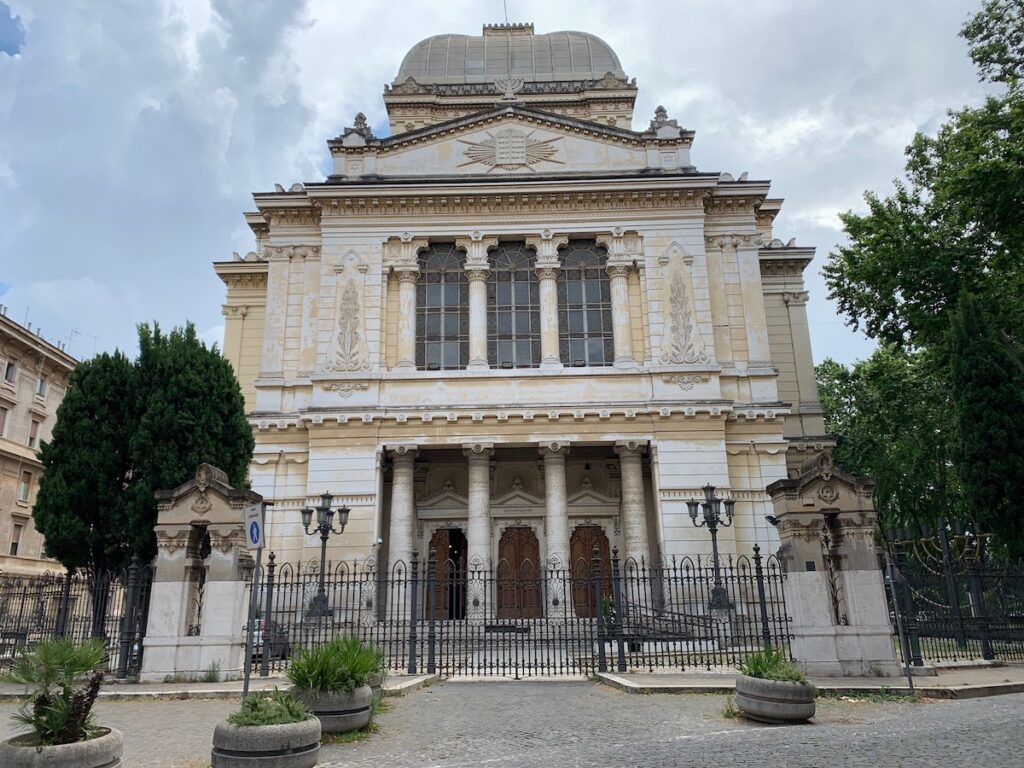
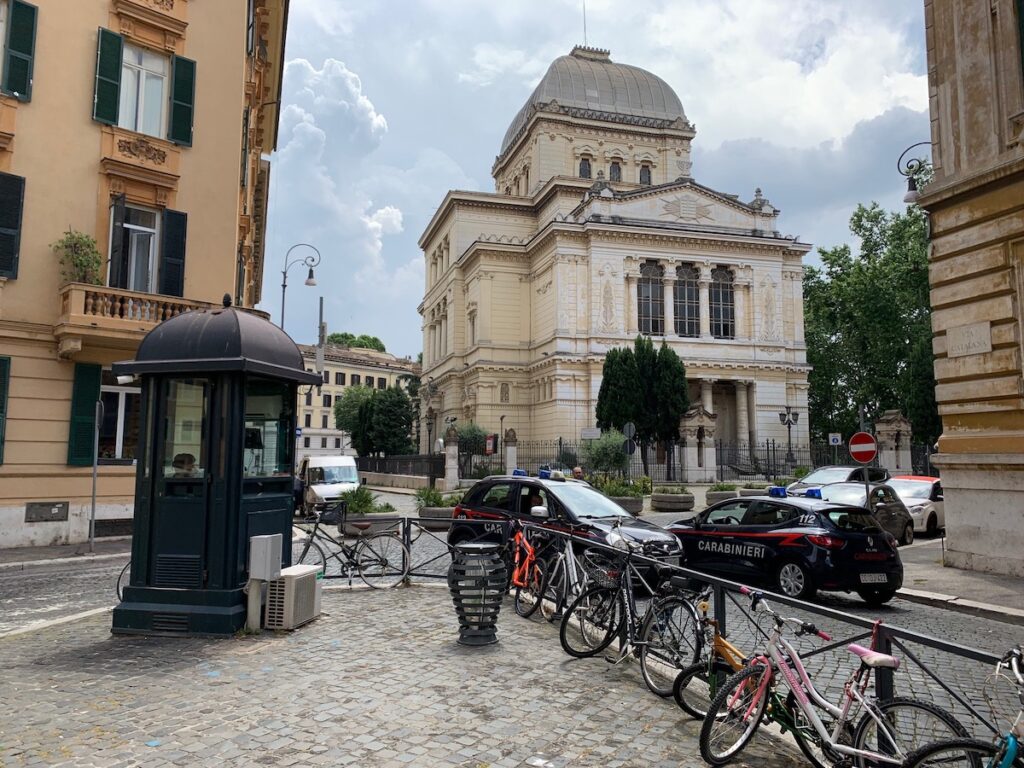
It is a remarkable building, in which different styles are intertwined. Primarily the Roman Baroque, with its impressive columns, vaults, stained glass windows and a 46 meter high dome. (A meter less than that of St. Peter's, because of course it was not allowed to go over it.)
In this way the synagogue also became a symbol of the newfound pride of the Jewish community. Other elements are clearly inspired by the origin of the Jewish people: Hebrew inscriptions, Babylonian-like winged figures, menorahs. Stylized floral motifs and graceful non-figurative decorations show that the designers were also influenced by Jugendstil (known in Italy as liberty style) that then fashionable was.
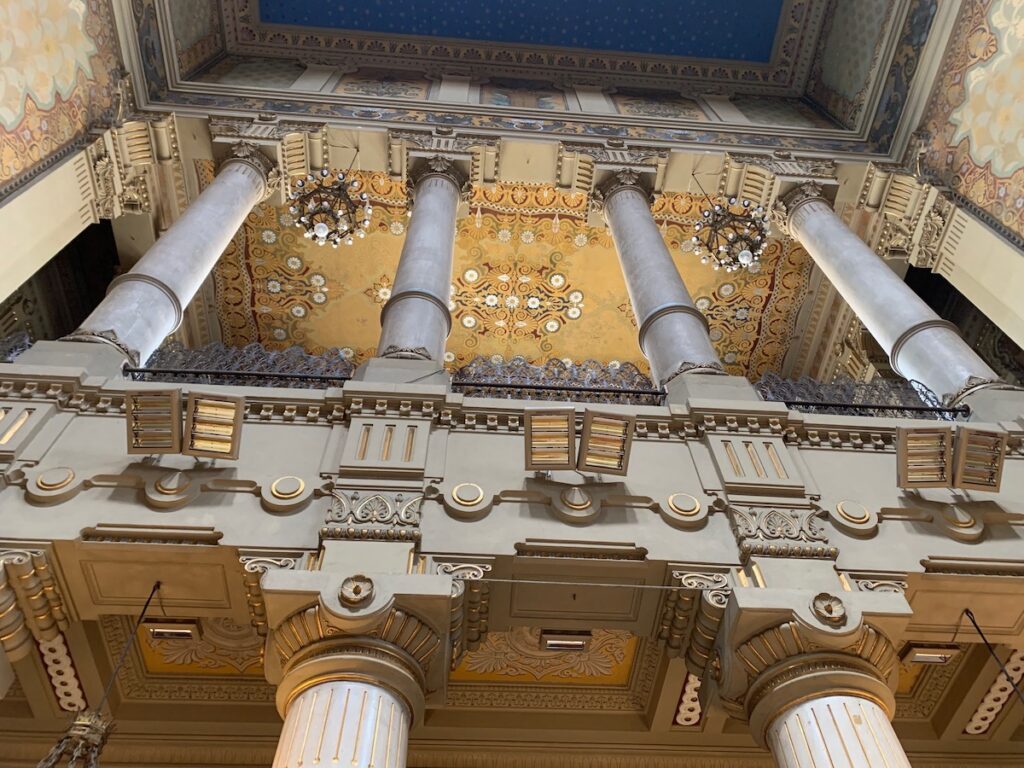
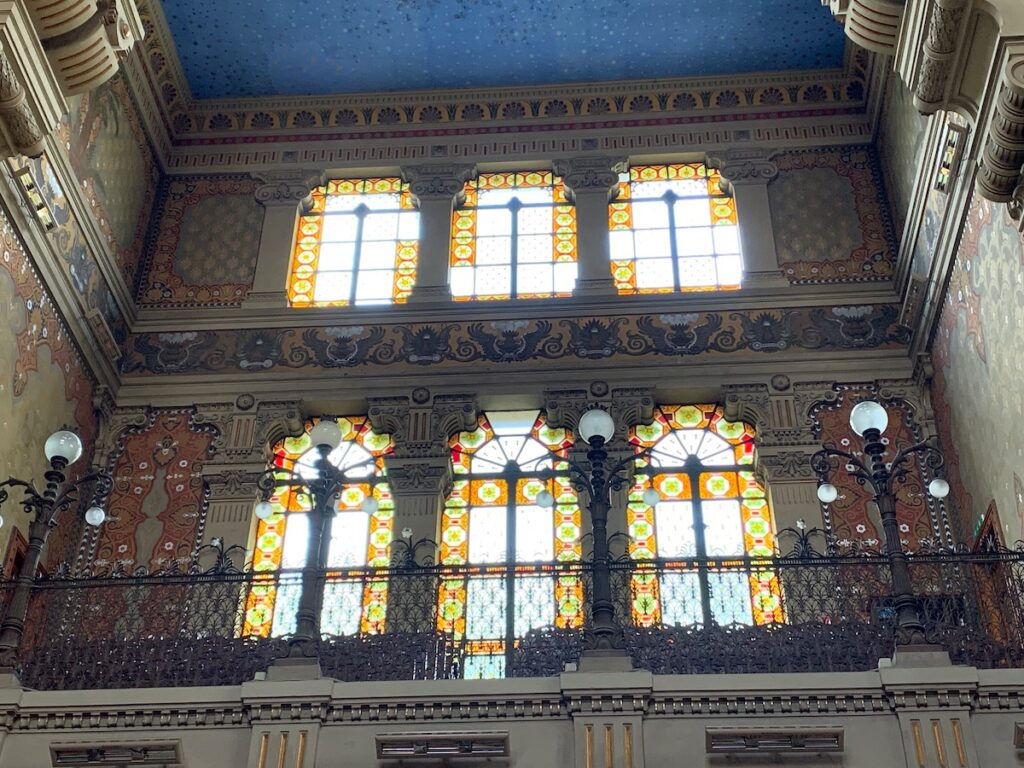
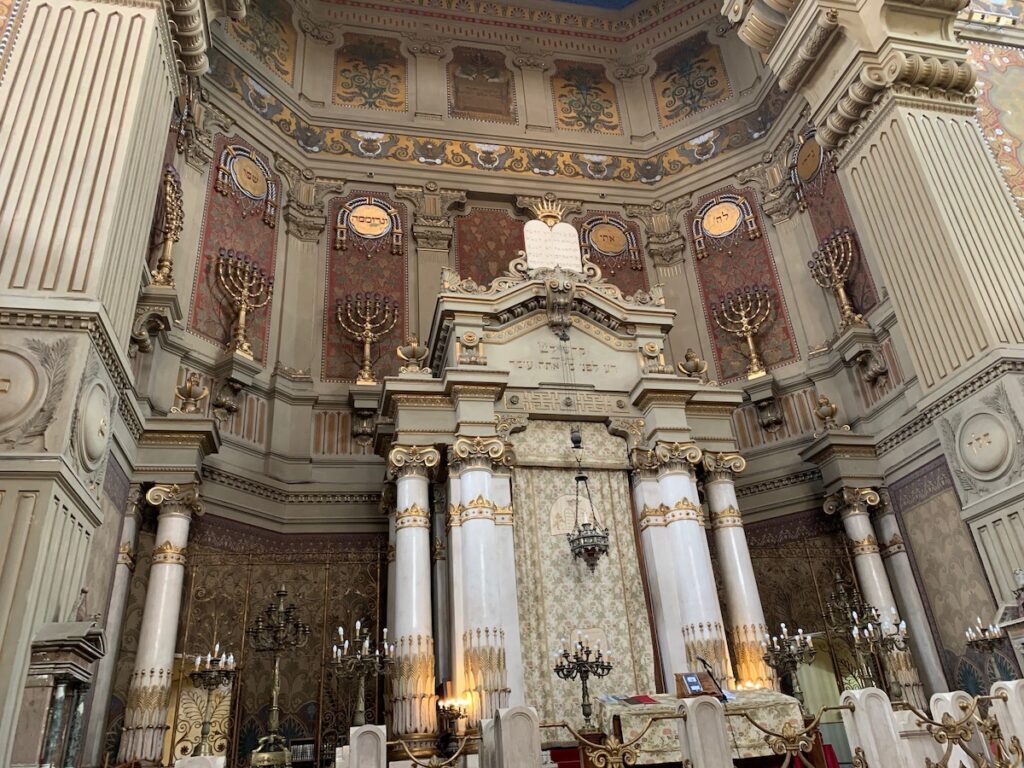
The building also houses the Jewish Museum, where the history of the Jews of Rome is summarized in 7 rooms with ancient Jewish epitaphs, embroidered cloaks of Torah scrolls, papal ukazes and impressions of the clearing of the old ghetto.


An interesting room is devoted to the history of the Libyan Jews who were thrown out of the country by Gaddafi in 1968, many of whom ended up destitute in Rome.
Of course the tragedy of war is also discussed, and then it is quite shocking if you have just passed the shop window of Limentani and now see in a time document how one Mario Limentani was written on April 10, 1944. abtransportiert durch SD, the Nazi secret service. (The entrance to the museum is on Lungotevere Cenci. From there, tours are conducted in the synagogue, whose main entrance is on Via del Tempio.)
Along the 'little Colosseum'
Finally, a short archaeological walk takes you out of the ghetto to the Theater of Marcellus, also known as the 'little Colosseum', although at 130 meters in diameter it wasn't that small.
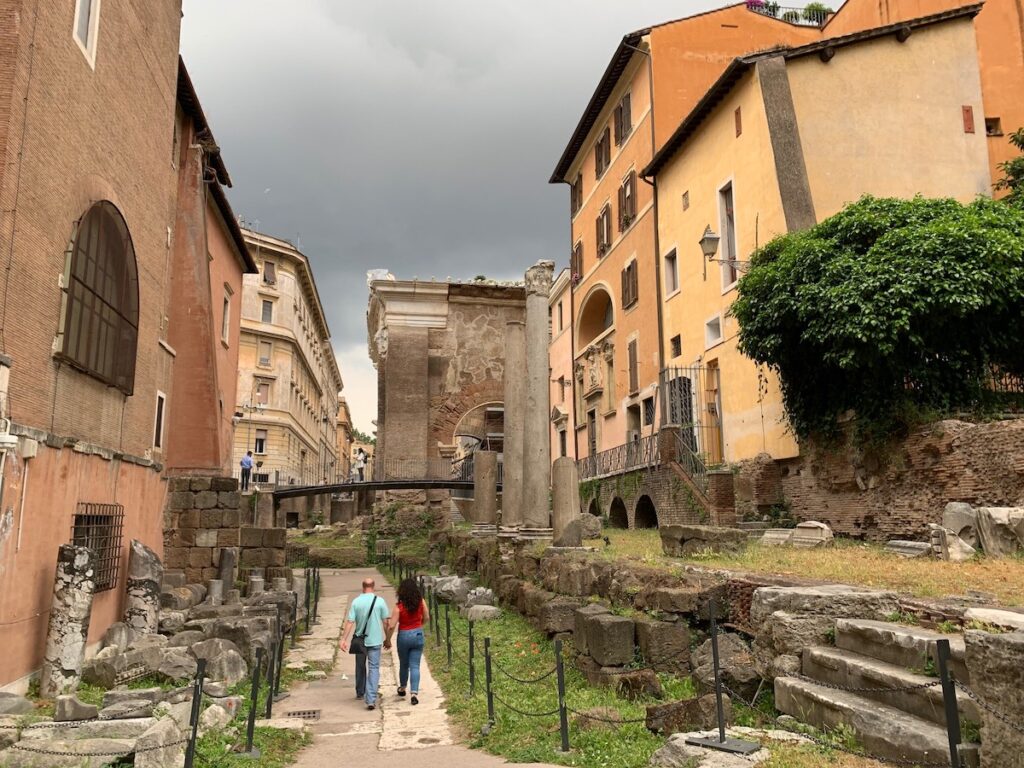
This was done in 13-11 BC. built by order of Augustus and dedicated to his nephew and son-in-law Marcellus, who had died at the age of 21. (Presumably poisoned, that happened more often in those days.)
Although the theater has been used as a marble quarry, bastion and palace for centuries, much of the original still stands. You can see this clearly if you take the footpath that was built here a few years ago between the excavations, with the arches of the ancient building on the right and a former inn for medieval merchants on the left and the 3 surviving columns of one of the 5e century BC. tribal Apollo temple.

The path leads to the busy Via Petroselli and if you still have the energy, you immediately have a range of top Roman attractions nearby: Piazza Venezia, the Bocca della Verità and the Tiber Island.






Comments