

 Aart Heering
He has fallen into disrepair, don Fabrizio Massimo Brancaccio, prince of Arsoli, Roviano and Triggiano and descendant of a family that traces its family tree back to the Gens Fabia of ancient Rome. The 55-year-old nobleman recently the papers because he has not paid his ex-wife 15 euros per month in alimony for their three children for 1.000 years.
He stated to the judge that he was without property, registered as unemployed and supported by his mother. The latter makes it possible for him to continue living in the ancestral Castello Massimo in Arsoli, in the Roman province. Maybe not like a prince, but still.
Faded glory
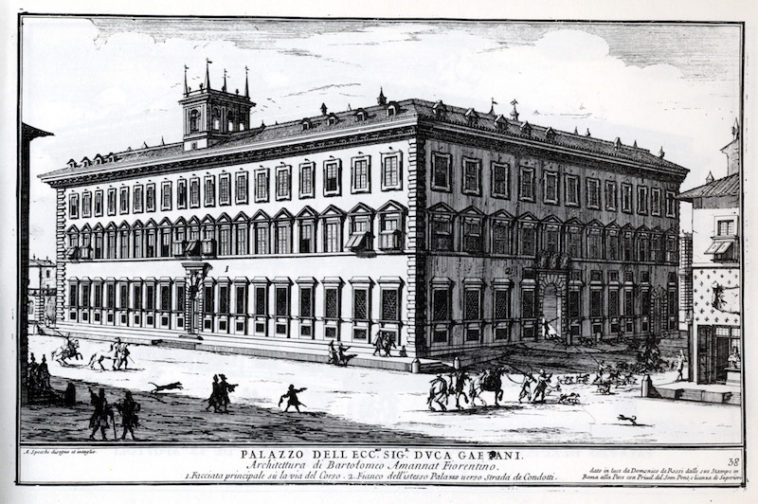
Indeed, there is not much left of the family's glory and possessions. The Roman Palazzo Brancaccio was bequeathed to the municipality by an ancient aunt in 2004 and Fabrizio's attempts to get it through the courts have been unsuccessful. His case is typical of many illustrious great families of Roman history, of whom streets, squares and palazzi all over the city are reminiscent: Colonna, Borghese, Ruspoli, Torlonia, Odescalchi, Chigi, Caracciolo, Barberini and so on. For centuries they dominated the Rome of the Popes, usually quarreling violently among themselves.

Things came to a head after the capture of Rome in 1870 by the newly formed Kingdom of Italy, when bourgeois rulers took over the city and the so-called 'black', papal nobility continued to sulk with the church leader in the Vatican. The habit of the thus powerless nobility, above all not to seek paid employment, but to spend hefty in order to survive, while the costs for maintenance, personnel and taxes increased rapidly, led to the sale of estates, villas and palazzi. . For example, Villa Barberini became a national museum, Palazzo Ruspoli now houses the cultural Fondazione Memmo and stands Palazzo Colonna open to the public.

On the lower shore
Others fared even worse. For example, last summer Princess Lucrezia Odescalchi . was arrestedafter she walked out of a supermarket without paying for a duvet and T-shirt. Prince Francesco Maria Boncompagno Ludovisi was arrested for tax fraud of 8,2 million euros by selling iPads without the necessary software. And Prince Oddone Colonna has been in a legal battle over his father's inheritance for years with his American stepmother, who, according to the prince, was still married when she married his father.
Successful scions
Yet there are also noble scions who fare very well in civil society. Urbano Barberini (in full Urbano Riario Sforza Barberini Colonna di Sciarra) is a well-known actor, theater producer and councilor of culture from the town of Tivoli. Also actor and poet was Alessandro Ruspoli, the ninth prince of Cerveteri, who died in 2005, known by his stage name Dado. But where Dado liked to present himself as the decadent dandy par excellence, his son Francesco, the tenth prince, opted for a career in banking.

Alessandra Borghese and Lucio Caracciolo are well-known journalists and Jonathan Doria Pamphilj is a leading gay activist. The grandson of the last king of Italy, Emanuele Filiberto, is not doing badly if advertising prince and pasta king.
And Princess Marina Colonna has made a name for herself with her own brand of olive oil, including essences of lemon, orange and bergamot. Pressed from olives from the family estate in Molise with the family coat of arms with the column on the label (la colonna). Nobles oblige!








Comments