

 Edward Hendriks
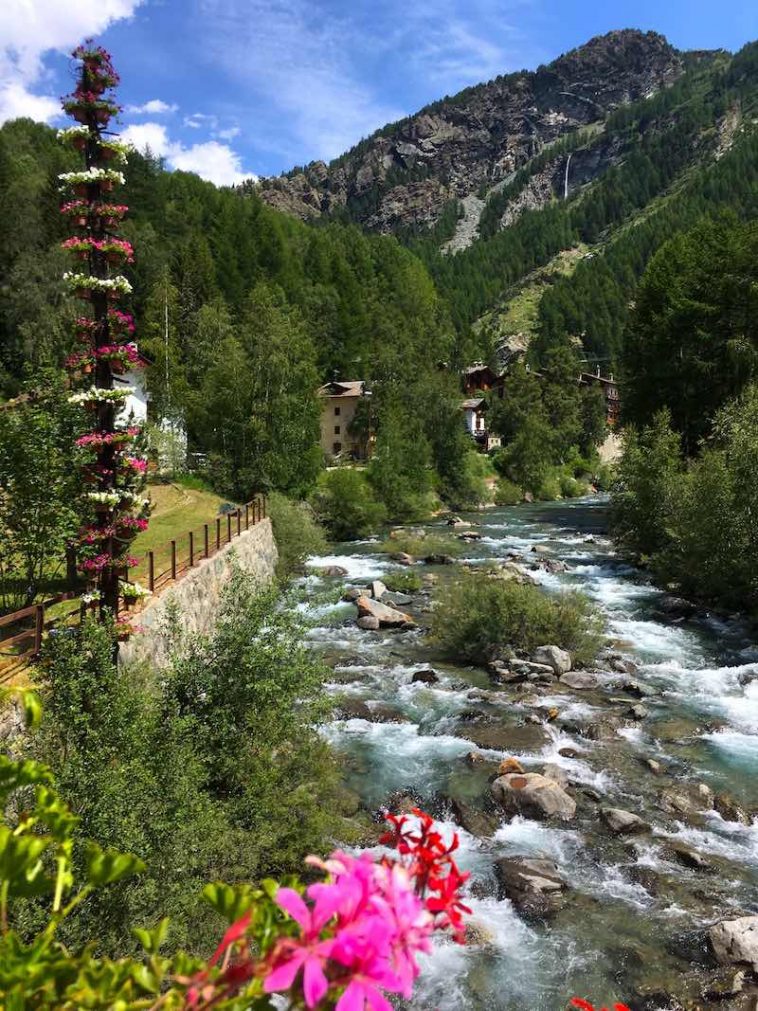
The Aosta Valley or the Aosta Valley, in Italian the Valle d'Aosta, is the smallest region of Italy. The area has an area of 3.262 square kilometers (about the size of the province of Friesland) and barely 130.000 people live there, of whom about 35.000 live in the capital Aosta.
The place names are French and a lot of French is spoken in this region. Together with its location in the most northwestern corner of Italy, wedged in by France, Switzerland and the majestic Alps, it's easy to overlook. And that's a shame, because a visit to the Aosta Valley in the summer has much more to offer than you think!
In this article I bring you the 8 most beautiful places in the Aosta Valley.

At the invitation of the Aosta Valley region I spent a few sweltering days in this green and mountainous region at the end of June. With the capital Aosta as our base, our group of travel journalists and Italy bloggers visited the most beautiful places. Here they come, in no particular order.

Video: Valle d'Aosta in summer
Would you rather see the most beautiful places of the Valle d'Aosta on a moving image? Then watch the impression on video I made the Aosta Valley in summer made.

1. Skyway Monte Bianco
In 2015 the Skyway Mont Blanc opened at the ski resort of Courmayeur. A feat of engineering that makes it possible to go from the Pontal d'Entrèves base station at 1.300 meters to the intermediate station Pavillon du Mont Fréty (2.200 meters) with its nice natural playground for children and its botanical garden for lovers of mountain flora .

Inside you can admire the construction of the cable car in the cinema or have something to eat or drink in the restaurant. When you've had enough of this, you can continue up to the imposing end station at 3.466 meters. You take the route of this impressive cable car in large gondolas with glass windows that rotate 360 degrees during the climb.

At the very top you will find yourself at Punta Helbronner and enjoy the view over the Aosta Valley and the surrounding mountains. From the 360-degree terrace with a diameter of fourteen meters you look at the snowy highest peak of Mont Blanc. Take it easy, because you immediately notice that there is a lot less oxygen at this high altitude. Once you are on top of the mountain, it is also nice to have some food here. You can go to the restaurant at the middle station as well as at the top of Punta Helbronner.


A ride on the Skyway is not cheap. A return ticket for one person costs € 48. There are some discount options for children and families. See the price table below.


If you visit Mont Blanc from the Italian side, it is also nice to visit the town of Courmayeur. Here you will find chic shops with expensive mountain equipment, luxury hotels and Ferraris.
2. The baths of Pré-Saint-Didier
De baths of Pré-Saint-Didier were opened in 1834 and are perhaps the most beautifully situated thermal baths in Europe. In the heart of the Aosta Valley, at the foot of Mont Blanc, you can enjoy bubbling in the open air while marveling at the astonishing view.

Let the hydromassages do their relaxing job, step into one of the sauna huts, float in the various thermal baths or simply enjoy the surroundings on a lounger on the lawn. Inside you can have a massage or take a seat in steam cabins. The entrance to the spa includes fruit drinks, water and fruit.


How much does a day of wellness in Pré-Saint-Didier cost? A day pass for QC Terme Pré-Saint-Didier will cost you €48 per person. Check beforehand whether it is not too busy, because this spa is quite popular. You can also opt for a small discount for evening admission from 17.30 pm.

3. Aosta
For a city of just 35.000 inhabitants, Aosta is remarkably vibrant. With the warm weather in which we visit the city, the streets and squares are full of people at night. There is a DJ playing records, music is played from crowded cafes and people are enjoying a late meal or cocktails on terraces.

Aosta is a charming city with a rich history. The city was built by the Romans in 25 BC. founded according to a typical Roman city plan, with a triumphal arch in honor of Emperor Augustus in front of the city walls. As with everything the Romans built, 'Augusta Praetoria Salassorum', as the Romans called the city, has also been well thought out. Aosta arose at the intersection of two important routes and two rivers.


The city is now simply called Aosta (August). The triumphal arch still stands proud after 2.000 years, as do parts of the old city wall, towers, underground crypts, a large city gate (the Porta Pretoria) and the Roman theater that has been partly restored over the course of a hundred years. The Roman street plan of Aosta is still well recognizable today.

Near Aosta you can also see the remains of the old megalithic civilization in a brand new museum in Saint-Martin-de Corléans. This civilization resided on the site of Aosta and its surroundings well before the Romans arrived. Much research is still being done into the treasures this rich culture has left behind and the secrets it still holds for us.


Aosta City certainly deserves to be one of the most beautiful places in the Valle d'Aosta.
Hotel tip: during our stay in Aosta we slept in the HB Aosta Hotel, a three-star hotel with stylishly furnished rooms, an extensive breakfast with good coffee and located in a very strategic location right in the city center (accessible for guests by car).
4. Gran Paradise National Park
The Gran Paradiso is with 4.061 meters the highest mountain in its entirety in Italy. The Mont Blanc and other peaks of the massif are still a bit higher, but they are largely in France. The Gran Paradiso is located on the border between the regions of Valle d'Aosta and Piedmont and is also the namesake of the oldest national park in Italy: Gran Paradise National Park.


In the park you will find a rich variety of flora and fauna. Flower lovers can spot the Edelweiss and thousands of other flower species here. Did you know that in this region you can find 30% of all flower varieties in all of Italy? Do you like animals more? In the National Park you might just run into alpine ibex, chamois, eagle owls, golden eagles and alpine marmots. Thanks to the beautiful flowers, you will also find hundreds of species of butterflies.

There are countless walking routes, from short to long, that lead along rivers and streams and right through meadows with cows and forest areas. You always have a view of the Gran Paradiso and the surrounding mountains. In the villages you cross, you can enjoy coffee with cake or a hearty lunch and then continue walking through this beautiful area. In winter, many mountain sports are practiced here, but in summer all your senses are stimulated.

5. Cogne
In villages like Cogne, everything revolves around winter sports. The shops, the slopes, the typical Alpine architecture, everything reminds you that there is snow and ice here for part of the year and people enjoy all kinds of winter sports. According to the guide who shows us around the village and its surroundings, it is the best place to do ice climbing.

But during the summer places like Cogne are actually so beautiful. The spacious meadows behind the village, the flowers on the balconies and on the squares, the special church, the ice creams at the local ice-cream shop, the hikers with their mountain boots and backpacks on, the water points from which you can drink delicious fresh water from the Alps…

A visit to Cogne or to one of the other villages that you will find in the National Park is definitely recommended if you are looking for the most beautiful places in Valle d'Aosta.
6. The Lillaz . Waterfalls
If you are in Cogne you are also close to Lillaz. And there you will find the famous waterfalls of Lillaz (de Lillaz waterfalls). Via the picturesque village you walk along the river into the mountains, to the waterfalls. On hot days, the splash of the waterfalls is a welcome refreshment. You can dip your toes in the lakes around the waterfalls if you're really hot. But not too long, because it is all melt water with a low temperature!

The surroundings are beautiful and the view is more than worth the climb. To view the falls from above, you must have a reasonable level of fitness. At some points you really have to 'climb'. The highest waterfall is 150 meters. In the vicinity of Lillaz and Cogne you will find many hiking trails marked on the difficulty. Many routes are also suitable for families with children.

7. Forte di Bard
It is strategically located Forte di Bardi was built in the 19th century by members of the House of Savoy, the noble family that would later rule all of Italy as a royal family. The fortress housed 416 soldiers. That number could be doubled during a siege by adding a straw bed in the sleeping quarters. The different layers of the fortress are connected by corridors. The complex covers an area of no less than 15.000 square meters.

The fortress is located 106 meters above the village of Bard and was considered impregnable. An army of 40.000 French soldiers led by Napoleon Bonaparte was held up for two weeks by only 400 soldiers encamped in the fortress. After years of neglect, the fortress was restored from 2003 to 2006 and reopened to tourists in 2006 with a permanent Alpine museum (also fun for children thanks to the interactive elements!), an opening of the prisons and changing exhibitions. At the time we were there, there was a photo exhibition of the famous American photographer Steve McCurry, among other things. You can also regularly enjoy concerts and theater performances here in the summer.

You get to the main square of the top floor of the fortress via three elevators. Once you are high and dry in the fort, you can also decide to spend the night there. That is, if there is room in one of the only eleven available hotel rooms, which in the past provided a place to sleep for the soldiers. The spacious suite with a great bathroom costs two hundred euros per night. The junior suite (with balcony) and the regular room are 130 and 110 euros respectively. For that money you get a unique overnight stay in a historic place with an astonishing view over the Aosta Valley. In the fortress you will also find a nicely decorated restaurant where you can enjoy Valdostan cuisine.

Admission to the fortress is free. You do have to buy a ticket for the Alpine Museum and the exhibitions.

8. Rafting at Villeneuve
Of course, what is a visit to the Aosta Valley without a good game of rafting? Bee Rafting Adventure Villeneuve we changed into a wetsuit with life jacket and helmet. Then we were taken a bit upstream and then we jumped into a rubber boat armed with paddles. We were of course instructed in advance. A guide went ahead of us in the canoe and an attendant went with us in the dinghy, which made it safe for us to be carried away through the churning waters of the river.


Rafting is not only an exciting activity, but also wonderfully refreshing on sweltering hot days like this one. After all, the water in the river is meltwater from the mountains of only five degrees Celsius. Halfway through the trip we had the opportunity to jump from a rock outcrop into the water. But even without that jump you get enough water over you. There is hardly any time to enjoy the overwhelming nature along the route.
There are several rafting packages that you can choose from. Families with children from the age of six can also go to Rafting Aventure Villeneuve. Instead of going a bit upstream first, you then leave from the location of the rafting park and then sail through less wild water. The rates are from €40 for adults and €20 for children up to the age of twelve.

Would you like to discover the Aosta Valley yourself?
They were. The 8 most beautiful places in the Valle d'Aosta in summer. This is of course by definition a subjective list. One thing will be clear. The Aosta Valley offers numerous sights, opportunities for an active and a relaxing holiday, you can enjoy excellent walks and enjoy the beautiful nature. But above all: the valley is so much more than just a winter sports destination!
💡Looking for accommodation in the Aosta Valley? Here you will find the best and cheapest accommodations.
More inspiration for a summer holiday or winter holiday in the Valle d'Aosta can be found on the Dutch website lovevda.nl.
Have you been to the Aosta Valley yourself and do you know beautiful places that should definitely not be missing from this list? Let us know in a comment below this article. I am very curious about your contribution.
Also watch: the most beautiful places in Italy.
Photos: Edward Hendriks, with the exception of the rafting photos at Villeneuve by Thierry Vuillermoz








Comments