

 Aart Heering
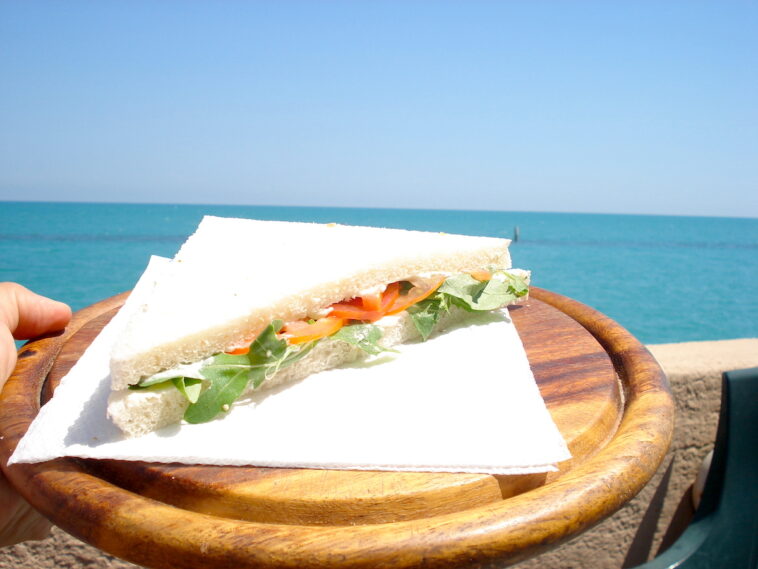
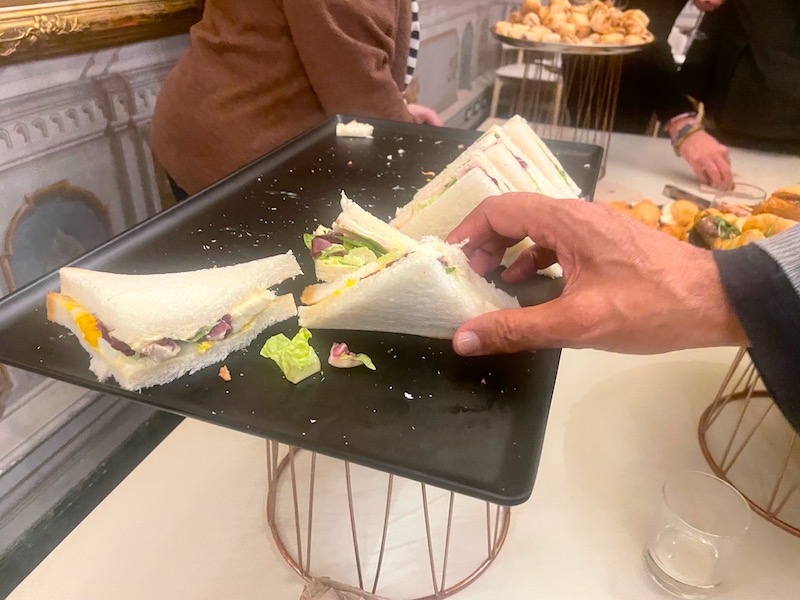
TramezziniAnyone who's been to Italy has eaten them at some point, for breakfast, as a snack, or with a glass of wine as an aperitif. These elegant triangles, formed from two slices of soft bread with a savory filling in between, are a household name in Italy.
Self-respecting cafe owners prepare a large supply every morning to serve fresh to their customers, and these days you can also get them pre-packaged in supermarkets and roadside restaurants. The tramezzino celebrates its centenary this year, especially in Turin, the city where it originated.
The inventor of the tramezzino
The tramezzino was an invention of Angela Demichelis, who emigrated to America at the age of 15 and married her compatriot Onorino Nebiolo, who with his family ran a chain of Italian restaurants in Detroit.
In 1925 they returned to Italy and bought the house with their savings. Caffè Mulassino, a well-known eating and drinking establishment in the centre of Turin, which became an Italian icon in the 20s thanks to Fiat and other industries boomtown was.
Angela soon became known as The Signora del Mulassino, also because she introduced a few innovations she had acquired in America. For example, she had brought a toaster from the States and served small snacks – sandwiches – which, in combination with vermouth, the typical drink of Turin, was ideal for the aperitif, which was already a common custom in the city at that time.
Italianization
But there was a problem. Toast en sandwich don't sound very Italian and in 1923 Mussolini had decided that foreign terms and names had to be Italianized.
Thus it happened: Football expectant Calciumthe winter sports resort Wolkenstein was renamed in Selva di Val Gardenathe extension kitchens of were now called Snaideroretail chain Standard expectant Standawriter Kurt Suckert changed his name to Curzio Malaparte; and the family Cucic ging cuzz to be named.
The Italian name for Angelina's rolls comes from none other than the poet Gabriele D'AnnunzioIl Vate (The Bard) of early fascism often invented names for food and drink brands – such as Saiwa crackers and Aurum liqueur – and was well paid for them. The tramezzino is therefore also the product of a – directed by the regime of the time – modern marketing operation.
The origin of the name is not entirely clear. A tramezzo is a non-load-bearing dividing wall, and according to some, the poet was inspired by the tramezzi in his house in Abruzzo. A more prosaic explanation is that of a snack between meals. And a third, that of a delicacy between two slices of bread.
Diminutive
Anyway, it diminutive tramezzino feels good in the mouth – unlike, for example, quissibeve (here you can drink), which in those years was proposed in vain as an Italian alternative to a bar – and soon became a household name. First in Turin and in Venice, where they speak of the tramesan, and from there southwards. In 1936 the first recipe appeared in the magazine The Italian kitchen, and with that the tramezzino was definitively part of Italian culinary heritage.
An inscription in the still-existing Mulassini recalls that "in this café, Signora Angela Demichelis Nebiolo invented the tramezzino in 1926." This is true, because Angela's tramezzino was much more than just the Italianization of an American product. Angela's "invention" met precise conditions, which have largely remained unchanged.
This is how they are made
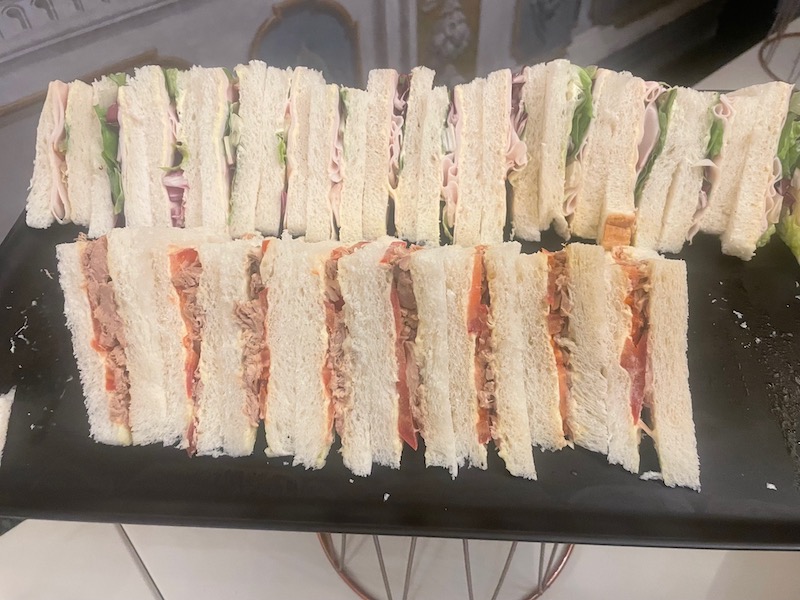
Tramezzini are made from thin slices sandwich bread of bread (square soft white bread), which is crusted, filled, and cut diagonally, giving it its characteristic triangular shape. (The triangles can also be divided into small appetizers.)
The culinary magazine Red shrimp therefore honors Angela Demichelis as a pioneer in the art of food design: a consciously considered choice of name, shape and ingredients.
The ingredients can, in principle, vary endlessly. In a well-stocked café, you can easily choose from about 10 types of tramezzini. A (nearly) standard ingredient is the mayonnaise, which is spread on the slices and keeps the tramezzino soft and creamy.
Variants
As a rule, the tramezzino is not heated: it's not toast, after all. The most common versions are those with ham and cheese and those with tuna and tomato or artichoke. Other popular variations include cold chicken and lattuga salad, smoked salmon or cured ham and rughetta, and tomato and egg.
In Turin, they're still prepared with truffle or bagna cauda (the Piedmontese garlic and anchovy sauce), just like a century ago. And now there are also whole-wheat and triple-wheat tramezzini.
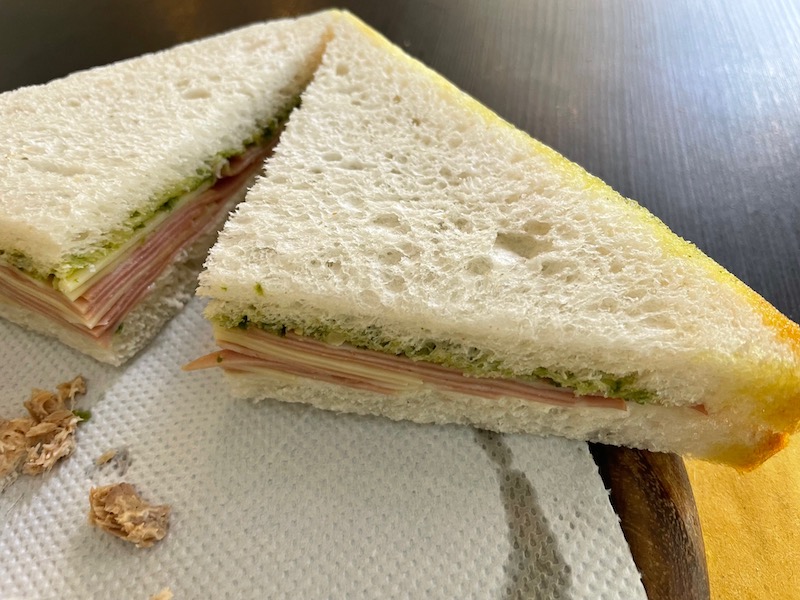
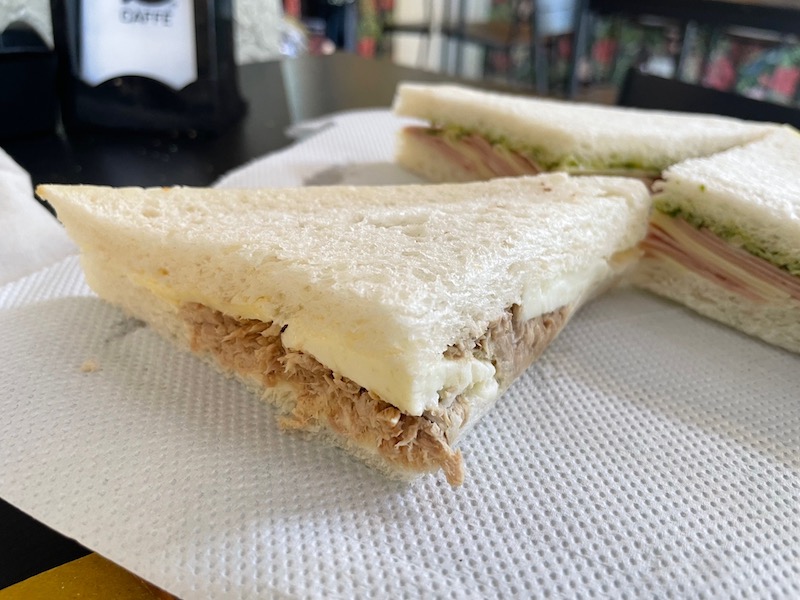
But not every combination is equally successful. Recently, I tried them with mortadella and pesto, flavors that proved to be a poor match, and with tuna and mozzarella, where the wet mozzarella made the bread soggy. Not something I'll be repeating.









Comments