

 Aart Heering
Prato, a city of about 200.000 inhabitants, is not exactly a tourist destination of the first order and is often seen as the somewhat hectic little sister of the rich and sparkling Florence. That is not entirely wrong, because it is precisely the proximity - less than 40 kilometers - from the Tuscan capital that has stood in the way of the development of Prato for centuries.
That does not alter the fact that the city is still a beautiful one Old Town where you can easily spend a day and then also enjoy excellent food.

The Emperor's Castle
Prato's heyday was in the 13e in 14e century, before being eclipsed by Florence. The main defenses also date from that time: the city wall, which was enriched in later centuries with a series of bastions and gateways, and the Castello dell'Imperatore, named after the German Emperor Frederick II, who wanted to control Central Italy from here.

The massive stronghold is an example of Frederick II's grand imperial power The city wall of Prato
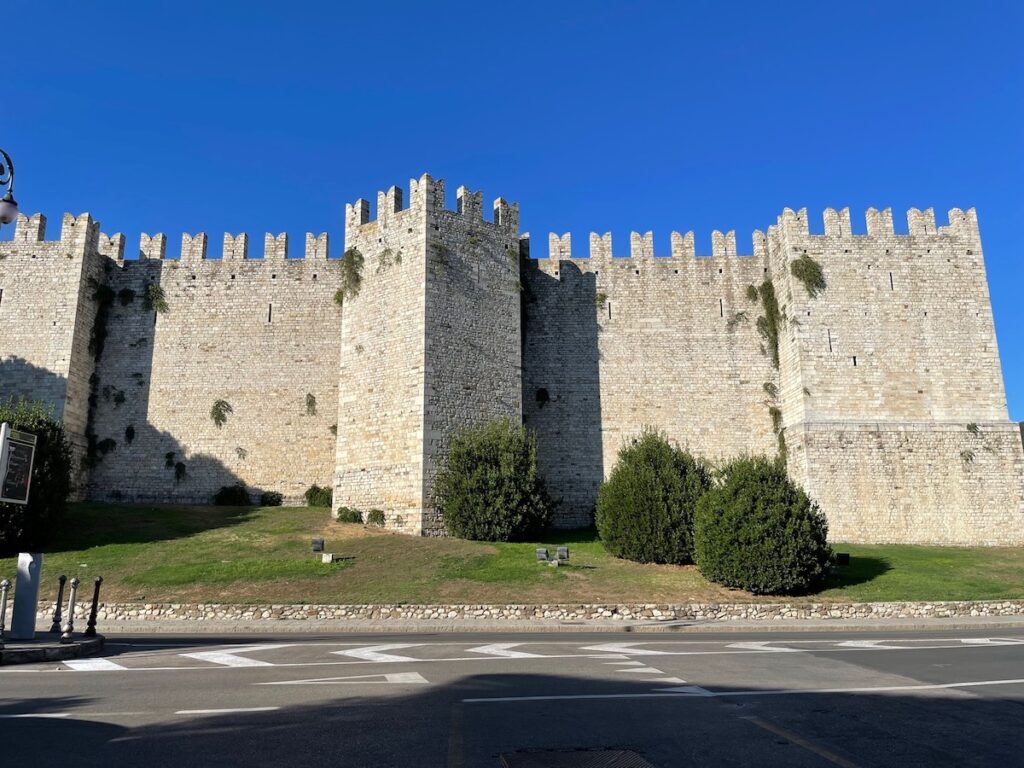
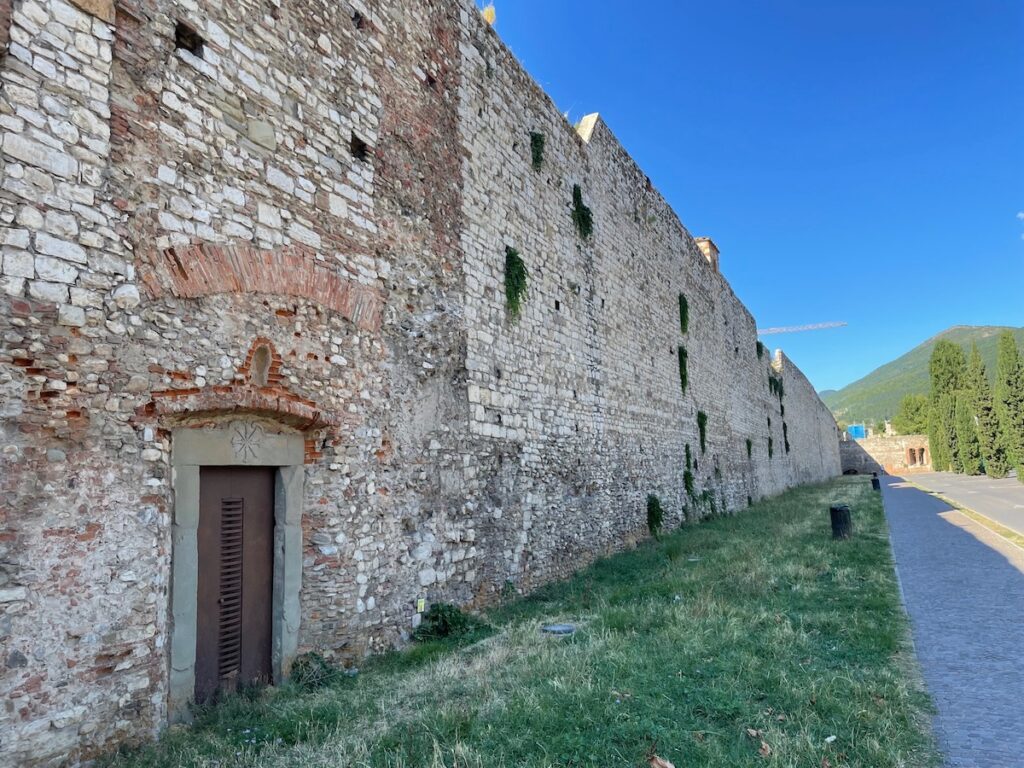
Construction was halted upon his death in 1250, but the massive square bulwark is still a symbol of grand imperial power.
Diagonally opposite the castle is the Basilica of Santa Maria delle Carceri, which takes its name from an image of the Blessed Virgin, which used to adorn the wall of the prison.
It is a fine example of Renaissance architecture from around 1500, the facade of which was never completed, as the city had meanwhile fallen into a prolonged economic crisis.

The churches of the mendicant orders
Nearby, across the square named after the basilica – brightened up with a merry-go-round and a few cafes and restaurants – lie the Romanesque Church and Convent of Saint Francis.

They were built at the end of the 13e century, when, in addition to the Franciscans, other mendicant orders, thanks to generous gifts from a well-to-do bourgeoisie, were able to build their own almshouse on the edges of the then center.
The Church of Saint Augustine was heavily damaged in World War II - when Prato was a target for Allied bombers as an industrial city - but has since been beautifully restored.
To church and monastery of San Domenico, St. Dominic, has been worked for decades, but the facade has remained largely uncovered, just like those of the Santo Spirito and San Lorenzo in Florence.
The Church of San Niccolo da Barii, laid out in the years after 1323, and is in the 18e century thoroughly rebuilt. Together with the adjacent Domenicanessen monastery (now used as a Roman luxury school) and the spacious square in front of it, it forms a beautiful complex.
And then there is the one dedicated to St. Stephen Duomo, in the very oldest part of Prato. The cathedral dates from the 10e century, was rebuilt from 1211, when the city grew bigger and richer, and a century and a half later it was provided with a facade of green and white marble, typical for that time and region.
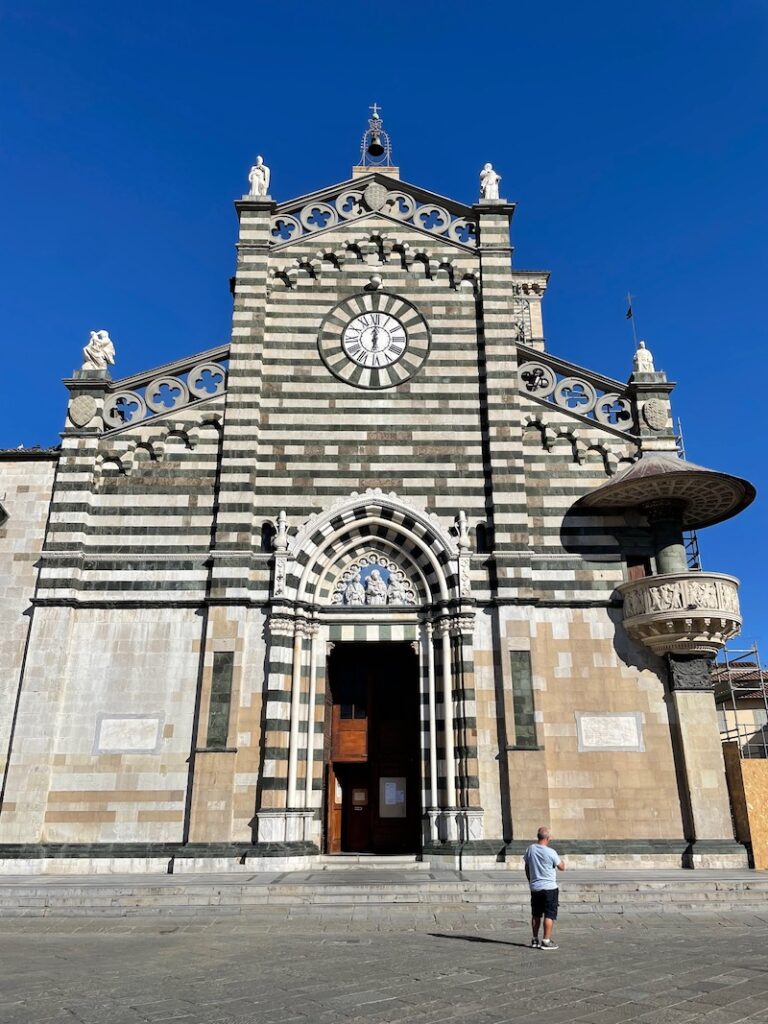
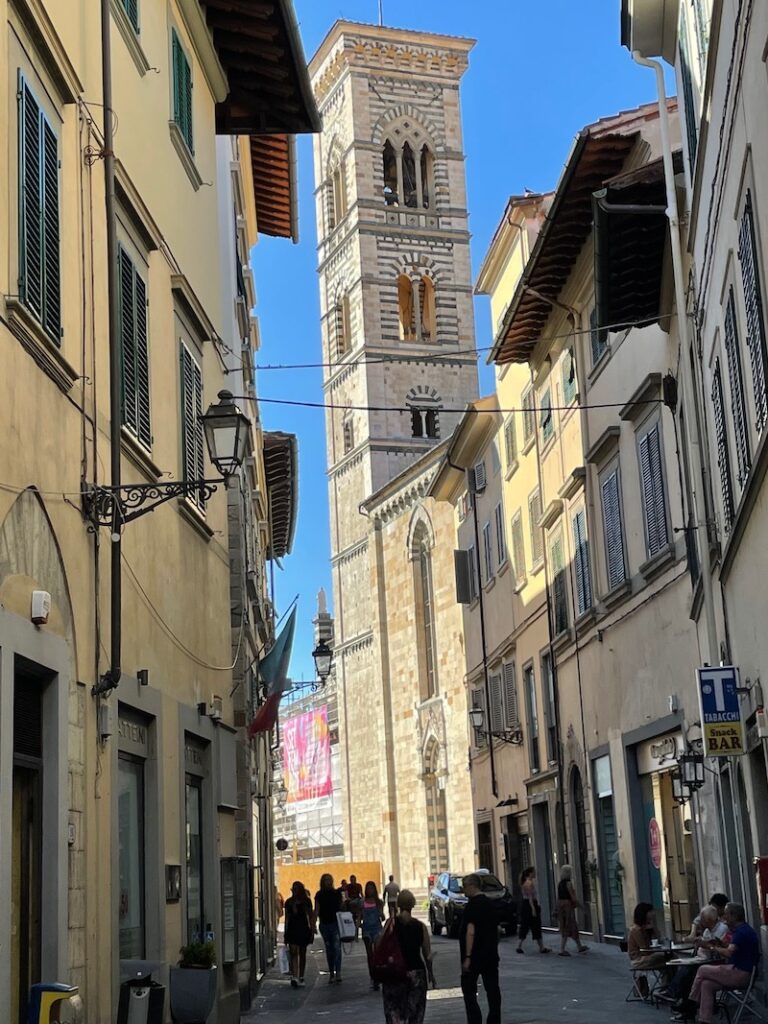
The same happened with the bell tower (church tower), from which you can clearly see how the original building was later added 2 floors. If you want, you can visit (and enter) all 2 churches within 5 hours. That is the advantage of a small center.
The center of power
A stone's throw from Piazza del Duomo, along Via Mazzoni flanked by mansions, you arrive at the Town Hall Square, the center of old Prato.

The massive on the square Praetorian Palace, the oldest non-religious building in Prato, has housed since the beginning of the 13e century the Podesta (mayor), the judiciary and the prison. Now it houses the municipal museum.
It's right opposite that city Hall, since time immemorial the center of urban power. In 1287, the ground floor was used as a council chamber, and it still is.
Just off the square, at the beginning of Via Mazzini, you'll find it Tourist Information Office, the office of the local tourist office.
Prato textile city
In the middle of the Piazza del Comune is a statue of the most famous citizen that Prato produced: Francesco Datini, who lived from 1335 to 1410. Datini made his fortune as a merchant of wool, silk and fabrics.

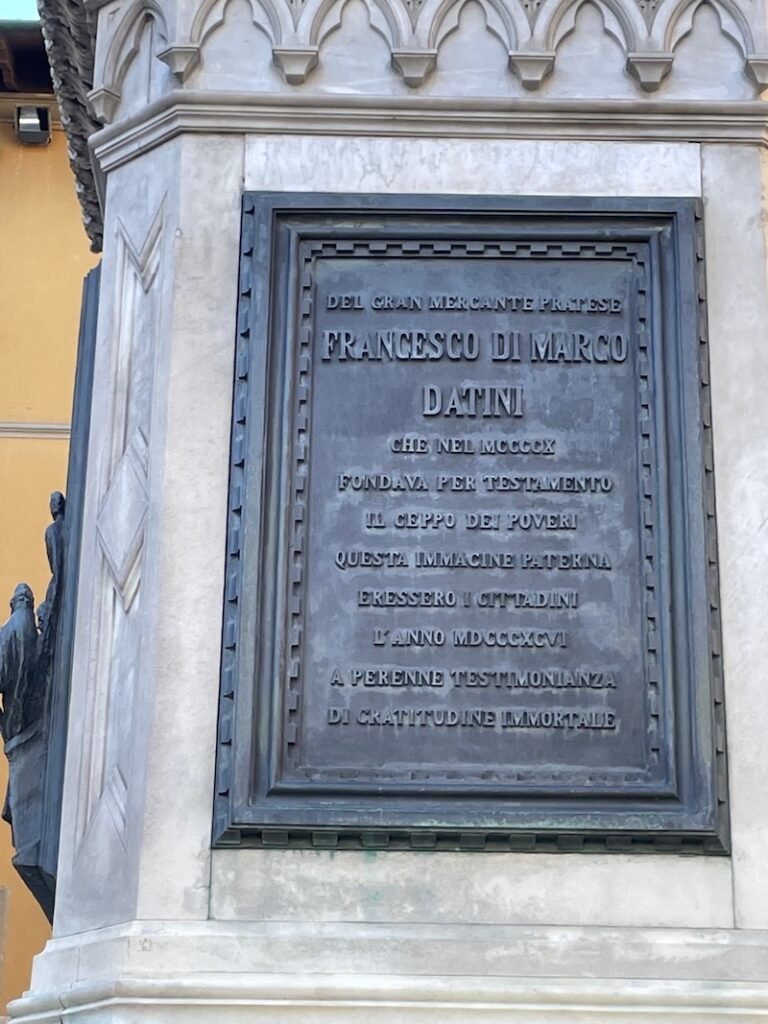
His business empire stretched all over Europe and his meticulous accounts, found in 1870 during a renovation of his house in Prato, are now one of the main sources for everyday life in the Middle Ages.
(The Anglo-Italian writer Iris Origo devoted a famous biography to him: The Merchant of Prato). Textiles have remained the main source of income for Prato, which is now a forerunner in the field of textiles recycling.
The Pratese textile district, scattered throughout the otherwise uninteresting suburbs, now includes some 7.000 businesses employing 40.000 people, half of whom are Chinese immigrants.
No wonder then that one of the most important textile museums in the world is located in Prato. It Textile Museum illustrates the history of the textile industry in the world (and of course in Prato itself) with hundreds of fabrics, garments, designs, etc. from the 14e century to now.
Modern Art
Just outside Prato is one of Italy's leading museums of modern art, the Museum Pecci. It was founded in 1988 by a Pratese industrialist Centro per l'arte contemporaneo Luigi Pecci, renovated and expanded as a football stadium in 2006 by the Dutch architect Maurice Nio, is not only a museum in the strict sense, but also an archive and library.
The collection includes many works by Italian movements such as the Art power and the Transavanguardia, along with those of modern artists from the former Soviet Union and international leaders such as Julian Schnabel and Jannis Kounellis. Highly recommended for enthusiasts, also because it is usually not crowded.

Eating and drinking in Prato
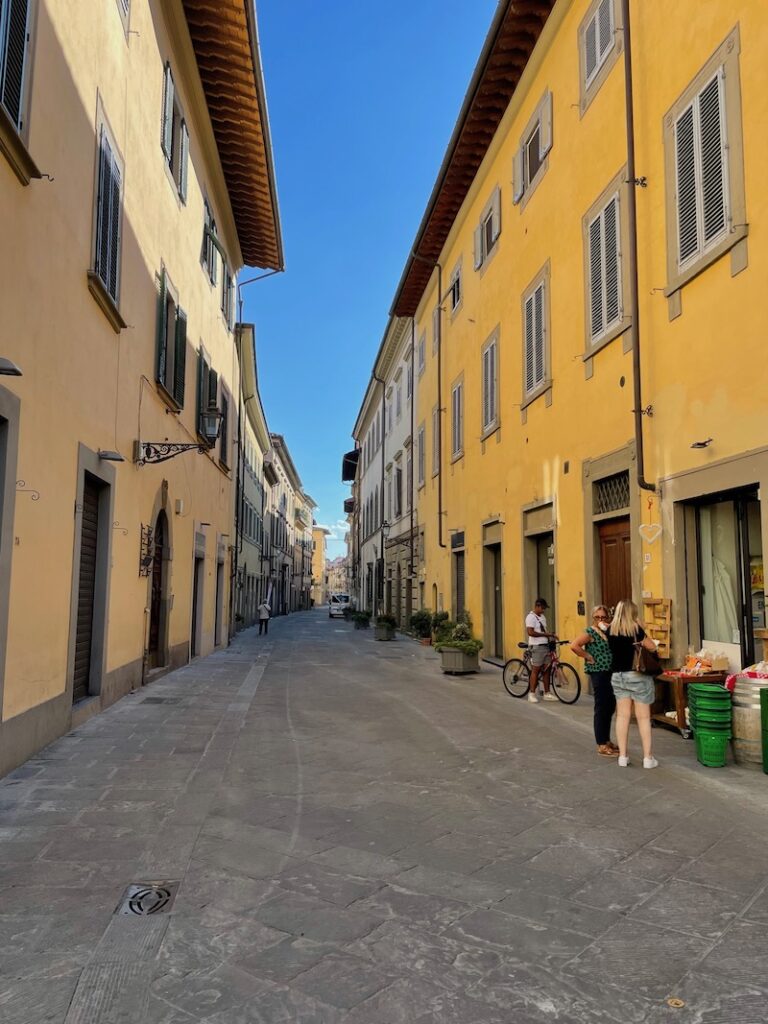
Because the nightlife is concentrated in a relatively small centre, there is no shortage of food and beverage outlets. On the contrary, streets like Via Garibaldi and Via dei Lanaioli are a succession of cozy cafes and Inns.
A concept in Prato is La Vecchia Cucina di Soldano (Via Pomeria 23), where you can get local Tuscan specialties for next to nothing like pici al ragu (Tuscan thick spaghetti with Bolognese sauce), sedani alla pratese (celery in red sauce) and braised wild boar.
De Osteria 'Su' Santa Trinita (Via de Neroni 4) serves typical Tuscan dishes as ribollita (hearty vegetable soup with solid ingredients cabbage black, cannellini beans (white beans) and stale bread) and the peppery, tender beef braised in Chianti and fresh pepper.
A specialty of the Trattoria Boves (Via dei Lanaioli 31). midollo arrosto, roasted marrowbone. Quite heavy, but good with dry bread and red wine, and you won't find it easily anywhere else.

For Tuscan street food you can go to Il Trippaio di Piazza Mercatale on the square of the same name: among others Tripe (tripe) and lampredotto, another part of the beef stomach that is only found in Florentine cuisine, preferably in a roll with a green sauce based on parsley and capers.
Anyone who wants something new and is not too picky should definitely try it!
Would you also like to end your visit to Prato with an overnight stay in style? There are plenty of good hotel rooms, B&Bs and holiday apartments available.








Comments