

 Aart Heering
Not everyone in Italy is sighing under the corona crisis. This is how the region Abruzzo (Abruzzo), which is largely dependent on tourism, also benefited from the lockdown and the looming quarantine measures.
For many Italians, 'the corona' was a reason to stay in their own country. For example, this summer the mountainous region in the center of the country was overrun with Italian tourists, who were happy to report in TV interviews and private conversations that they were only too happy at the chance to get to know this lesser-known area. .

Table of contents
Just as beautiful as the Alps
The Abruzzo With the possible exception of Pescara and the Adriatic coast, as a tourist destination they have indeed lagged behind regions such as Liguria, Tuscany, Apulia and Sicily. Wrongly, because the Abruzzo, as this part of the Apennines is called, is certainly not inferior to the Alps, especially in summer.
Campo Imperatore, the largest plateau in Europe
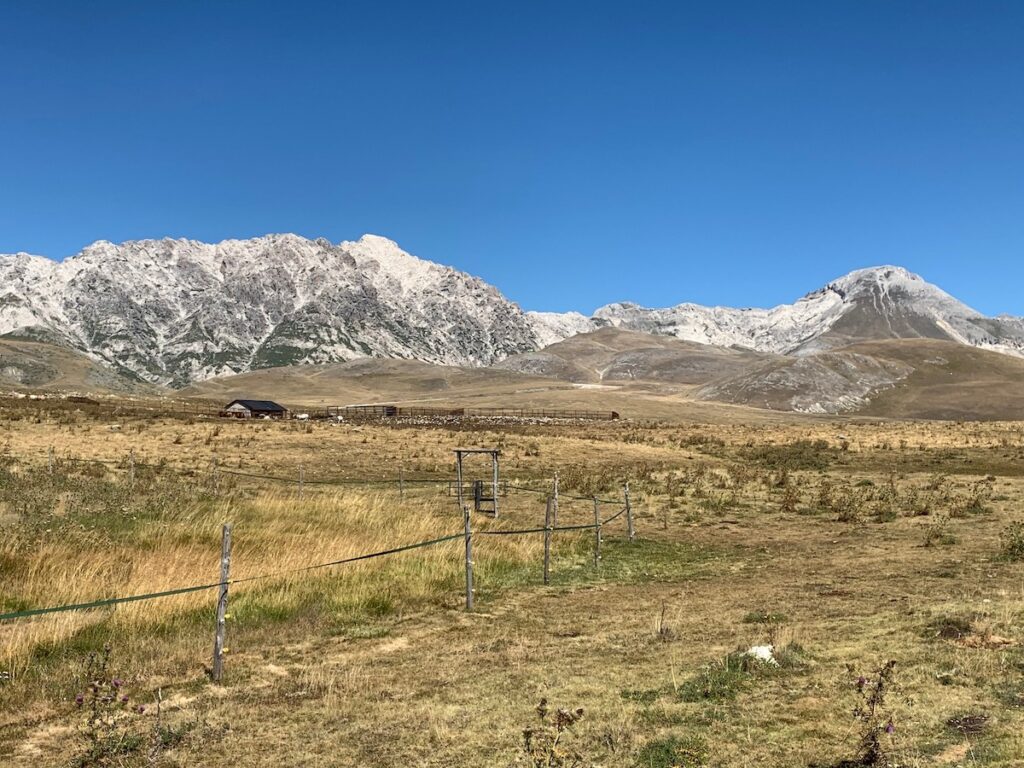
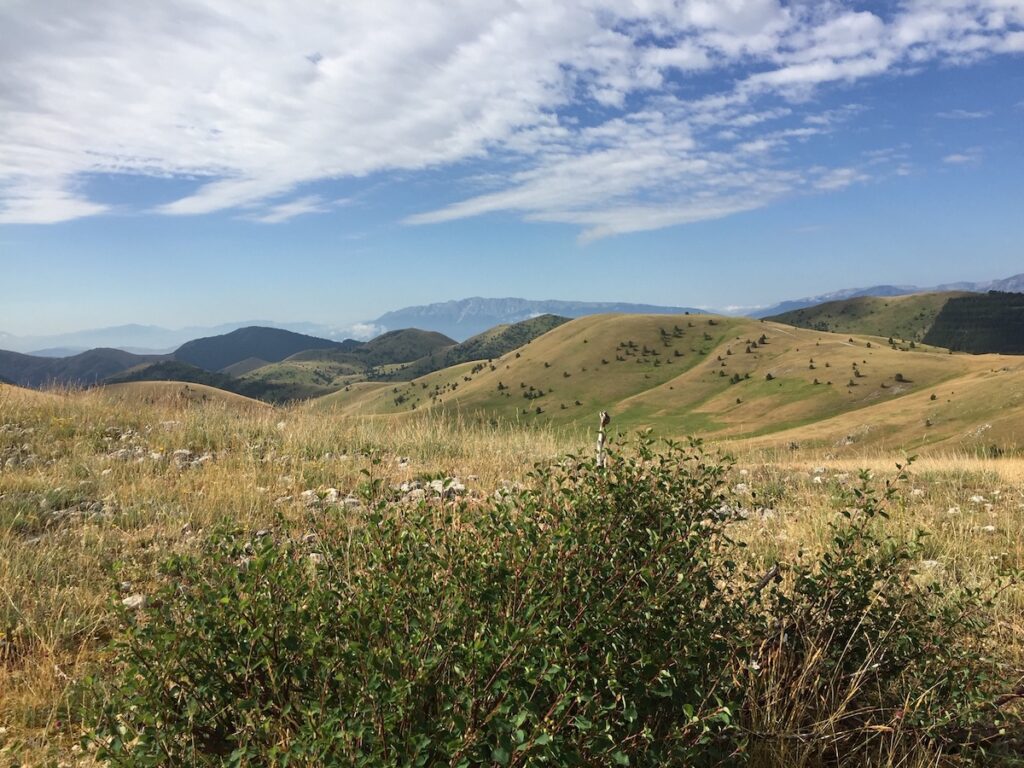
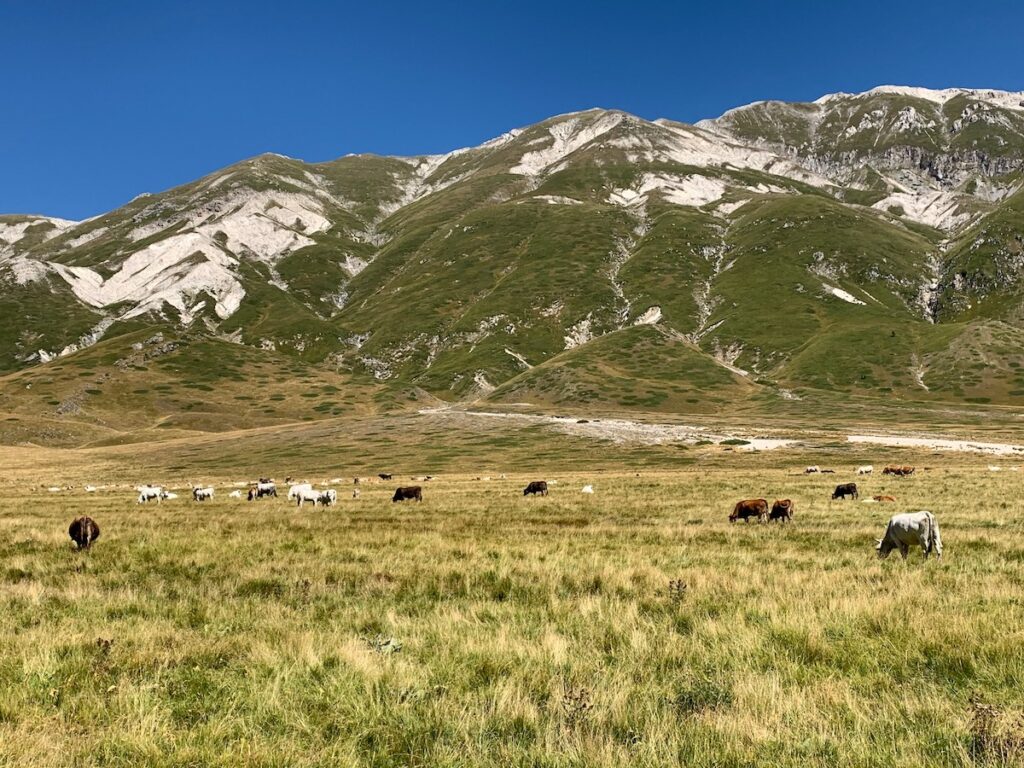
At the foot of the mountain range Gran Sasso (Great Stone), barely an hour's drive from Rome, is Campo Imperatore, the largest plateau in Europe. An immense green field surrounded by fierce-looking Apennines. This 'Emperor's Field' (the name seems to have been taken from Emperor Frederick II of Hohenstaufen, who lived here in the 13e century) is no less than 8 by 28 kilometers in size and is located at an altitude of 1.600 to 2.000 meters.

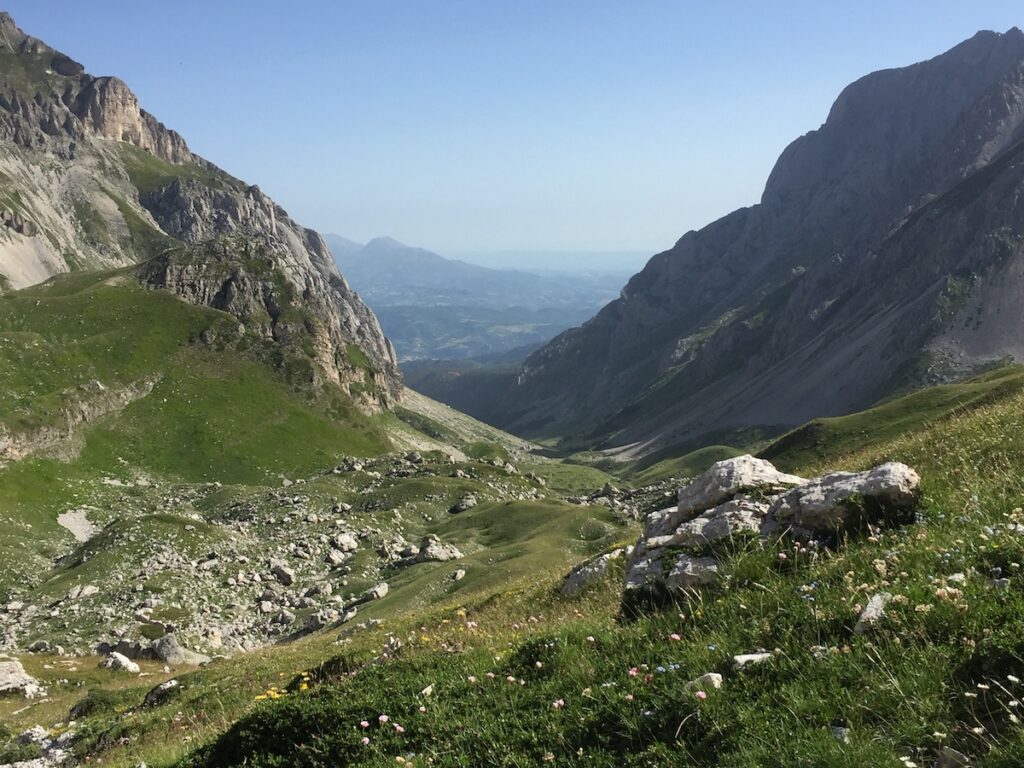



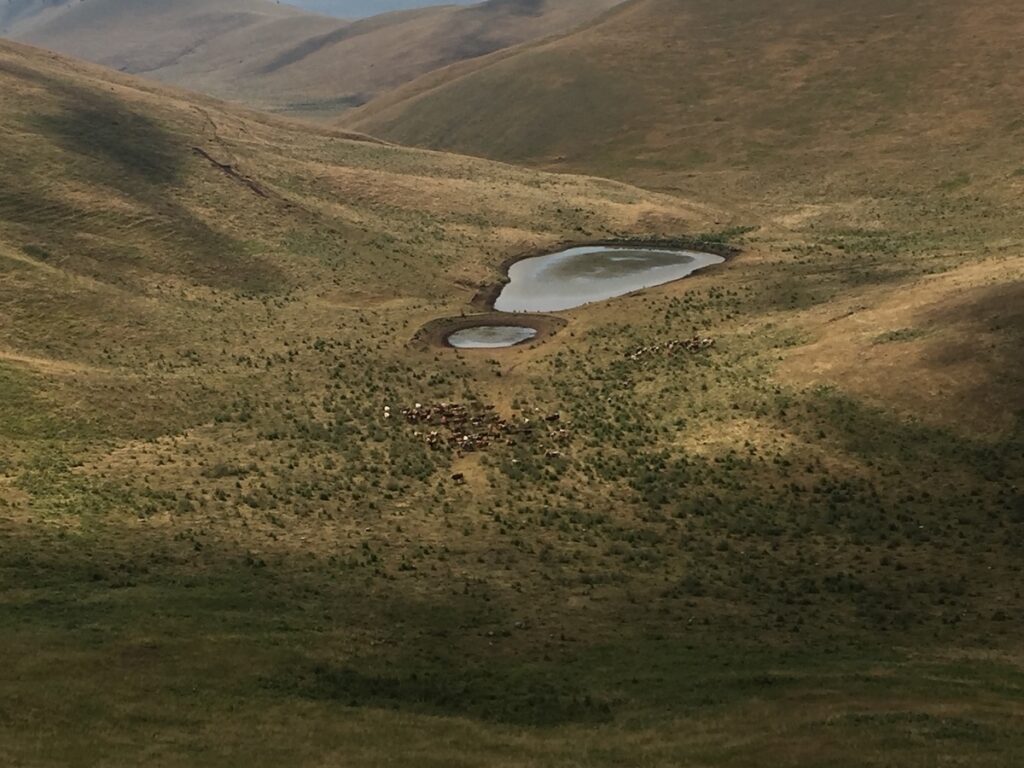
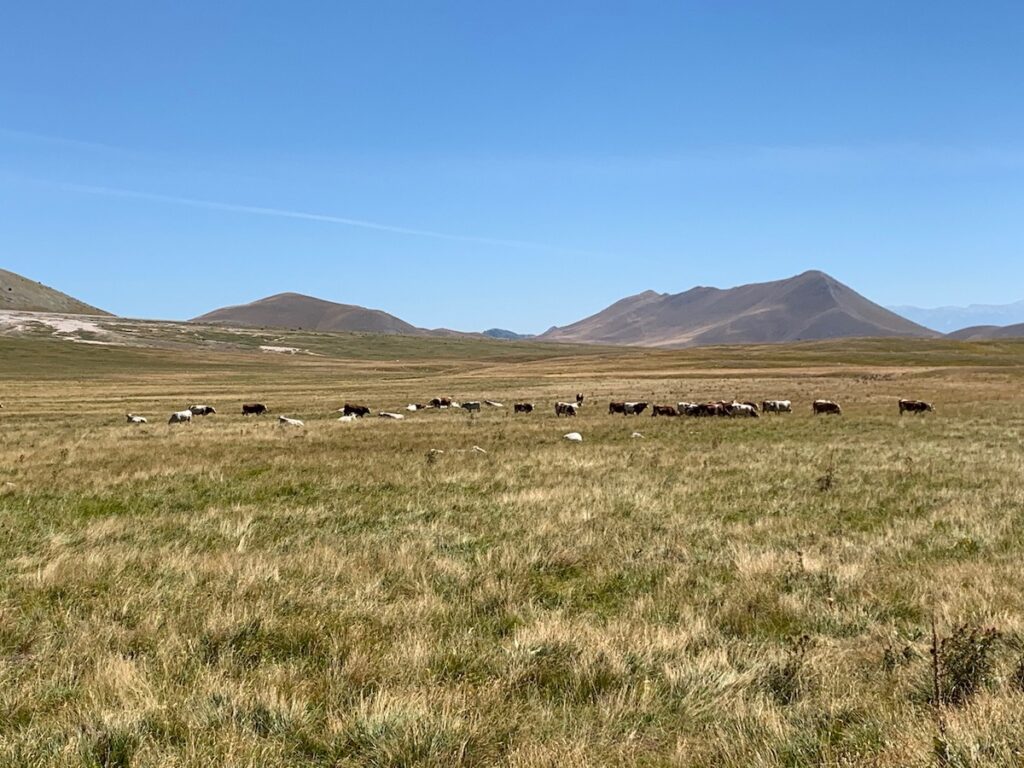
That makes it a wonderful retreat in hot summers and a great starting point for trekking in the mountains. Campo Imperatore has been a gigantic summer pasture for herds of cattle, horses and sheep from the surrounding villages since the Middle Ages and not much has changed in that regard. Even now you have to stop regularly for cattle crossing the road and it is usually crowded at the watering places.

Campo Imperatore as a film set
Due to the high altitude and the centuries of grazing, almost no trees grow. Also, almost any form of buildings is missing, so that Campo Imperatore looks a lot like a prairie or pampa. That makes it a nice set for movies and a lot of them were shot here. These include spaghetti westerns such as those by Terence Hill and Bud Spencer, but also international productions with actors such as Richard Gere, Schwarzenegger and Franco Nero.
Roman day-trippers prefer to visit the plateau by car (without it ever getting crowded), but perhaps the best way to absorb its overwhelming magnificence is by bicycle.
You can then leave from the lower level barisciano (but if you don't want to climb you can also start higher) and then leisurely drive around the plain in a long oval loop. Not without stopping along the way at a restaurant with local sheep's cheese, grilled meat and strong red wine.

Medieval towns
On the south side, the medieval mini-towns calascio, Castel del Monte en Santo Stefano di Sessanio a nice base for a trip to Campo Imperatore. At the end of the last century they seemed hopelessly abandoned and on the brink of death, but in the meantime tourism has revived them.
The most famous is Santo Stefano, which has been thoroughly restored and where a series of buildings in the village now form a building hotel form, a 'scattered hotel'. In the 2009 earthquake that hit the regional capital L'Aquila destroyed, the ancient city tower has collapsed, but its reconstruction is now (finally) in full swing.
Another tower worth seeing is that of Rocco Calascio, a 13e century fortress that in 1985 formed the scene of ladyhawke, a medieval fantasy film starring Rutger Hauer and Michelle Pfeiffer.
Coming from the autostrada A24 (Rome-Teramo) you can also take the exit to Assergic, a rustic village where the effects of the earthquake are still clearly visible. As a prelude to the mountains, you can spend the night here and enjoy what the Germans are so beautiful about gutbürgerliche Kuche mention in the Trattoria Fore le Mura da Franchino, which indeed abuts against the medieval city wall.


Hotel Campo Imperatore
A little further away Source Cerreto, which is little more than a few rather shabby and not very expensive hotels and eateries around the valley station of the funicular which takes 7 minutes to the 1.000m higher (2.130m) Hotel Campo Imperatore leads.
Cable car and hotel are in the 30s the typical style of those years built on the initiative of Mussolini, for the development of a new winter sports center, where even now in winter there is still a lot of skiing. The Duce He himself was interned in this hotel for 2 weeks after the fall of his regime in 1943, until he was liberated by a German commando, and you can still visit his room (for a fee).

Staying overnight in this hotel has always been a special experience, especially as it hasn't been much changed since the 30s, but is currently not possible as it is undergoing one of those typical Italian restorations that seems to never end.
Mount Portella
Instead of the cable car you can also take a footpath, which after 2,5 to 3 hours on the ridge of the Mount Portella about 1.000 meters higher. (If possible, leave at sunrise, because it can get very hot. And take water with you, because streams are not easily found in the Apennines, even though in this case there is a well about halfway through where the cows come to refresh themselves.)
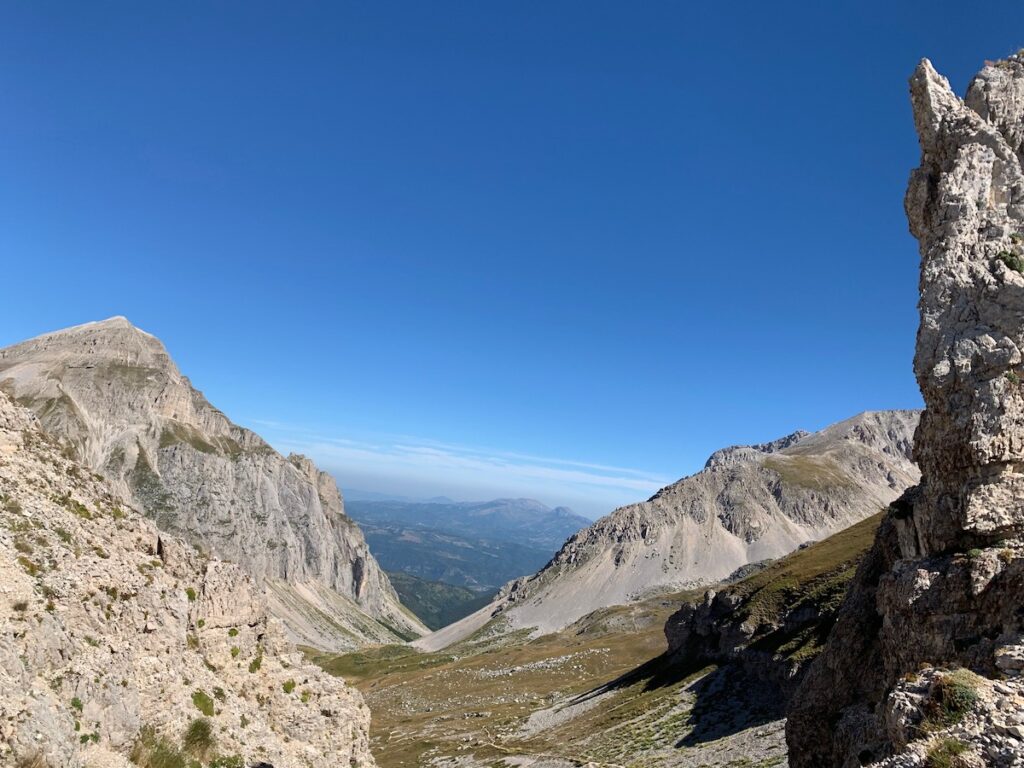
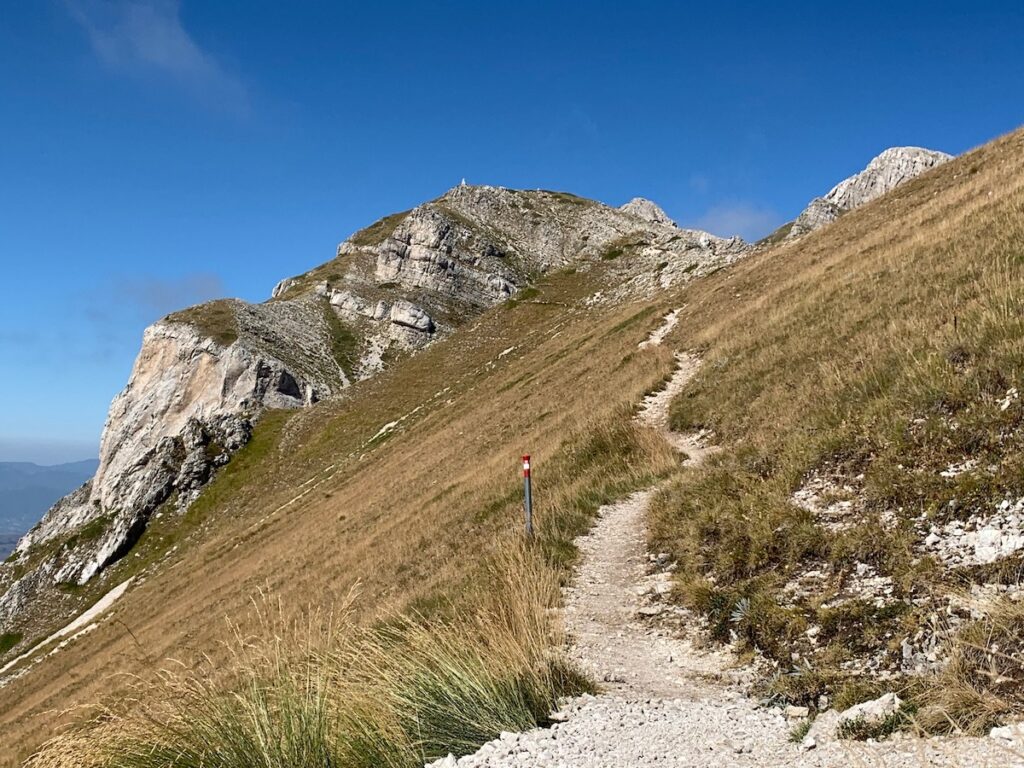
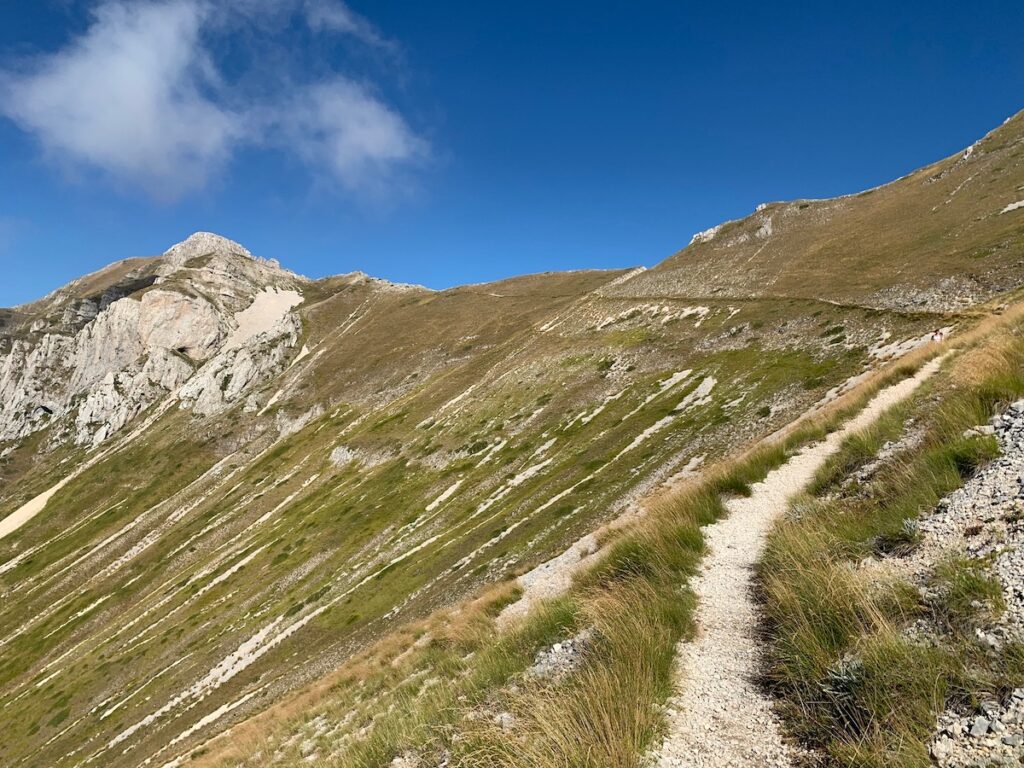
From there you can continue and spend a day in the high mountains, and if desired descend again in the evening with the cable car. I myself do this once or twice every year when I want to get away from the busy and busy for a day heated Rome. You can also go up by car, but watch out, because in August the parking lot in front of the Hotel Campo Imperatore is probably the busiest place in Abruzzo.
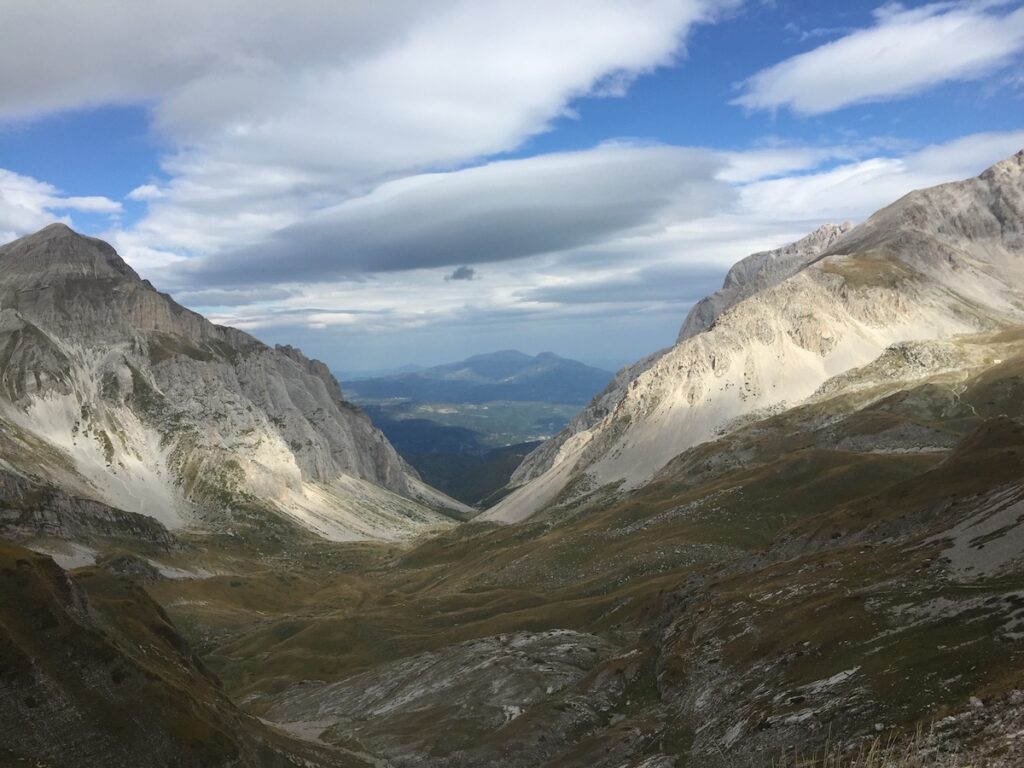
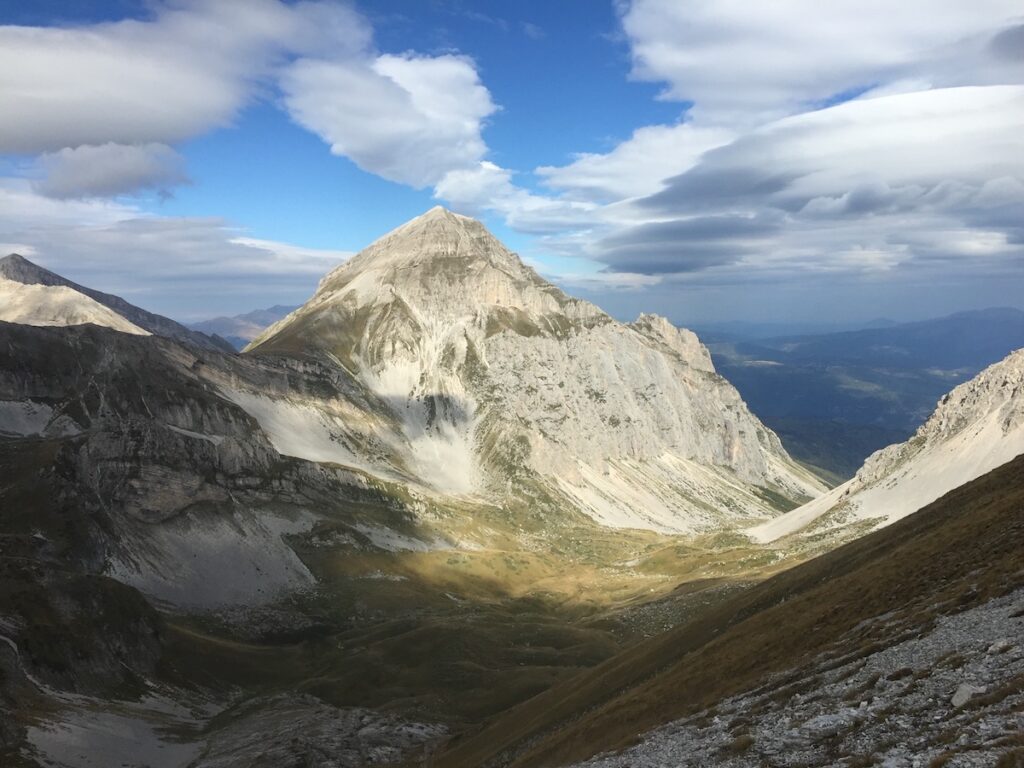

Even in high season it is not difficult to find quieter paths. Most visitors walk only half an hour uphill to the mountain hut Rifugio Duca degli Abruzzi to spend some time there and enjoy the view.


Corno Grande: the highest peak
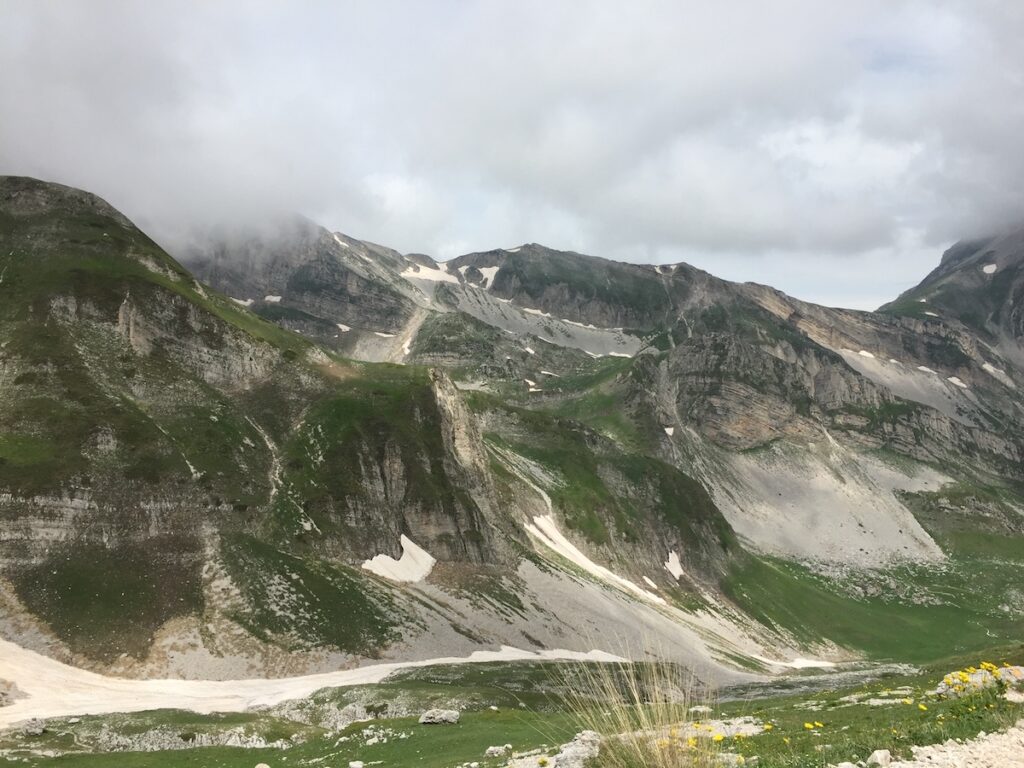
Another group takes the exit for the climb to the big horn, which at 2.912 meters is the highest peak of the Apennines. That is a nice trip, but preferably not in the high season because then you really have to queue.


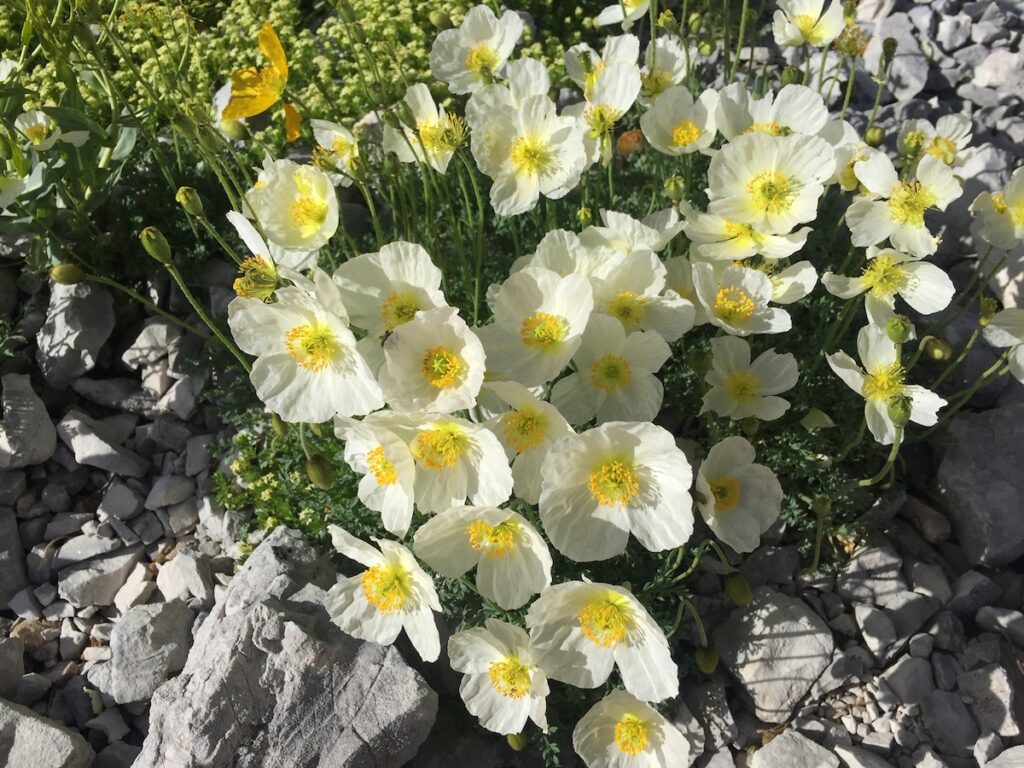
And there are alternatives like the Corno Piccolo, Pizza Cefalone and the Monte Aquila, which may not reach that record height, but where hikers and climbers hardly have to meet each other. This offers you the opportunity to enjoy the silence, the flowers, the views and the majestic mountain ranges. This is possible from June to October, if there is no big mountain of early snow.







Comments