


 Aart Heering
Even if you have lived in Rome for decades, you can still discover new gems in the vicinity of the capital. Such a revelation to me recently was the Palazzo Farnese in Caprarola, a tiny town in the Tuscia, the olive- and hazelnut-strewn hill country of northern Lazio, on the border with Tuscany and Umbria.
(Not to be confused with the much more famous, and equally monumental, Palazzo Farnese in Rome, which now houses the French embassy and is only open to the public on special occasions.)

View of Caprarola View of Caprarola Front view of Palazzo Farnese

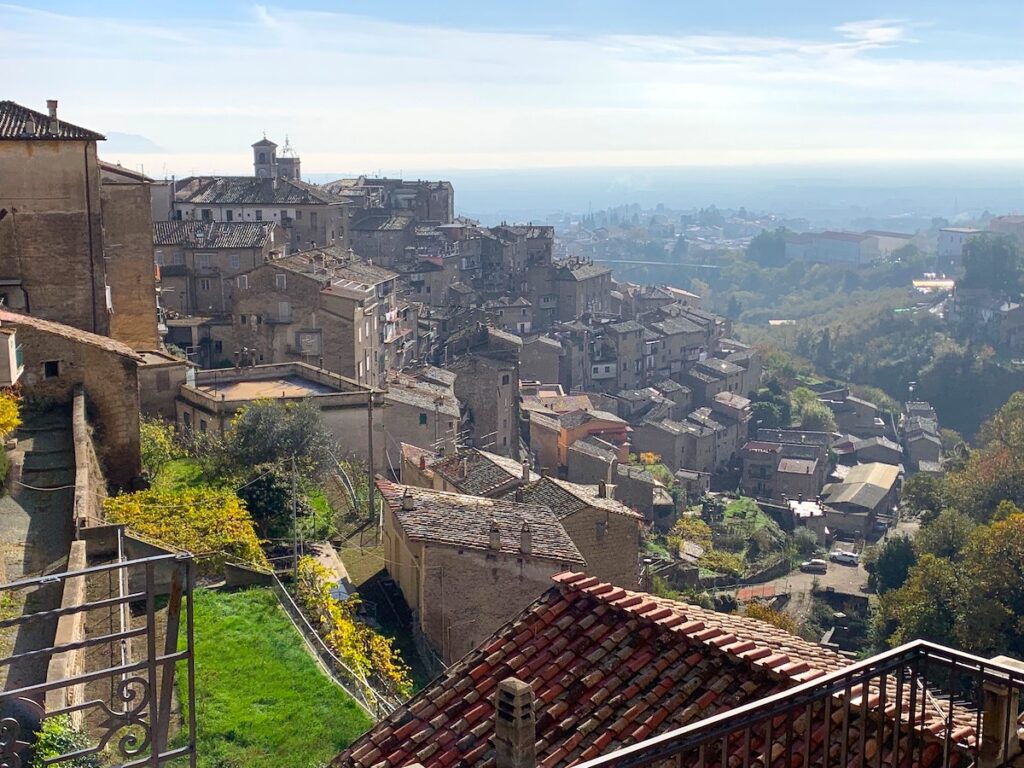
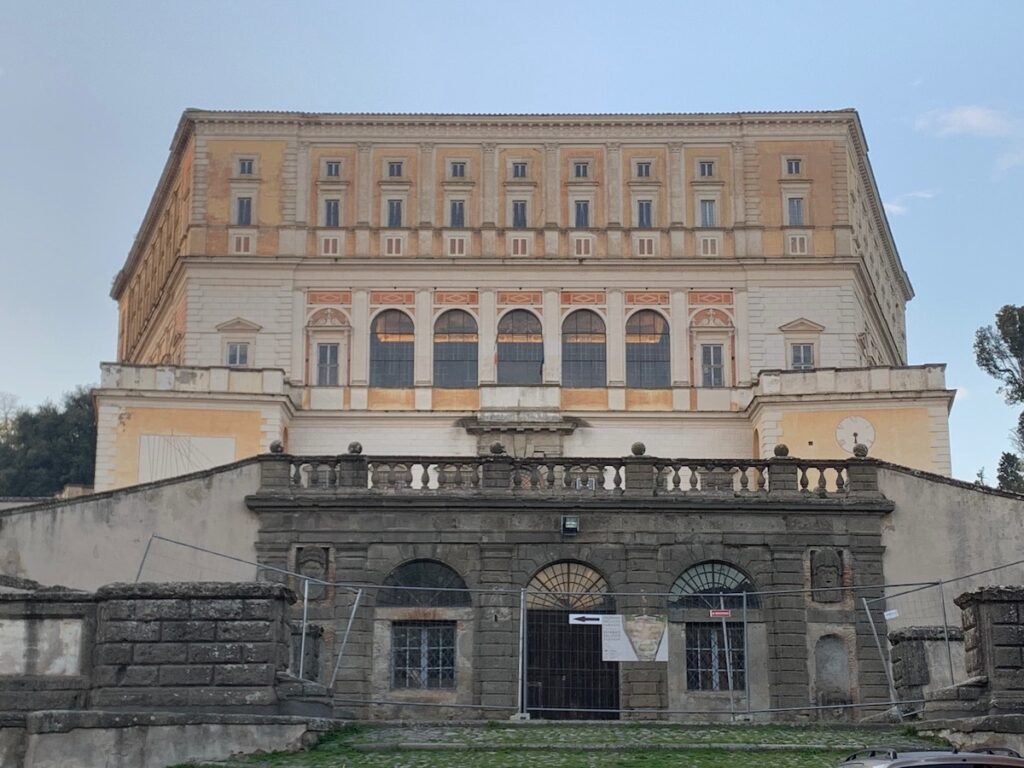
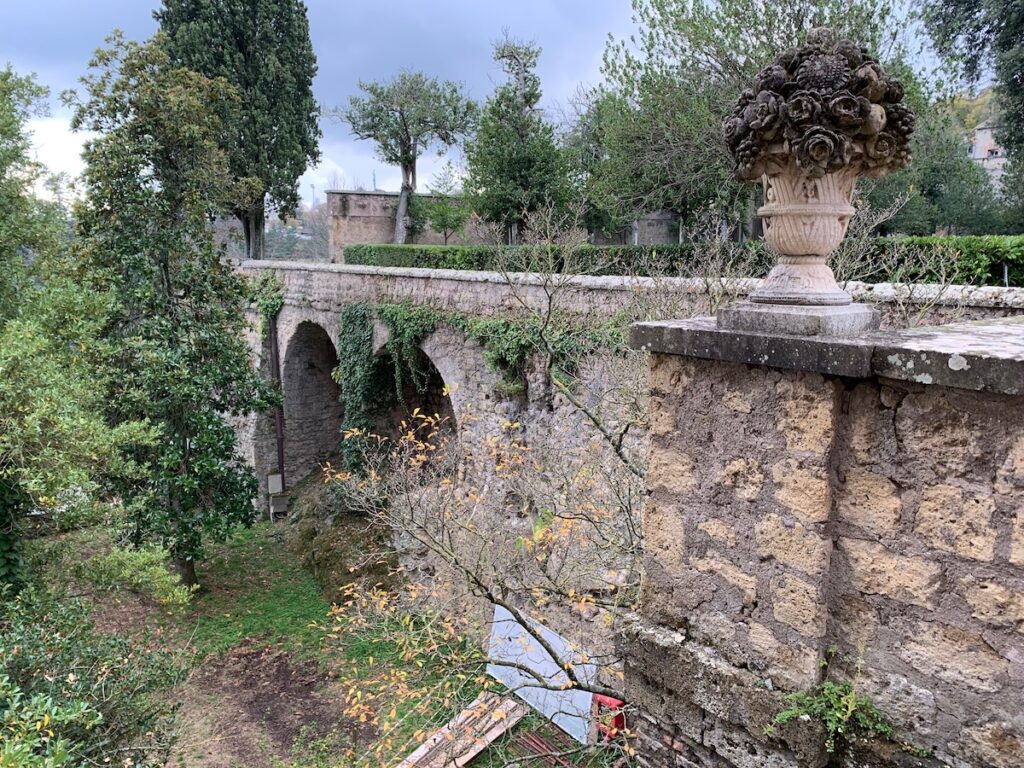
From the outside this looks 16eCentury building with its French garden, frankly, looks a bit massive, but inside you can't get enough of the enormous amount of frescoes with which every wall and ceiling is painted.
And that at barely 50 kilometers from Rome, next to an adjacent village with a series Inns serving old-fashioned folk fare, and a few miles away the cool volcanic Lake Vico.


Alessandro Farnese
I ended up at the Palazzo with an invitation to participate in a conference titled Alessandro Farnese, l'eroe italiano delle Fiandre (AF, the Italian hero of Flanders).
This descendant of a powerful Italian family of clergy and warlords is better known to us as the Duke of Parma, or shorter still, simply Parma, the governor who, in the early years of the Eighty Years' War, from 1579-88, took a hefty share of reconquered the rebellious Dutch provinces for his boss, the Spanish king Philip II.

As a result, in addition to a handful of Italians, 3 speakers from the Low Countries were also invited: Geert de Proost, diplomatic representative of Flanders in Italy, the Dutch journalist Ewout Kieckens and the undersigned.
Alessandro Farnese, hero for the Italians
This created a great opportunity to juxtapose, or rather oppose each other, two different visions of history. For Italian scholars and the public, despite Covid-19, Farnese was the local hero, a genius in the martial arts and also of the highest nobility.

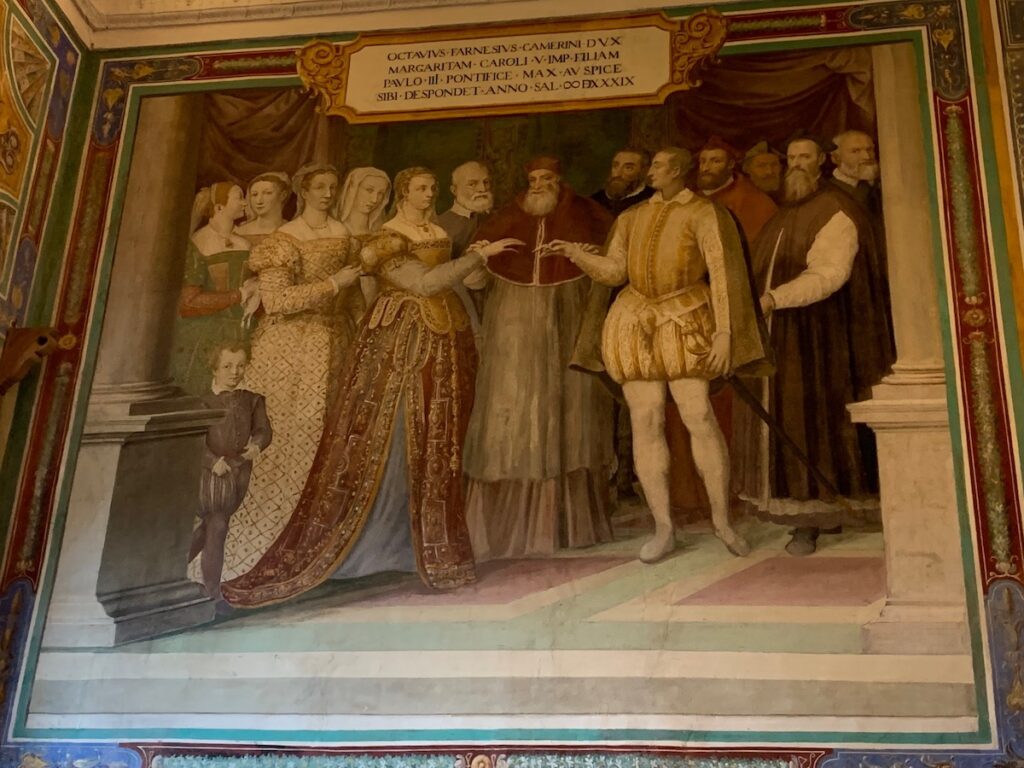
His mother Margaret was after all an illegitimate child of Charles V and his great-grandfather, also an Alessandro Farnese, from 1534-49 Pope under the name Paul III. Descendant of an emperor and a pope at the same time, it can't get much higher. The fact that in both cases it was about hybrid lines was not a problem at the time.
Division of the Netherlands and Belgium
The Dietse participants were less enthusiastic. Farnese was indeed an able strategist, and as governor quite lenient than his predecessors, especially the hideous Duke of Alba.
But he was also the squirrel who stole Flanders from us and is therefore in a sense responsible for the division of the Netherlands and Belgium. Farnese did not hesitate to starve Antwerp and stealthily bribe state garrisons.

The French King Henry II, ally of the Farneses Entry of Francis I (with the nose), Charles V (with the chin) and Farnese (with the cardinal's hat) Pope Paul III appoints his son Pier Luigi Farnese commander of the papal troops (1535) Pope Paul III blessing his grandson Ottavio Farnese and his Flemish bride Margaret (of Parma)


That is why the Dutch and Flemish speakers wanted to put a question mark behind the title The hero of Flanders: L'eroe delle Fiandre? True Farnese fans could hardly appreciate that.
Italians are extremely sensitive to criticism from outsiders, especially if irony is also added to it, but afterwards the harmony was complete again, with a strong lunch with local sausage, cheese, lentil soup and red wine.
Wealth and Power
In the meantime we had also made a tour through the Palazzo and we were amazed. The pentagonal Palazzo Farnese in Caprarola was built between 1559-75 as a pleasure place by order of a Cardinal Farnese who was also called Alessandro, nephew (nephews) of the Pope and great-uncle of our governor.


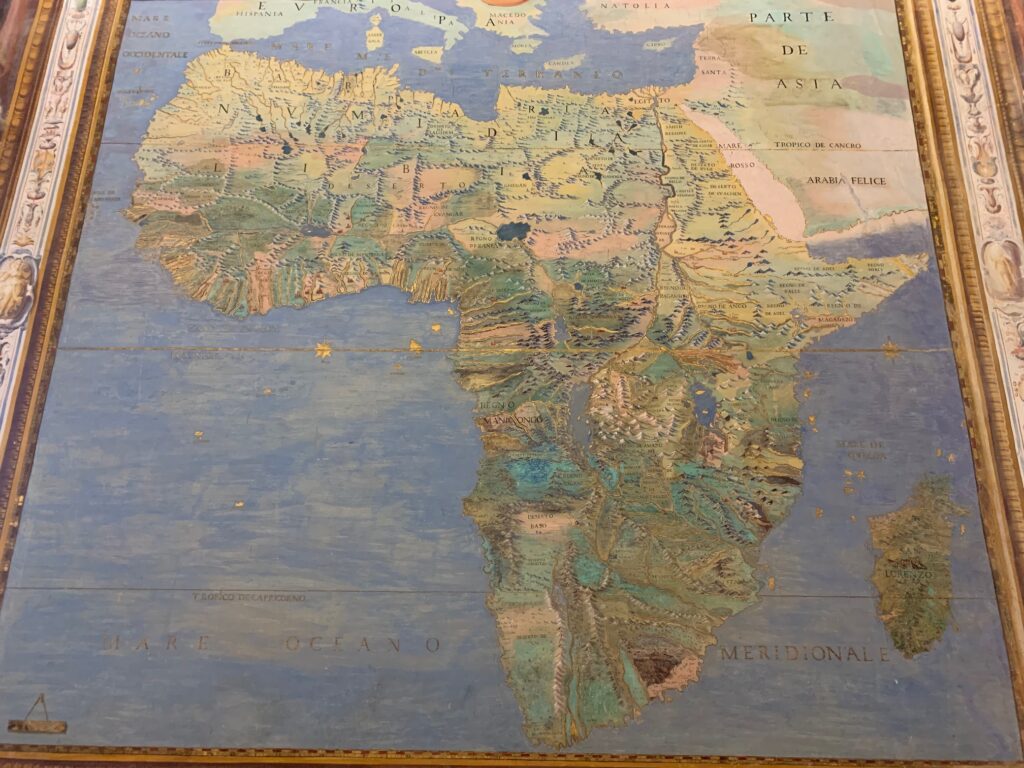
The family was then at the height of its wealth and power and the world should know it too. All the rooms are lavishly painted and this time not only with Biblical scenes (although there are some, such as a horrifying Solomon's judgment), but also with many geographical representations: images of cities and countries and a Sala del Mappamondo (Hall of the Globe) .

With a beautiful map of the world as it was known in 1571: still without Australia but with an imagined bright green South Country. Other rooms and corridors are devoted to the (then) recent history and of course also to the glory of the Farneses themselves.

The world in 1571: without Australia and with a fictitious green Southland Asia Africa



Notably that of Patriarch Alessandro, aka Paul III, who is regularly staged as a peacemaker between the two ruffs vying for supremacy over Europe in those years: the French King Francis I, easily recognizable by his huge nose, and the German Emperor Charles V, with his no less striking Habsburg chin.

Unfortunately, the explanatory texts (also in English, that's for sure) are rather sparse, but a quick googling will help you a lot further. With the risk that you linger for hours, while the sun is shining outside, but so be it.
Want to know more? Information about tickets and opening times can be found here: Palazzo Farnese – Direzione Regional Musei Lazio (beniculturali.it)








Comments