

 Myrtle Claus
When you say Tuscany, you think of culture, art and history. To cities such as Florence, Pisa and Siena. To Lucca, San Gimignano and Volterra. Each and every one of them beautiful places that you should not miss during your (first) Tuscan holiday. Tuscany also has a lot of unknown surprises in store for you. In this extensive article with the most beautiful places in Tuscany you will find both.
These are – according to the editors of This is Italy – the 25 most beautiful places in Tuscany.

We'll start with some classic destinations in Tuscany that you shouldn't miss.
Are you going on a virtual tour of Tuscany?
1. Lucca: city of 100 churches

Lucca is one of the best preserved medieval towns in Italy and worth a visit for that alone. It has perfectly intact city walls complete with towers, which completely surround the historic center. You can walk straight into the center of the city through one of the six city gates.
Lucca's nickname is 'the city of 100 churches'. Of course it's impossible to see all of them during your visit, but at least walk past the Basilica of San Frediano, the Cathedral of San Martino and the Church of San Michele in Piazza San Michele.
Lucca also has beautiful squares, such as the old plane-lined Piazza di Napoleone with the imposing Palazzo Ducale and the oval Piazza dell'Anfiteatro, built on the foundations of an ancient Roman amphitheatre.
The Palazzo Pfanner with its Baroque gardens is also worth seeing. And do you want to have the best panoramic vantage points for your photos? Then take a walk on the 4 kilometer long city walls or climb the Torre Guinigi or the Torre delle Ore for a view over the red roofs of the city and the surrounding area.
2. Pisa: more than the leaning tower

Whoever says Pisa says 'Leaning Tower' And of course you should not miss this special building that stands together with the Duomo and the Baptistery on the Piazza dei Miracoli when you are in Pisa.
But Pisa is so much more than that. In the center you will find beautiful buildings, Gothic churches such as the small church of Santa Maria della Spina and Renaissance squares such as Piazza dei Cavalieri, once the political center of the city.
Stroll down the street the Pisans call the Borgo Stretto. It is the most characteristic street of the center with a colonnade, decorated porches and old shops.
The Borgo Stretto leads to the Ponte di Mezzo, the bridge over the Arno that connects the 2 halves of the center.
Need more contemporary art after all those historic buildings? Then go to Piazza Vittorio Emanuele II near the Central Station. In a side street of the square you can admire a huge mural by Keith Haring.
3. Florence: Renaissance that strikes the clock

A trip to Tuscany is not complete without a visit to Florence! It is the cradle of the Renaissance and is known as the 'treasury of art and architecture'. And not just because the Uffizi Museum houses so many beautiful works.
While walking through the center you pass the Dom with Brunelleschi's enormous dome with the bell tower designed by Giotto and the Baptistery with the bronze doors right next to it.
You can see Michelangelo's statue of David in the Accademia Gallery, but also head to Piazza della Signoria with the imposing Palazzo Vecchio.
From there it is not far to the Ponte Vecchio with its colorful historic shops, one of the oldest bridges in the world and the symbol of the city of Florence.
There are famous churches to see such as the Santa Maria Novella, the Basilica of San Lorenzo and the Santa Croce. And how about the church Orsanmichele, a grain store turned church?
But Florence is also green, with parks and gardens like Boboli's to relax in. And for a nice view over the historic center of the city, go to Piazzale Michelangelo. A must at sunset!

4. San Gimignano, Monteriggioni and Siena: Medieval Towers and Squares

Halfway between Florence and Siena is San Gimignano, 'the city of beautiful towers' or the Manhattan of the Middle Ages.
In its heyday, the city had 74 towers built by the noble families of the time, 14 of which remain today.
The oldest tower is the Torre Rognosa or Bell Tower from the 13th century, the tallest the Torre del Podestà with 54 meters.
In the historic center you can admire the Duomo, as well as the Torre Grossa, the Palazzo Comunale, the Pinacoteca and the ruins of the Montestaffoli fortress.
But the cathedral, the Loggia del Comune and the beautiful Palazzo del Popolo are also beautiful to see. For the best view of the village, head to Piazza del Cisterna. And after that tough climb to get there, you deserve a glass of white Vernaccia from San Gimignano.
If you have a taste for towers after San Gimignano, then on your way to Siena you should definitely make a stop at Monteriggioni, a well-preserved fortified town along the Via Francigena. You can already see the building from a distance.

In Siena, city of the Gothic, you can breathe in the charm of a medieval city. Once you have passed the city walls you will find yourself in a maze of alleys and narrow streets.
They will lead you to Piazza del Campo, the shell-shaped square where the famous Palio is held twice a year.

On the square are the Palazzo Pubblico and the Torre del Mangia. Don't miss the Gothic-style cathedral with a beautiful marble floor and the Basilica of Santa Caterina.
5. Volterra: in search of Etruscans and Romans

Perched on a hilltop, Volterra was once one of the most powerful Etruscan-Roman centers. The traces of this can still be found today: from the Etruscan walls surrounding the historic center to the archaeological area just outside the walls with the Roman amphitheatre, the Roman baths and the Roman forum.
The narrow streets lead to Piazza dei Priori, the main square where the Palazzo Preotorio and the Palazzo dei Priori, the oldest town hall in Tuscany, stand.
Of course you can't skip the Duomo and in the Cathedral of Santa Maria Assunta you can find works of art by Andre dela Robbia.
And what do you take with you from Volterra? A souvenir of alabaster, of course, extracted from the nearby Etruscan quarries.
6. Barga: medieval gem in the Valle del Serchio

This medieval town is located in northern Tuscany. From the cathedral that towers above Barga, you have a beautiful view over the Garfagnana and the Apuan Alps. In clear weather you can even see the famous Arch of Monte Forato. The old town of Barga is partly surrounded by the remains of the old town walls.
From the central Piazza del Comune, you can explore the rest of the historic center via narrow streets and steep stairs and imagine yourself a few centuries back in time. An atmosphere enhanced by buildings such as the early medieval Palazzo Pretorio and the Church of the Holy Cross.
7. Montecatini Terme and Montecatini Alto: one city, two very different faces
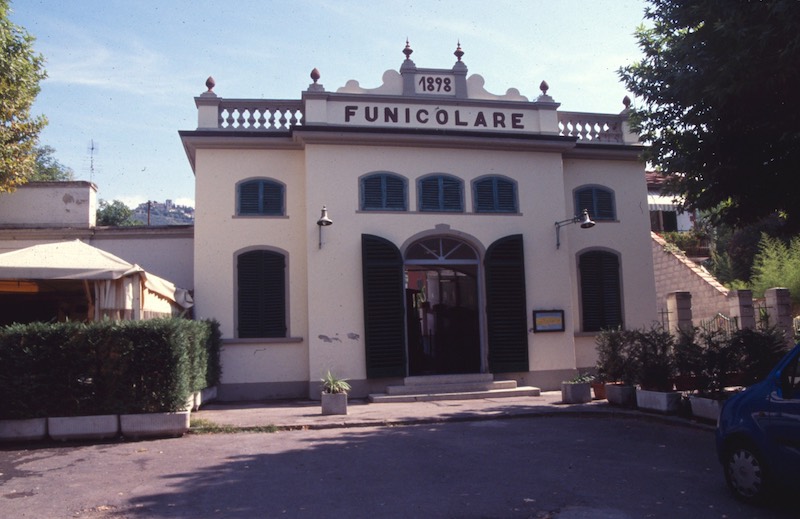
Montecatini, like many Tuscan towns, is divided into two parts. An older part on top of a hill and a more recent part at the foot of it. The special thing about the two parts of Montecatini is that each has its own face.
Two completely different worlds that are only connected by a cable car. Montecatini Terme is a stately city with stately buildings, wide streets and a very beautiful park that has been laid out around the famous thermal baths.

Montecatini Alto, on the other hand, is a much less polished, genuine medieval village. You can visit the Saint Peter's Church and the Torre dell'Orologio. Or, and that might be much more fun, have a drink on the Piazza Giuseppe Giusti.
Keep an eye on when the cable car makes the last ride down. A fairly steep descent of 300 meters on foot in the dark is not recommended after a long day.
8. San Miniato (al Tedesco): the fortress of Emperor Frederick II and white truffles

Driving on the highway between Pisa and Florence you can't miss it! There is only one town on an elongated hill whose Rocca rises so stately into the sky. Although that may seem because the rest of the landscape is quite flat by Tuscan standards. But it really pays to make a stopover in San Miniato.
Start at the fortress of Emperor Frederick II and look out over the Val d'Arno to the foothills of the Apennines. Visit Piazza della Repubblica with the Seminary, enter the Cathedral in Piazza del Duomo, admire the Torre Matilde, the Church of St. Domenicus and stroll through the center.
There is always a market to be found. If you're there in November, there's a good chance you'll fall head over heels in the white truffles!
9. Bolgheri: the most famous avenue in Italy with Tuscan cypress trees

Ask an Italian what first comes to mind when they hear the name 'Bolgheri' and many will hear the first lines of the song of praise Davanti a San Guido by Giosué Carducci. The long avenue that runs from Via Aurelia to Bolgheri became famous for this. And if you go down that road, you'll understand why Carducci was so full of praise for it. It is a beautiful, five kilometer long avenue lined with ancient Tuscan cypress trees.
Bolgheri itself is also worth a visit, especially for lovers of good wine. In the small shops and osterie you can taste the delicious wines from the region. But of course only after you have seen the impressive castle of the Della Gherardesca and the house where Carducci lived in the village.
10. Pitigliano: surrealistic picture of tuff with sp(r)ook-like 'cave'

San Gimignano, but a little different. That is what Pitigliano with its many residential towers reminds you of from afar. But when you eventually slowly drive up bend after bend and look up, the town feels surreal. It appears to float above a rocky outcrop of tuff.
Pitigliano is fascinating with its narrow streets and the beautiful views over the three ravines at the foot of the mountain. It is known as 'Little Jerusalem' because of the large and active Jewish community that has lived there since the 15th century. However, its history goes back to the Etruscan-Roman era.
Outside the city walls is an enormous network of three to ten meters deep canals cut in tuff, which date back to that time. It really pays off to walk one of the marked trails in the fairytale 'cave', although they can sometimes have something scary! Wear something warm, because the temperatures here are also a lot lower in summer.
The cavities that you encounter here and there in the wall of the quarries were used as tombs by the Etruscans. Today they have a completely different function: as wine cellars for the Pitiglianese white wine.
11. Massa Marittima: the cathedral reminiscent of Siena

This place was the center of metal mining in Etruscan times. It prospered under the Romans who found large amounts of copper and silver there. In 800 AD. it became a episcopal city after Bishop Cerbine of Populonie settled there to escape malaria.
It is one of the most beautiful places in Tuscany and is reminiscent of Siena. From the Piazza della Repubblica with the large cathedral, many steep streets lead to the other parts of the city.
On the square are the most important buildings such as the Palazzo della Podestà, the Palazzo Comunale and thus the cathedral of St. Carbone. It was built between the eleventh and the thirteenth century. The upper part is reminiscent of the churches you see in Siena.
Also look for the oil factory that is hidden somewhere in a house and discover how they used to press the olives here.
12. Certaldo: photogenic town, especially for your wedding album

It may get a bit monotonous, but Certaldo is also split into a Low expats must register with the local municipality and obtain a HighFor those who don't feel like walking the steep way up, there is also a cable car waiting here that takes you up for less than 2 euros per person.
Certaldo Alto, also called Il Castello, is the historic part of the city with terracotta paving stones and buildings of the same color. A photogenic place, given the large number of bridal couples that even have their pictures taken on rainy Saturdays!
Certaldo is the birthplace of the 13th century Italian writer and poet Giovanni Boccacio. In the long, wide street named after him, you can view his birthplace, one of the residential towers in Certaldo Alto.
The old town is also rich in beautiful buildings and churches. Don't miss the Palazzo Pretorio or the Vatican building with decorations by Pietro Fiorentino.

13. Bagno Vignoni: warm spa water on the village square
A truly undiscovered Tuscan gem: Bagno Vignoni. This small village of about thirty inhabitants is located on a hilltop in the Val d'Orcia, near Siena and San Quirico d'Orcia.
The village square consists of a large water basin where warm water from thermal springs bubbles up and slowly evaporates. Sun creates a fairytale atmosphere.
Surrounding the water basin are Renaissance buildings and the beautiful loggia of St. Catherine of Siena. Most of the water from the basin flows to the spas that can be found here.
The rest splash into the Natural Park of the Mills. Here are 4 medieval mills that were once important for the local economy. Thanks to the thermal water, they also functioned in dry periods, when other mills in the area came to a standstill.
A picturesque area for beautiful walks!
14. Anghiari: city walls as city walls are meant to be

If you are talking about the most beautiful places in Tuscany, then you cannot ignore Anghiari. Anghiari is one of the most beautiful fortified towns in all of Italy. It played an important role in the Middle Ages thanks to its strategic position.
In 1440 the famous Battle of Anghiari took place here, in which the Florentines defeated the Milanese. Leonardo painted this battle on a wall in the Palazzo Vecchio in Florence, but the fresco was lost during a renovation of the palace.
The city walls surrounding the historic city center are city walls as they should be: imposing and thus impregnable at first sight.
Wandering through the steep, atmospheric streets you can admire the Saint Augustine Church. And also the abbey and the Palazzo Pretorio, whose facade is decorated with coats of arms and frescoes.
A museum is located in the 15th century Palazzo Taglieschi. Besides works by Andrea della Robbia and Jacopo della Quercia, you can also see the famous 'Catorcio di Anghiari'. This door bolt of the Porta del Ponte was stolen by the residents of Sansepolcro, seven kilometers away.
He was then retrieved by the residents of Anghiari. The most striking building, however, does not date from the Middle Ages, but from the 18th century. The Teatro dei Ricomposti is a grand building overlooking Anghari.
15. Belforte (Radicondoli): tiny village, hidden between green hills
Got a taste for visiting the unknown most beautiful places in Tuscany? And don't you mind driving into the 'middle of nowhere' to visit a very small village where tourists are not often spotted?
Then Belforte is really something for you! This village near Radicondoli, also a nice place to visit by the way, was built as a castle sometime in the 11th century.
The historic center is small and cozy, with surprising corners, beautiful houses and churches that you do not always recognize as a church. And, like all Tuscan fortified towns, it has a beautiful view of the surrounding area.
It is not a full day trip. There are no spectacular buildings to admire and there is no shop full of souvenirs, but in terms of atmosphere and location it is highly recommended!
16. Elba: island in the sun

Spending your holiday on a not too big island in a crystal clear sea? Want to relax on some of the most beautiful beaches in the Mediterranean? Then is Elba the ideal place!
Together with 6 other islands, it forms the Tuscan Archipelago. From Piombino, a ferry takes you to Portoferraio in less than an hour. In this 'capital' of the island you will find fortifications, stairs and small hanging squares.
But also the Theater and the Villa dei Mulini, which date from the time of Napoleon's exile. And from the fortress of Volterraio you have a beautiful view of the islands of Pianosa, Capraia and Montecristo.
Elba itself is a mixture of nature and history that is best discovered on foot, walking along one of the many paths with beautiful panoramas.
In Punta delle Grotte you can view the remains of the Villa Romana delle Grotte. And a trekking to the highest peak of the island, Monte Capanne, is definitely worth it!
17. San Galgano: A Knight, Monks and Swords in Rocks

If you are near Siena you can the abbey of San Galgano don't really just drive by. It is located about 35 kilometers from the city, in a beautiful spot in the Val di Merse.
What is so special about this building? They are the remains of a huge, perfectly preserved abbey, built in the 13th century by Cistercian monks.
The only thing missing is the lead roof: the material was stored in the 16e century when only 6 monks remained.
The abbey is dedicated to Saint Galgano. The former knight retired in the 11th century to the Hermitage of Monte Siepi, just behind the abbey.
In the center of the chapel is a sword in the rock. According to the stories, the saint would have planted it there with his own hand when he renounced the use of weapons.
18. Viareggio: A seaside town as it once was

Known for its Carnival, Viareggio is a beautiful and elegant seaside resort on the Versilia coast. If you like Art Nouveau, you can indulge yourself in this city. And where better to start than on the Passeggiata Margherita?
Small villas and buildings in that style appeared on this boulevard at the end of the 19th century. The result is a succession of bars, luxury boutiques, bathing pavilions and buildings that still retain a touch of the refined elegance of the 20s and 30s.
The Gran Caffè Margherita, decorated with two turrets and colored ceramic tiles, frequented by the composer Puccini, and the nearby Chalet Martini are fine examples.
In Viargeggio you will also find many impressive villas and historic buildings, such as Villa Argentina, Villino Nistri and Villa Paolina.
The latter villa is named after Napoleon's sister, who used it as a summer residence.
But don't miss the Torre Matilde, a watchtower from the 16th century or the Church of San Paolinio and that of Sant'Andrea.
19. Val d'Orcia: Tuscany at its best
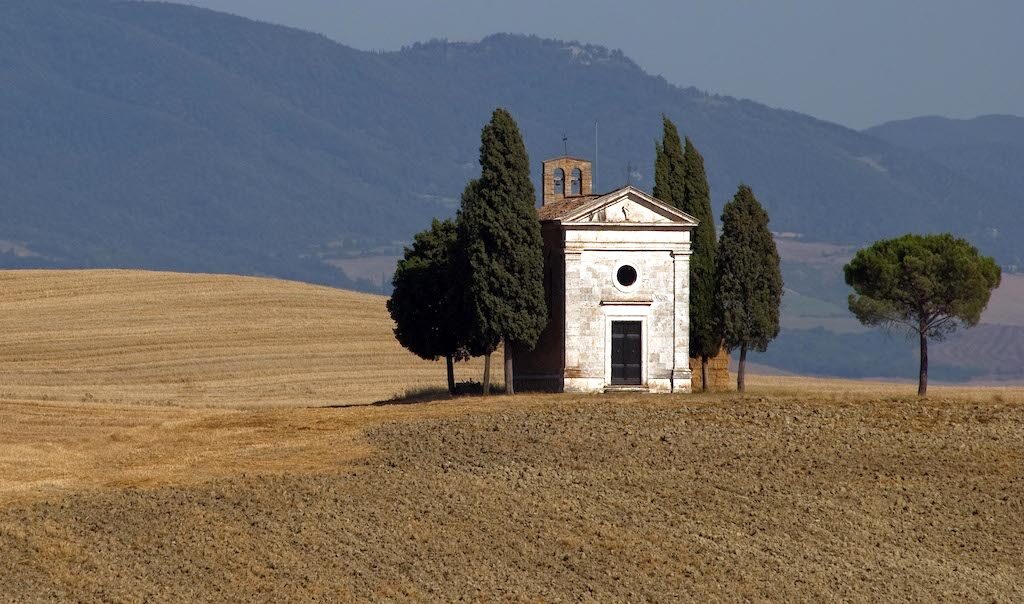
Are you looking for the classic pictures of Tuscany with its rolling hills, small churches and narrow streets with cypress trees?
Then all you have to do is go to Val d'Orcia! This beautiful area was declared a UNESCO World Heritage Site in 1991 World Heritage. Besides driving around through the typical Tuscan landscapes, there are also beautiful villages to visit.
Such as San Quirico d'Orcia, of Etruscan origin and the main center of the Val d'Orcia with the beautiful Collegiata, the Church of San Francesco and the Horti Leonini.

Or Pienza, probably one of the most photographed villages in Italy, Montalcino or Montepulciano, rich in elegant Renaissance palaces, old churches, piazzas and hidden corners.
But also visit Bagno Vignoni, spa with a water basin on the large central square where sulphurous water of 49ºC bubbles up. A perfect way to relax!
20. Garfagnana: the green region of Tuscany

Need peace and greenery after all your city trips through Tuscany? Then it's time to go to the Garfagnana in northern Tuscany!
This region stretches along the river Serchio and is enclosed between the Apuan Alps and the Apennines.
You will find beautiful nature in the Parco dell'Orecchiella near Piazza al Serchio and San Romano:
- Beautiful lakes such as Lago di Vagli and Lago di Isola Santa.
- Natural phenomena such as the always windswept Grotta del Vento and the spectacular limestone gorge Orrido di Botri.
- Medieval villages such as Barga, Castelnuovo di Garfagnana or Castiglione di Garfagnana.
- Castles such as the Fortezza delle Verrucole.
- And churches in places you wouldn't expect, such as the Sanctuary Eremo di Calomini.
This region is perfect for an active holiday in the great outdoors with all the opportunities you have for walking, hiking, rafting, climbing and mountain biking.
21. Pistoia: Florence in miniature

With its works of art, Pistoia is somewhat in the tourist shadow of cities such as Florence, Siena and Pisa. But there is plenty to see.
In Piazza del Duomo, one of the most beautiful squares in Italy, you will find the Duomo, the Baptistery and the Palazzo del Comune in perfect medieval style.
More than 600 figures have been sculpted on the altar of the Duomo by artists of Brunelleschi's caliber.
The city market has been held on the square itself since 998 AD (!) on Wednesdays and Saturdays. The place to taste the gastronomic specialties from Pistoia for yourself.
Pistoia also has one of the oldest hospitals in the world, although the Spedale del Ceppo now houses a Museum of Medicine.
The building's facade alone is worth seeing with Della Robbia's signature blue ceramics above the colonnade.
22. Arezzo: the square of Life is Beautiful

Once a thriving Etruscan city, Arezzo is a veritable treasure trove of art. In the Basilica of San Domenico you can admire the large crucifix of Cimabue.
Masterpieces by Piero della Francesca can be found in the Duomo of San Donato and in the Baccia Chapel belonging to the Basilica of San Francesco.
And, of course, you can't miss Vasari's birthplace, with beautifully frescoed apartments and works by his most famous pupils.
The heart of the city is the Piazza Grande, which has a trapezoidal shape and slopes upwards to allow the rainwater to rush away.
The square is surrounded by buildings such as the Loggia of Vasari and the Romanesque church of Santa Maria della Pieve.
And if you are in the area in June or September, you have a good chance of experiencing the 'Giostra del Saracino'. During this event, the 4 historic districts of the city compete against each other in medieval games.
23. Cortona: Tuscany according to the Americans

Cortona is one of the most enchanting places in the Val di Chiana. It is located on the top of a hill, near the Lake Trasimeno.
Cortona is surrounded by city walls, built on foundations from Etruscan and Roman times. The medieval buildings and typical alleys create a cozy atmosphere.
You will find many American tourists here, since the writer Frances Mayes moved here and wrote a book about the purchase of the house and the renovation, which has also been made into a movie. Under The Tuscan Sun.
In Piazza Signorelli are the Palazzo Pretorio and the Palazzo Casali, which today houses an Etruscan museum.
The other main square of the city is Piazza della Repubblica with the Palazzo Comunale and its steps and the bell tower.
Of course you must have seen the Duomo, the Basilica of Santa Margherita and the Church of San Francesco.
Just like the Medici fortress, the Fortezza Medicea di GiriFalco, which is at the highest point of the city, just outside the walls. Comfortable shoes are a must to explore Cortona; you are continuously walking up or down!
24. Montepulciano: one of the most beautiful Tuscan villages

The atmospheric Montepulciano was founded in the Etruscan time and was once a Roman settlement. The town is located on the site of an ancient sanctuary and amphitheatre.
Perched high on hills overlooking plateaux to the north, Montepulciano is one of the best kept secrets in Tuscany for its unspoilt beauty and medieval treasures. The vineyards produce its famous Vino Nobile - perfect with prosciutto ham as part of a Tuscan picnic.
This small Tuscan town is filled with medieval architecture, and breathtaking views that are second to none. So turn your next holiday in Tuscany into an unforgettable wine tasting in Montepulciano for a day or simply stroll around the medieval streets and absorb the unadulterated Tuscany.
25. Prato: In the Shadow of Florence

Prato is a city steeped in ancient history and even though it is a tourist destination, you can see how much effort has gone into preserving its authenticity. With attractions for every kind of visitor, whether they are interested in UNESCO sites or walks to make your trip unforgettable.
The picturesque, urban city of Prato is also one of the greenest in Italy. Not only does the birthplace of Marco Polo provide economic energy, it also has a rich history with amazing architectural buildings. A visit to the Duomo di Prato is not to be missed!
Visitors to Prato will marvel at the city's architecture and enjoy a fine espresso or fresh wine. Locals recommend spending an afternoon within the walls of this once fortified city, walking through the historic center with plenty of goodies to choose from along the way. The small museum offers visitors a glimpse into Tuscan life during the Middle Ages.
With a rich and vibrant history, Prato is one of the most diverse and interesting Italian cities. You marvel at beautiful churches and museums; enjoy many cafes and restaurants or experience the most beautiful cycling routes for an active day out.
Video: most beautiful places in Tuscany
They were: 25 of the most beautiful places in Tuscany that are far from being overrun by tourists. Would you like to camp in Tuscany, but a bit on that beautiful Tyrrhenian coast? Check out the article with the 15 most beautiful campsites by the sea in Tuscany.
Finally, a beautiful time-lapse video in which the most beautiful places in Tuscany pass by!
Would you like to discover the most beautiful places in Tuscany for yourself?
Do you already feel like combining culture, nature, history and good food? To discover all those beautiful medieval towns and those fascinating landscapes for yourself?
Tip: here you will find the best and cheapest accommodations in Tuscany.
Have you been to Tuscany before? What do you think are the most beautiful places in Tuscany? We would love to hear from you!
Also watch: the most beautiful places in Italy.








Comments