

 This Is Italy
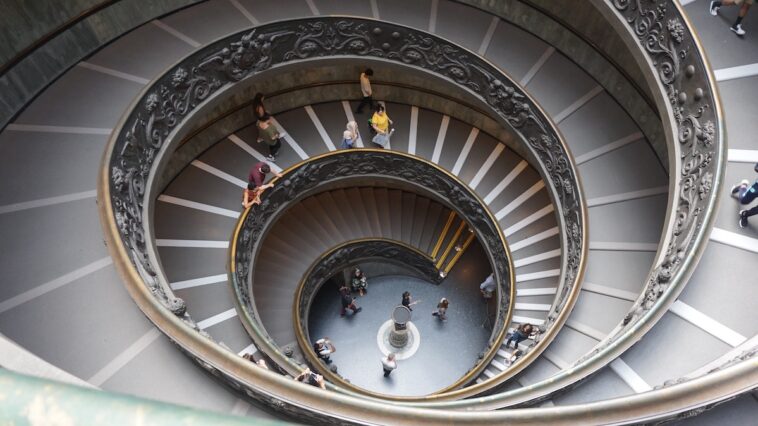
The last 2 years the museum visit has been sad because of you-know-who. But in Normal Times the Italian museums are doing great. There are thousands of them in Italy, from the well-known museums in Rome, visited by millions of tourists, to obscure museums that welcome a handful of visitors a year in a shed somewhere.
The Italian Touring Club (similar to the ANWB in the Netherlands) conducts annual research into the best Italian museums, based on the number of visitors.
This is the top 11, based on the most recent visitor numbers:
1. Parco Archeologico del Colosseo

One of the largest museums (literally) in Rome is the Colosseum. It could have been much nicer if they had been a little more frugal in the past. But this is still the place to dream away from the fights between gladiators from more than 2.000 years ago.
This top attraction attracts just 7,5 million visitors a year. It is therefore important to prepare your visit well, not least to avoid standing in line for hours in the blazing sun.
Tip: buy a combination ticket with the Roman Forum and Palatine Hill, those other must-sees in the Colosseum Archaeological Park.
2. Vatican Museums

The Vatican Museums are among the largest and most impressive art collections in the world. At the end of the 15th century, Pope Sixtus IV ordered the collection of partly purchased and partly stolen art from all over the world in a grand museum.
The museums consist of 54 galleries with thousands of art treasures. The star attraction is the Sistine Chapel, located at the end of a corridor over a kilometer in length.
Some tourists run past all the other art just to get into the Sistine Chapel as quickly as possible, where, incidentally, photography is not allowed. More than 6 million visitors a year pass through the gates of the Vatican Museums.
3. Uffizi . Gallery

The Uffizi Gallery in Florence is the Serie A of global art. You'll find this museum next to the Palazzo Vecchio in the center of town in a palace that once belonged to the De' Medici family.
It was opened as a museum as early as 1580, making it the oldest museum in Europe and one of the top attractions in Florence and throughout Tuscany.
Here you will find famous works such as 'The Birth of Venus' or 'Spring' by Botticelli, 'Tondo Doni' by Michelangelo, 'Venus of Urbino' by Titian and 'Medusa' by Caravaggio, and works by Leonardo da Vinci. Mainly many works from the Italian Renaissance, but also from antiquity and the late Baroque.
As a visitor to the Uffizi Gallery, you will walk past all the paintings and sculptures in chronological order. And you certainly don't do that alone. This important museum attracts 4,4 million visitors a year.
4. Parco Archeologico of Pompeii

Of course, the Pompeii Archaeological Park. It has to be in the top 10 and it does, with about 4 million visitors a year.
As a child, we were all fascinated by the pictures of people who had been overcome by the hot ash of Vesuvius and who were petrified and still in time in school books.
Walking through this ancient Roman city you will fall from one surprise after another. So much to see and so well preserved: the Roman bakery, the bathhouse, the bullring, the shops, the streets, the murals in the villas of distinguished families. It is all equally special and world class.
It is good to know that in recent years a lot of money has been invested in these art treasures to present and preserve even better.
If there's one museum you must see at least once in your life, it's this sprawling archaeological park at the foot of Vesuvius. Wear good walking shoes, because the area is huge!
5. Galleria dell'Accademia di Firenze

The highlight of the Accademia Gallery in Florence is, of course, Michelangelo's famous white statue of David. This statue originally stood outside, in the piazza, but a replica now stands there. The original David is admired by some 1,7 million tourists from all over the world every year.
In addition to art by Michelangelo, this Florentine museum also houses work by Botticelli, Allessando Allori and Del Sarto, among others.
The Galleria dell'Accademia was founded in 1563 by the artists Bartolomeo Ammanati, Agnolo Bronzino and Giorgio Vasari, who opened the first art school in Europe with it.
In 1784 came the art collection that served as an inspiration and example for the students. In addition to the statues, there are also paintings by Florentine artists, religious prints from the Middle Ages and a collection of work by the students at the academy.
6. Castel Sant'Angelo

Castel Sant'Angelo, Castel Sant'Angelo, dates back to the 2nd century and originally served as a mausoleum for Emperor Hadrian.
In the course of history it became successively a papal fortress and part of the defense line of Rome. An escape tunnel still runs from the Vatican to the castle.
The building houses a museum with numerous artifacts. Also note the bridge of the same name over the Tiber opposite the castle.
7. Museo Egizio

The Museo Egizio – the Egyptian Museum – in Turin is one of the largest and most important museums in all of Italy. It is an archaeological museum with the largest collection of Egyptian art treasures outside of Egypt itself. About 850.000 visitors come here every year.
The museum is housed in the building of the Accademia delle Scienze. It was able to build such a special collection through the diligent work of Italian archaeologists in Egypt. The collection of antiquities is large and impressive. In this museum, too, everything is arranged in chronological order in the halls.
The apotheosis is formed by the royal gallery with the statue of Ramses II. Also special are the 3 versions of the Book of the Dead, the tomb of Iti and Neferu and the statue of Seti II.
The museum has done a lot to make it interesting and fun for children as well.
8. La Veneria Reale

It's not every day that you can walk around a royal residence, but in La Veneria some 840.000 visitors a year do it. You will find this baroque palace with its extensive gardens on the outskirts of Turin. It is also known as the Versailles of Italy.
That former royal family is known to us as the House of Savoy. This country house was also used for hunting in nature near Turin.
In the center of the city itself you will also find a royal palace that deserves a visit. Did you know that Turin was the first capital of Italy from 1861 to 1870?
9. Reggia di Caserta

47.000 square meters of palace, 1.200 rooms and a garden of 3 kilometers in length. The Reggia di Caserta is arguably the largest royal residence in the world.
Between 1780 and 1861 it served as the residence and work palace of the kings of Naples and Sicily. The palace is located just north of the city of Naples and many visitors to that city also visit this baroque palace with its extensive garden and large-scale fountains.
Every year, 730.000 visitors marvel at the splendor that Carlo di Borbone had built here at the beginning of the 18th century.
Architects were Luigi Vanvitelli and later his son Carlo Vanvitelli. Fun fact: Luigi Vanvitelli (born Lodewijk) was a son of the Dutchman Casper van Wittel, a Dutch landscape painter who settled in Rome around 1675.
10. Villa Adriana and Villa d'Este

The beautiful Villa d'Este is a UNESCO World Heritage Site. The villa is beautifully decorated inside and you can also enjoy the garden full of water features with hundreds of fountains.
Villa Adriana is quite a large park full of remains from Roman times, once built as a luxurious country residence for Emperor Hadrian. It included theatres, thermal baths and water features, many of which can still be seen today.
You definitely need half a day for this, but you can also enjoy yourself longer. In addition to the many ruins, the park is also rich in trees and there are several fountains with drinking water.
You can enter for free on the first Sunday of the month, as well as on special cultural days. You can buy combination tickets for both villas via the website.
11. National Archaeological Museum of Naples

The program National archeologic museum di Napoli is one of the most important archaeological museums in the world. Not surprisingly, it attracts nearly 700.000 visitors a year.
They come here to see the spectacular pieces from Pompeii and Herculaneum. You can no longer find them at the site of the excavations, but here in the Archaeological Museum of Naples. Each and every one of these objects tells us a lot about Roman civilization from the 1th century.
Or would all those visitors secretly for it Gabinetto Segreto come, an overview of well-preserved, antique erotic works of art from the doomed cities? Who's to say.
Which of the Italian Museums from this top 11 have you already seen with your own eyes?









Comments